South Africa prepares to host the first G20 summit on African soil. Leaders from the world’s most influential economies will gather in Johannesburg against the backdrop of intensifying climate crises that disproportionately affect developing nations. The summit arrives at a critical juncture for the continent, which continues to bear the brunt of climate disasters despite contributing the least to global emissions.
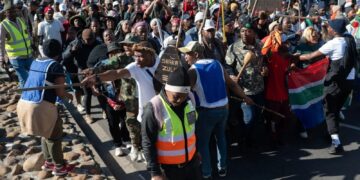
In the township of Alexandra, just steps away from Sandton’s gleaming financial district, local volunteers wade through the polluted waters of the Jukskei River. Their mission is simple yet vital: repair damaged garbage nets that help prevent catastrophic flooding in the densely populated settlement. Known as the Alexandra Water Warriors, the group represents grassroots resilience in the face of state shortcomings and environmental degradation. Their efforts have grown into a movement of more than 3000 participants, bolstered by a modest public-private stipend programme initiated in 2022 with support from the South African and Canadian governments.
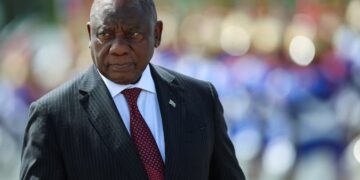
Alexandra, home to over half a million residents, embodies the paradox of South Africa’s developmental landscape. As the continent’s most industrialised economy, the country also grapples with some of the most severe socio-economic disparities. The recent Amnesty International report timed for the G20 meetings draws attention to this imbalance, stating that more than five million South Africans in informal settlements remain exposed to climate-related risks without adequate access to basic services or infrastructure. These vulnerabilities have been laid bare in recent disasters such as the floods in the Eastern Cape in June 2025, which claimed over 100 lives. Though President Cyril Ramaphosa attributed the tragedy to climate change, local authorities pointed to degraded infrastructure and systemic neglect.



The Johannesburg summit offers South Africa an opportunity to centre the concerns of the Global South in the climate discourse. The call is not only for acknowledgement but for structured financial redress. South Africa is expected to urge wealthier nations and multilateral institutions to honour and significantly increase their commitments to climate finance. At present, a pledge made during the 2023 United Nations Climate Change Conference to mobilise 300 billion US dollars annually by 2035 falls significantly short of the estimated 1 trillion US dollars per year needed by 2030, according to independent evaluations.
Climate-related disasters have intensified across Southern Africa. Cyclone Idai in 2019 caused damage estimated at 2 billion US dollars in Mozambique, Malawi and Zimbabwe. The economic blow was particularly stark for Malawi, where the total damage was equivalent to one sixth of its GDP. More recently, the El Niño weather pattern exacerbated drought conditions throughout the region, further undermining agricultural livelihoods and food security.

According to the World Bank, the poorest countries experienced eight times more climate-related natural disasters in the decade from 2010 to 2020 than in the 1980s. These statistics underscore the pressing need for both mitigation and adaptation strategies that are contextually relevant and locally driven. As Cameroonian economist Vera Songwe has argued, green and climate-resilient development need not come at the cost of economic growth. Rather, it offers an opportunity to reframe Africa’s development trajectory along lines of sustainability and innovation. Her assertion that “resilient growth is faster growth” offers a counterpoint to the prevailing narrative that climate action hinders development.
At this moment of geopolitical flux, however, significant obstacles remain. The absence of the United States from the G20 summit, in protest over politically controversial and unsubstantiated claims made by former President Donald Trump regarding South Africa, complicates prospects for consensus on global climate policy. While this absence weakens one of the bloc’s most influential voices, it simultaneously creates space for African leadership to assert new frameworks for multilateral cooperation, particularly on climate finance and environmental justice.
Crucially, the African call for climate justice is not one-dimensional. It does not deny the need for internal reform. South Africa’s own policy failures are under scrutiny, from inadequate urban planning to slow infrastructure repair. Yet, local initiatives such as the Alexandra Water Warriors offer a model of civic-led innovation that speaks to a broader pan-African tradition of community-based resilience. These grassroots movements, often marginalised in global narratives, are asserting their agency within the broader climate conversation.
As global leaders convene in Johannesburg, the stakes could not be higher. Africa’s voice in global governance remains underrepresented but increasingly vital. The G20 summit in South Africa is more than a symbolic event. It is a test of whether the world’s most powerful economies are willing to move beyond rhetorical commitments and towards practical, just, and inclusive climate solutions. The outcomes of this summit will not only shape the future of African development but also the trajectory of global climate cooperation.