South Africa has accomplished a feat that has become exceedingly rare in recent years: fostering consensus among the Group of Twenty (G20) economies. This accomplishment, while modest in its immediate policy implications, represents a diplomatic success in an era where international cooperation is often subordinated to national interests.
Serving as the host of the 2025 G20 finance track, South Africa has faced a complex and demanding diplomatic landscape. The gathering, held at a coastal venue along the Indian Ocean, brought together senior officials and finance ministers from major global economies. Notably, five out of the seven G7 nations were represented at the ministerial level, despite the conspicuous absence of some senior U.S. officials. The United States’ reduced participation echoes its recent scepticism toward multilateral forums under the leadership of President Donald Trump, who has been vocal in his criticisms of both the G20 and South Africa’s participation in the BRICS grouping.
Enoch Godongwana, South Africa’s Minister of Finance, acknowledged the weight of the responsibility bestowed upon the host country. Yet, through a combination of deft negotiation and strategic emphasis on common ground, South African officials were able to steer the dialogue toward areas of mutual agreement. Although consensus remained elusive on contentious topics such as sustainable finance and persistent global trade imbalances — issues of significant contention between China and the United States — the overarching tone of the discussions was marked by constructive engagement.



Crucially, the meeting culminated in the drafting of a joint communiqué, a symbolic yet substantial indication of collective intent. While falling short of binding commitments, the document underscored the importance of “strengthening multilateral cooperation to address existing and emerging risks to the global economy.” In today’s fractured international environment, even this level of alignment among divergent economies is noteworthy.
The communiqué, though limited in scope, suggests a willingness among key economic powers to maintain channels of cooperation. This is particularly significant given that the multilateral order — which has served as the backbone of international relations since the conclusion of the Second World War — has increasingly come under strain. The United States’ evolving stance on trade and global governance, characterised by unilateral tariff policies and a reduced emphasis on international institutions, has raised questions about the durability of longstanding economic alliances.

South Africa’s G20 presidency also places it at the intersection of several diplomatic fault lines. Its affiliation with the BRICS coalition — a bloc that includes China and Russia — has prompted scrutiny from Western capitals, particularly Washington. The Trump administration’s critical stance toward BRICS has further complicated South Africa’s task of maintaining neutrality while serving as a facilitator of dialogue.
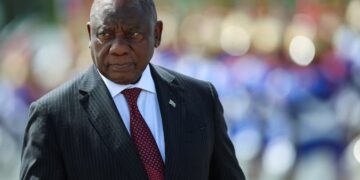
As President Cyril Ramaphosa looks ahead to the November G20 leaders’ summit, he faces the dual challenge of consolidating the gains of this ministerial meeting while preparing to hand over the presidency to the United States. The significance of South Africa’s leadership lies not only in its capacity to manage global economic discourse but also in the example it sets for developing economies seeking a greater voice in international forums.
While South Africa’s role as host may indeed be viewed as an honour, it also carries the burden of managing conflicting global interests in an increasingly volatile international system. The real test will be whether the current spirit of consensus can translate into substantive policy action at the forthcoming summit.
For further details on South Africa’s G20 presidency, please visit the official G20 South Africa page.