

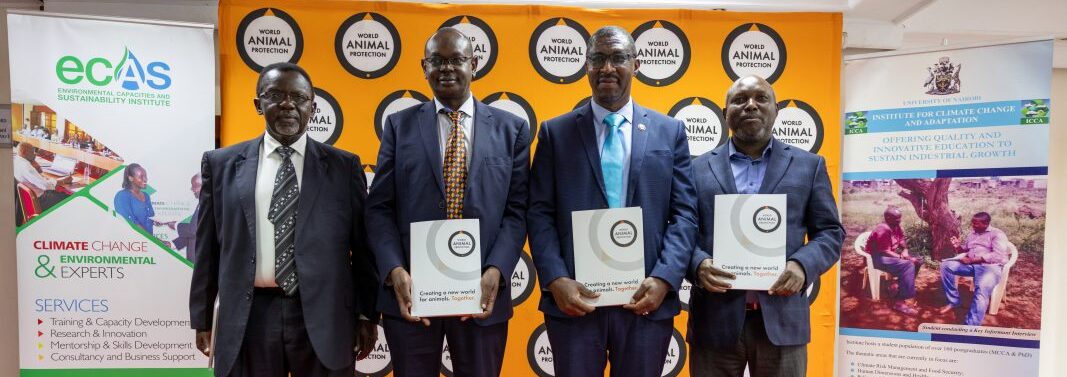
Millions of African smallholder farmers must be at the forefront of efforts to transition to nature-positive, sustainable, and climate-resilient food production systems, campaigners stated on Wednesday at the Africa Protein Summit held in Nairobi.
The third edition of the summit, organised by World Animal Protection (WAP), an international animal welfare charity, highlighted the crucial role smallholder farmers play in achieving food security and ecological sustainability on the continent.
Tennyson Williams, WAP’s regional director for Africa, emphasised that smallholder farmers, responsible for more than 70 percent of staple food production, should be integral to policy-making aimed at promoting agricultural practices that conserve habitats and reduce greenhouse gas emissions.



“We need to empower smallholder farmers through capacity building, sustained funding, and awareness creation to facilitate food systems transformation, achieve climate resilience, and improve rural livelihoods,” Williams stated.
Held under the theme “Towards Equitable, Humane, and Sustainable Systems: Creating Pathways Away from Industrial Animal Agriculture to Agro-Ecologically Produced Sustainable Foods,” the summit saw participation from senior policymakers, civil society representatives, academia, and industry leaders. They collectively called for a smallholder-led overhaul of food systems to address Africa’s hunger crisis.

Million Belay, the general coordinator of the Alliance for Food Sovereignty in Africa, based in Kampala, Uganda, asserted that smallholder farmers and livestock keepers are pivotal in swiftly adopting culturally and environmentally friendly food production systems. Belay urged governments and donors to support these farmers in implementing agroecological practices that ensure food security, habitat regeneration, and reduced emissions of greenhouse gases.
“As custodians of a vast wealth of genetic diversity, African smallholder farmers and herders are in a prime position to promote the cultivation of traditional foods that are nutritious and resistant to pests, diseases, and climatic stresses,” Belay remarked.
Philip Kilonzo, head of Policy, Advocacy, and Communications at the Pan African Climate Justice Alliance, based in Nairobi, highlighted the continent’s potential to overcome hunger and malnutrition and build resilience to climate emergencies through scaling up smallholder farmers’ innovations.
The summit underscored the need for concerted efforts to empower smallholder farmers, ensuring they are well-equipped to lead Africa towards a sustainable and food-secure future.


