Monday, September 14, 2026
  • Login
The Southern African Times
  • Home
  • Southern Africa
  • Business
    • African Start ups
    • African Continental Free Trade Area
  • Technology
    • Lifestyle
      • Health
      • Culture
      • Food and Drink
      • Entertainment
  • Opinion
  • Sports
  • SAT Jobs
    • Events
  • About Us
    • Advertise with Us
    • Contact Us
No Result
View All Result
  • Home
  • Southern Africa
  • Business
    • African Start ups
    • African Continental Free Trade Area
  • Technology
    • Lifestyle
      • Health
      • Culture
      • Food and Drink
      • Entertainment
  • Opinion
  • Sports
  • SAT Jobs
    • Events
  • About Us
    • Advertise with Us
    • Contact Us
No Result
View All Result
The Southern African Times
No Result
View All Result
Home Middle East

Saudi Oil Tankers Reroute After Houthi Warning Raises Fresh Concerns Over Red Sea Shipping

by SAT Reporter
July 22, 2026
in Middle East
0
Saudi Oil Tankers Reroute After Houthi Warning Raises Fresh Concerns Over Red Sea Shipping

Three oil tankers carrying Saudi Arabian crude destined for China and India have altered their routes in the Red Sea following warnings issued by Yemen’s Houthi movement, highlighting growing uncertainty over one of the world’s most strategically significant maritime corridors.

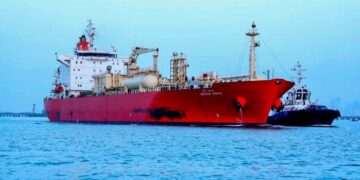
Shipping data reviewed by The Southern African Times indicates that the Very Large Crude Carrier Xin Long Yang together with the tankers Rodos and Amazon changed course on Tuesday, steering towards the Suez Canal instead of continuing south through the Bab el Mandeb Strait after completing or preparing to complete cargo operations at Saudi Arabia’s Red Sea export terminal in Yanbu.

The developments come after the Houthi movement announced what it described as a naval blockade targeting Saudi Arabia. In communications reportedly sent to shipping companies, the group warned vessels against loading or discharging cargo at Saudi ports, stating that ships engaged in such activities could become potential targets.


ADVERTISEMENT

The warning introduces a fresh layer of uncertainty to global energy supply chains at a time when the Strait of Hormuz remains heavily disrupted by the ongoing regional conflict involving Iran, Israel and the United States. With access through the Gulf constrained, Saudi Arabia’s Red Sea infrastructure has become increasingly important for maintaining crude exports to international markets.

According to maritime security specialists, risk assessments for vessels operating from Saudi Arabian ports are being reassessed, with war risk insurance premiums increasing as shipping companies evaluate the evolving security environment. British maritime security firm Ambrey advised operators to reconsider transits through the southern Red Sea while implementing enhanced security measures where voyages continue.

The Xin Long Yang had loaded approximately two million barrels of Saudi crude and had initially been bound for China before reversing course. The Rodos, carrying around 700,000 barrels for India, also altered its route, while the Amazon, another tanker loading Saudi crude for India, similarly redirected towards the Suez Canal. Public vessel tracking data showed that the ships later switched off their Automatic Identification System transponders, a practice that has become more common in conflict affected maritime zones for security reasons.

Another tanker, New Prime, which had been scheduled to arrive at Yanbu later this week to load crude, also reportedly turned back before entering the Red Sea.

Despite these route changes, shipping industry sources indicated that operations at Yanbu have continued. Tankers already within the Red Sea or arriving through the Suez Canal have continued approaching the Saudi export terminal, suggesting that loading activities have not been suspended entirely.

The potential implications extend well beyond the Middle East. The Bab el Mandeb Strait links the Red Sea to the Gulf of Aden and the wider Indian Ocean, serving as one of the world’s most important maritime gateways. A significant share of trade between Europe, Asia and Africa passes through this corridor, including energy exports, manufactured goods, agricultural commodities and container traffic.

For African economies, sustained disruption along the Red Sea carries implications that extend beyond oil prices. Countries bordering the eastern African coastline rely heavily on these shipping lanes for imports and exports, while ports across the continent remain integrated into global logistics networks that depend on predictable maritime access. Longer shipping routes could contribute to higher freight costs, increased insurance expenses and renewed inflationary pressures for import dependent economies.

Should vessels increasingly avoid the Bab el Mandeb, journeys from Saudi Arabia to Asian customers would become considerably longer. Ships travelling through the Suez Canal towards the Mediterranean would ultimately need to navigate around southern Africa before reaching Asian destinations, adding both time and operational costs. Fully laden Very Large Crude Carriers also face navigational limitations within the Suez Canal, often requiring partial unloading through Egypt’s SUMED pipeline system before continuing their voyages.

Industry analysts caution that while enforcing a complete naval blockade would present significant operational challenges, the risk of isolated attacks or heightened military activity may be sufficient to alter commercial shipping behaviour. Such adjustments could reshape global crude flows, with Saudi exports from Yanbu potentially being redirected more frequently towards European markets while Asian buyers seek alternative suppliers.

The evolving security landscape underscores the interconnected nature of global trade and Africa’s central position within international maritime commerce. As geopolitical tensions continue to influence shipping decisions, developments in the Red Sea are likely to remain closely watched by governments, energy markets and businesses whose supply chains depend on stable access through one of the world’s busiest sea lanes.

Tags: Africa tradeBab el MandebChinaCrude OilEnergy Securityglobal economyHouthisIndiamaritime securityoil marketsRed SeaSaudi ArabiaShippingStrait of HormuzSuez CanalYemen
Previous Post

Ghana and TGS Partner on Seismic Data Project to Advance Offshore Keta Basin Exploration

Next Post

EU Carbon Levy Proposal Sparks Airline Opposition Over Costs on Africa and Middle East Routes

SAT Reporter

Related Posts

Oil Tankers Resume Passage Through Hormuz Amid Fragile Truce
Middle East

Oil Tankers Resume Passage Through Hormuz Amid Fragile Truce

by SAT Reporter
April 18, 2026
US directive on Hormuz shipping raises global concern as diplomatic efforts stall
Middle East

US directive on Hormuz shipping raises global concern as diplomatic efforts stall

by SAT Reporter
April 12, 2026
Netanyahu approves talks with Lebanon as escalating strikes strain regional ceasefire
Middle East

Netanyahu approves talks with Lebanon as escalating strikes strain regional ceasefire

by SAT Reporter
April 10, 2026
Arab economies face up to $200 billion in losses from Iran conflict
Middle East

Arab economies face up to $200 billion in losses from Iran conflict

by SAT Reporter
April 4, 2026
Strike on Iran’s Mobarakeh Steel Raises Global Supply Concerns
Middle East

Strike on Iran’s Mobarakeh Steel Raises Global Supply Concerns

by SAT Reporter
March 29, 2026
Next Post
EU Carbon Levy Proposal Sparks Airline Opposition Over Costs on Africa and Middle East Routes

EU Carbon Levy Proposal Sparks Airline Opposition Over Costs on Africa and Middle East Routes

Browse by Category

  • Africa AI
  • African Continental Free Trade Area
  • African Debt
  • African Start ups
  • Agriculture
  • AI Africa
  • Algeria
  • All News
  • Analysis
  • Angola
  • Arts / Culture
  • Asia
  • Botswana
  • BOTSWANA
  • BREAKING NEWS
  • BRICS
  • Burkina Faso
  • Burundi
  • Business
  • Business
  • Business Wire
  • Cameroon
  • Central Africa
  • Chad
  • China
  • Climate Change
  • Climate Changev
  • Community
  • Congo Republic
  • Conservation
  • Côte d’Ivoire
  • COVID 19
  • CRYPTOCURRENCY
  • Culture
  • Democratic Republic of Congo
  • Diplomacy
  • Eastern Africa
  • Economic Development
  • Economy
  • Education
  • Egypt
  • Elections 2024
  • Energy
  • Entertainment
  • Environment
  • Eritrea
  • Ethiopia
  • Europe
  • Fashion
  • Feature
  • Finance
  • Financial Inclusion
  • Food
  • Food and Drink
  • Foods
  • GABON
  • Ghana
  • Global
  • Global Africa
  • Guinea
  • Health
  • Humanitarian Aid
  • Immigration
  • in Southern Africa
  • International news
  • International Relations
  • Investment
  • Ivory Coast
  • Just In
  • Kenya
  • Lesotho
  • Libya
  • Life Style
  • Lifestyle
  • Literature
  • Malawi
  • Malawi
  • Mali
  • Markets
  • Mauritius
  • Middle East
  • Mining in Africa
  • Morocco
  • Mozambique
  • Namibia
  • Niger
  • niger
  • Nigeria
  • North Africa
  • North-Eastern Africa
  • Obituaries
  • Obituary
  • Opinion
  • PARTNER CONTENT
  • Politics
  • Property
  • Racism
  • Rwanda
  • Rwanda
  • SADC
  • SAT Interviews
  • SAT Investigation
  • SAT Jobs
  • Saudi Arabia
  • Senegal
  • Seychelles
  • Somaliland
  • South Africa
  • South Sudan
  • Sports
  • Startup Africa
  • STOCK EXCHANGE
  • Sudan
  • Sustainability
  • Sustainablity
  • Tanzania
  • Technology
  • Telecommunications
  • The Editorial Board
  • The Power Of She
  • Togo
  • Trade
  • Travel
  • Travel
  • Tunisia
  • Uganda
  • Uncategorized
  • Wealth
  • West Africa
  • World
  • World
  • ZAMBIA
  • Zambia
  • ZIMBABWE
  • Zimbabwe

Browse by Tags

#NewsUpdate #SouthAfrica #SouthernAfricanTimes #TheSouthernAfricanTimes AfCFTA africa African Continental Free Trade Area African development African economies African economy African Union Agriculture Angola Botswana China Climate change critical minerals Cyril Ramaphosa Economic Development economic growth energy transition Ghana governance industrialisation Inflation Infrastructure Infrastructure Development International relations Investment Kenya Mozambique Namibia news Nigeria Regional Integration renewable energy Rwanda SADC South Africa Southern Africa Southern African Times sustainable development Tanzania Zambia Zimbabwe
ADVERTISEMENT

WHO WE ARE

The Southern African Times is a regional bloc digital newspaper that covers Southern African and world news. The paper also gives a nuanced analysis on news and covers a wide range of reporting which include sports, entertainment, foreign affairs, arts and culture.

Welcome Back!

Login to your account below

Forgotten Password?

Retrieve your password

Please enter your username or email address to reset your password.

Log In
  • Home
  • Southern Africa
  • Business
    • African Start ups
    • African Continental Free Trade Area
  • Technology
    • Lifestyle
      • Health
      • Culture
      • Food and Drink
      • Entertainment
  • Opinion
  • Sports
  • SAT Jobs
    • Events
  • About Us
    • Advertise with Us
    • Contact Us