A convoy of oil tankers has begun moving through the Strait of Hormuz for the first time since the outbreak of war involving United States, Israel and Iran, signalling a tentative easing of tensions in one of the world’s most critical energy corridors.
Shipping data indicates that several liquefied petroleum gas carriers, alongside oil product and chemical tankers, crossed through Iranian waters near Larak Island on Saturday, with additional vessels expected to follow. The movement marks the first significant commercial transit since the waterway was effectively disrupted by seven weeks of conflict.
The strait, which ordinarily carries around a fifth of global oil trade, had been largely inactive during the hostilities, contributing to volatility in energy markets and heightened concerns over global supply chains. Its reopening follows a ceasefire arrangement linked to broader regional negotiations involving Israel and Lebanon.



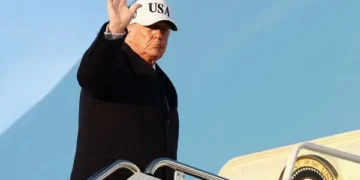
Donald Trump, speaking aboard Air Force One, alluded to “positive developments” concerning Iran, though he declined to provide specifics. He suggested that negotiations were ongoing and expressed cautious optimism, while reiterating that preventing Iran from acquiring nuclear weapons remained a central priority for Washington.

Despite the resumed maritime activity, uncertainty persists. The United States has indicated that the current ceasefire may not be extended without a more comprehensive agreement, while maintaining elements of its blockade on Iranian ports. This has raised questions about the durability of the truce and the sustainability of resumed shipping operations.
Tehran, for its part, has adopted a guarded stance. While authorities confirmed that commercial vessels would be permitted to pass during the limited truce period, officials warned that access to the strait could again be restricted if pressure from Washington continues. New conditions have also been introduced, requiring vessels to coordinate passage with Iranian forces, a departure from pre war norms.
Diplomatic efforts remain fluid. Talks between Iranian and American representatives are expected, though logistical challenges have cast doubt on their immediacy. Asim Munir has been engaged in mediation efforts, with discussions reportedly exploring the possibility of an initial memorandum of understanding, potentially followed by a broader settlement within weeks.
The resumption of tanker traffic offers a measure of relief to global markets, yet the situation remains finely balanced. With competing strategic interests, ongoing military pressure and unresolved political demands, the Strait of Hormuz continues to sit at the centre of a fragile and evolving geopolitical landscape.