Libya’s Saif al Islam Gaddafi the most prominent son of former leader Muammar Gaddafi has reportedly died at the age of 53 after what his office described as a direct confrontation with four unidentified gunmen who entered his home. The statement announcing his death gave no further detail and Libyan authorities had not independently confirmed the circumstances at the time of writing. The killing if verified would be the latest in a long sequence of violent and often opaque events that have shaped Libya’s politics since 2011. It would also close the life of a figure whose actions and image have generated sharply different reactions inside Libya across Africa and in Western capitals.
For many years Saif al Islam was widely regarded as his father’s favoured successor and as one of the most influential personalities in Libya. Although he never formally held a high government post he exercised considerable informal authority particularly on strategic policy questions and international engagement. Trained as an architect and later educated at the London School of Economics he developed strong English language skills and cultivated relationships in political and business circles in Europe and North America. In some Western narratives he was frequently portrayed as a modernising influence. He was seen by certain external observers as someone who might gradually guide Libya towards market reforms and a more structured political order.
Within Libya and across the African continent perceptions were more layered. Some Libyans saw him as a bridge between an older revolutionary generation and a younger more globally connected society. Others viewed him as integral to a centralised system that concentrated power and controlled political space. Many African commentators placed him within a Libyan leadership that for decades had played an assertive continental role including investment in infrastructure support for liberation movements and efforts to shape African Union debates. In that sense he was part of a state that combined external activism with internal limits on pluralism.
Saif al Islam became closely associated with a series of high profile diplomatic engagements during the 2000s. He played a prominent role in negotiations that led Libya to abandon programmes linked to weapons of mass destruction. Those talks paved the way for rapprochement with the United States and several European governments after years of sanctions and isolation. He was also central to discussions on compensation for the families of those killed in the 1988 bombing of Pan Am Flight 103 over Lockerbie in Scotland. The Libyan state eventually paid substantial sums to affected families. These measures eased Libya’s pariah status opened avenues for trade and signalled a shift in international posture even as many Libyans questioned how far such deals advanced their own rights and well being.

In public interventions during this period Saif al Islam sometimes adopted the language of legal reform. He spoke of the need for a written constitution and greater respect for civil and political rights. In external commentary these positions were often interpreted as evidence of an internal reform agenda centred on him. Yet inside the country the boundaries of that project became apparent. Proposals for deeper institutional change repeatedly stalled. Organised opposition activity remained tightly constrained. Independent media and party politics did not truly emerge. For many Libyans the contrast between his reformist vocabulary and the persistence of a highly controlled political environment raised questions about intent and capacity.
The decisive break in his trajectory came in 2011 when protests against his father’s rule evolved into a national uprising and then a full scale armed conflict. At that moment Saif al Islam sided unequivocally with the existing leadership. In speeches broadcast on Libyan television and reported internationally he denounced those he called rebels and warned that rivers of blood would flow. He stated that the authorities would fight to the last man and woman and bullet. He also predicted that if the government fell Libya could face decades of fragmentation as multiple actors struggled for dominance. Those warnings were heard by supporters as a stark description of potential chaos. They were heard by many opponents as part of an effort to justify a harsh response to dissent.
The conduct of security forces during the early stages of the conflict and the rhetoric surrounding it transformed his image. Among Libyans who had once followed his talk of reform his role in defending the status quo during the uprising became central to how they judged him. Internationally the International Criminal Court in The Hague issued an arrest warrant for him on charges of crimes against humanity. The allegations related to persecution and acts of violence against civilians during the first months of the conflict. The Libyan authorities and the ICC later entered into a protracted dispute about where he should be tried and under what conditions. That disagreement reflected wider African debates over the balance between national sovereignty and international justice and echoed concerns often raised by the African Union about the workings of global legal institutions.
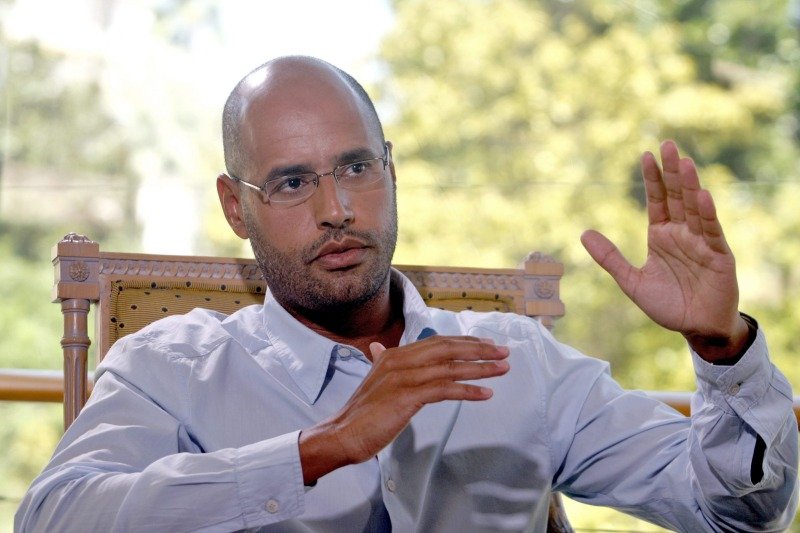
After the collapse of his father’s government and the killing of Muammar Gaddafi in October 2011 Saif al Islam was captured by an armed group in the western mountains. For years his situation remained uncertain. Access by international organisations was limited. Different Libyan institutions offered divergent accounts of his status. In 2015 a court in Tripoli sentenced him to death in a mass trial that human rights groups criticised for serious due process shortcomings. Later reports indicated that he had been released under an amnesty law though accounts of the timing and legal basis varied. During these years of detention and partial secrecy he largely disappeared from the public arena and from mainstream political debate.
His return to public view came in 2021 when he sought to register as a candidate for a planned presidential election. That vote was intended to reunify Libya’s fragmented institutions after years of parallel administrations and competing military coalitions. The electoral process soon became entangled in legal and political disputes. One of the most contested questions concerned whether individuals facing domestic sentences or international warrants could stand for office. Saif al Islam’s application crystallised these tensions. Some communities including segments of tribal networks and citizens who associated the pre 2011 period with a degree of stability responded positively to his bid. They expressed hopes that a familiar figure might restore order and assert a strong central authority. Other Libyans including families of those killed or displaced in the conflict activists who had confronted the old system and several political rivals opposed his candidacy. For them unresolved questions of accountability and justice remained paramount.
The broader electoral process stalled. The presidential and parliamentary elections were postponed amid disputes over rules candidates and security arrangements. Libya today remains politically divided with rival institutions and armed formations exerting influence in different regions. In that context the reported killing of Saif al Islam does not resolve the underlying issues. Rather it highlights the enduring fragility of the security environment and the difficulty of building a system where political competition is managed through institutions rather than through violence.
From an African perspective his life story intersects with wider continental themes. Libya under Muammar and Saif al Islam Gaddafi channelled significant resources into African infrastructure projects and financial institutions and played a vocal role in debates about African unity. At the same time the governance model within Libya restricted internal political competition. This juxtaposition produced admiration in some African circles for Libya’s assertive stance on continental matters and criticism in others for the lack of inclusive politics at home. Saif al Islam personified that tension. He engaged with Western elites and negotiated high stakes deals over disarmament and compensation yet he remained anchored in a system built around family authority and revolutionary legitimacy rather than transparent institutions.
His story also sheds light on the profound impact of external intervention in African conflicts. The 2011 NATO led campaign launched after the uprising with United Nations authorisation reshaped Libya’s trajectory. It contributed to the fall of the old regime but also preceded a prolonged period of insecurity the proliferation of armed groups and the spread of weapons across borders into the Sahel and beyond. Many African governments and regional bodies such as the African Union have since reflected on the Libyan case when debating future responses to crises. They have raised concerns about how decisions taken outside the continent can interact with domestic dynamics to produce outcomes that are unpredictable and often painful for local populations.
How Saif al Islam will be remembered is likely to differ across Libyan families regions and generations and across African and international audiences. Some will recall his role in negotiating Libya’s partial reintegration into the international system and his early references to constitutionalism and rights. Others will focus on his involvement in the government’s reaction to the 2011 uprising and on the suffering associated with that period. For many Libyans who have lived through cycles of conflict displacement and economic difficulty he may appear less as an isolated figure and more as one element in a broader structure that has yet to deliver stable inclusive governance.
Humanising his story does not mean ignoring the allegations that surrounded him or the pain endured by many Libyans. It involves recognising that he inhabited conflicting roles. He was a son operating in the shadow of a powerful father a mediator between domestic elites and foreign governments a participant in efforts to end Libya’s pariah status and a defender of a system that responded forcefully to dissent. He spent years in captivity facing the possibility of execution. He later attempted to re enter politics in a landscape marked by fragmentation and distrust. Each of these stages shaped not only his personal experience but also how different communities projected their hopes and grievances onto him.
In the global conversation about Libya it remains important to place Libyan and African voices at the centre. Analyses that focus primarily on strategic competition over energy migration or security risk obscuring the lived realities of Libyans themselves. The decisions of foreign states including choices about intervention arms transfers and diplomatic recognition have had deep consequences. At the same time the actions of Libyan political and military actors including Saif al Islam have played a decisive role in determining the country’s path. A balanced understanding acknowledges both external influences and domestic agency.
The reported killing of Saif al Islam Gaddafi therefore raises questions that go beyond the fate of one individual. It draws attention to the need for credible security institutions unified legal processes and inclusive dialogue that can address grievances accumulated over decades. It also underlines the challenges that societies across Africa face when attempting to move from personalised rule and conflict towards accountable institutions and shared civic space. As Libya continues its search for a political settlement that reflects its diverse regions communities and histories the story of Saif al Islam will remain part of a larger conversation about memory justice and the kind of future Libyans wish to build.