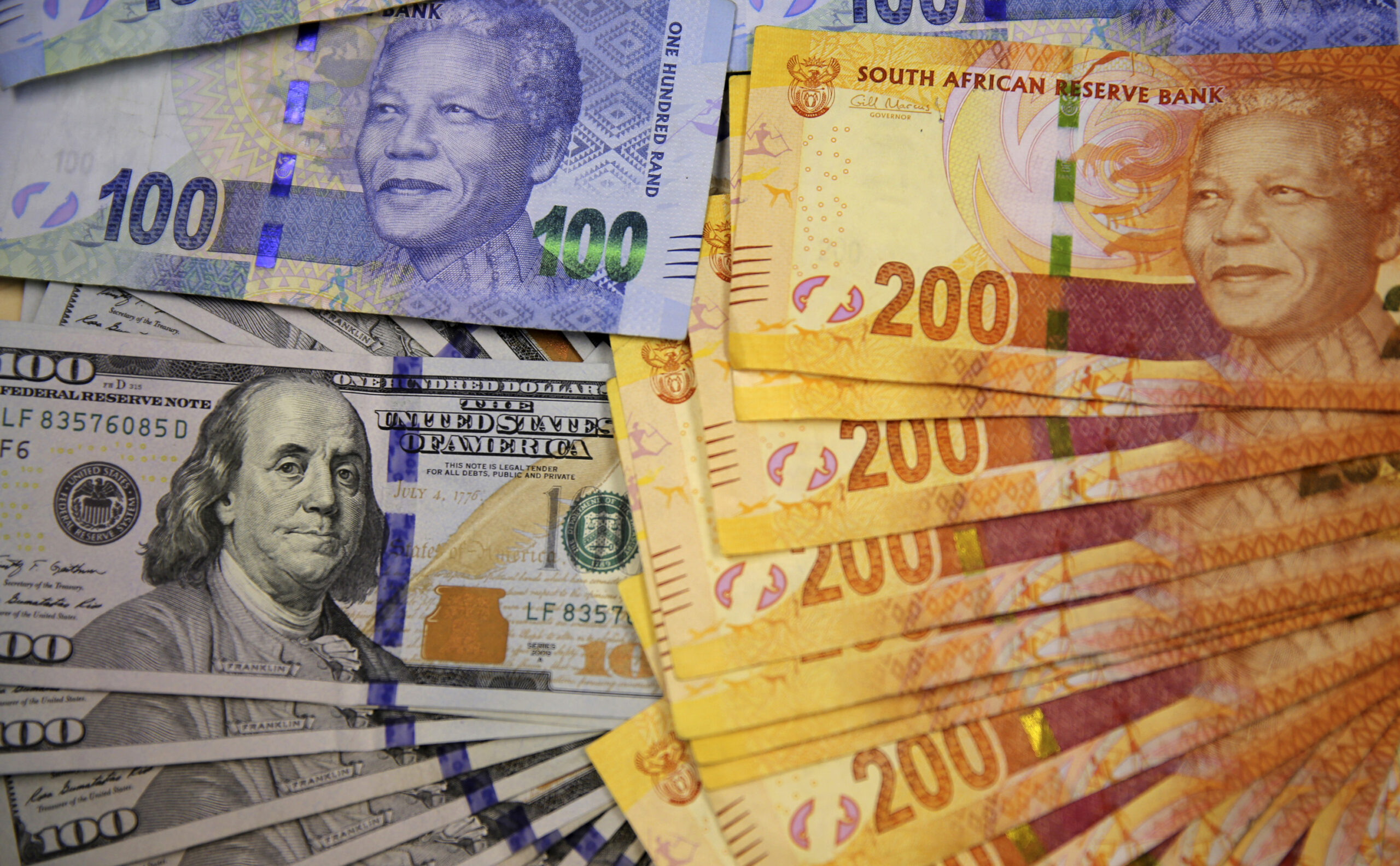
The South African rand appreciated modestly in early trade on Tuesday, supported by a weaker United States dollar as investors adjusted their expectations for U.S. monetary policy following dovish comments from a senior Federal Reserve official.
At 0604 GMT, the rand traded at 16.3350 to the dollar, marking an approximate 0.2 per cent gain from Monday’s close. The improvement in the local currency came as the dollar softened globally, reflecting increased market expectations of forthcoming interest rate reductions in the United States.
Minneapolis Federal Reserve President Neel Kashkari stated on Monday that inflation in the U.S. was gradually easing, though he cautioned that the unemployment rate might rise, potentially prompting the Federal Reserve to consider policy adjustments. His remarks were interpreted by financial markets as signalling a more accommodative stance, strengthening the case for at least two potential rate cuts this year.



Market participants are now closely watching the U.S. non-farm payroll report due later this week, which is expected to provide further clarity on the Federal Reserve’s direction. Analysts have noted that the labour market’s resilience will likely determine the pace and extent of monetary easing.
Adam Phillips, a treasury specialist at Umkhulu Treasury, remarked in a research note that Kashkari’s tone was widely perceived as dovish by currency traders. He added that the release of services and composite Purchasing Managers’ Index (PMI) data across major global economies could offer a more nuanced indication of policy momentum and inflation expectations.
In the South African context, attention now turns to the S&P Global December whole-economy PMI, scheduled for release at 0715 GMT. The index serves as a key indicator of domestic business conditions, reflecting activity across manufacturing and services sectors. Economists expect the reading to shed light on whether the country’s private sector is gaining momentum amid lingering structural and energy-related challenges.
Meanwhile, South Africa’s benchmark 2035 government bond strengthened slightly in early trading, with the yield easing by 1.5 basis points to 8.19 per cent. The movement reflects steady investor confidence in local debt markets, despite global monetary uncertainty.
The rand’s performance this week underscores the interplay between global monetary policy shifts and domestic economic sentiment. While the South African currency remains sensitive to external developments, it also mirrors broader continental trends in which African markets are becoming increasingly attuned to international liquidity cycles and investor risk appetite.

This dynamic reinforces a more interconnected African economic narrative, one that recognises regional resilience and the continent’s evolving role in global financial dialogues. Rather than being viewed solely through a peripheral lens, African markets are progressively asserting their agency within the broader economic landscape.
As traders await further data, both from abroad and within South Africa, the prevailing mood remains cautiously optimistic. The rand’s movement, while modest, reflects a balance between domestic fundamentals and global macroeconomic expectations that continue to shape the trajectory of emerging market currencies.