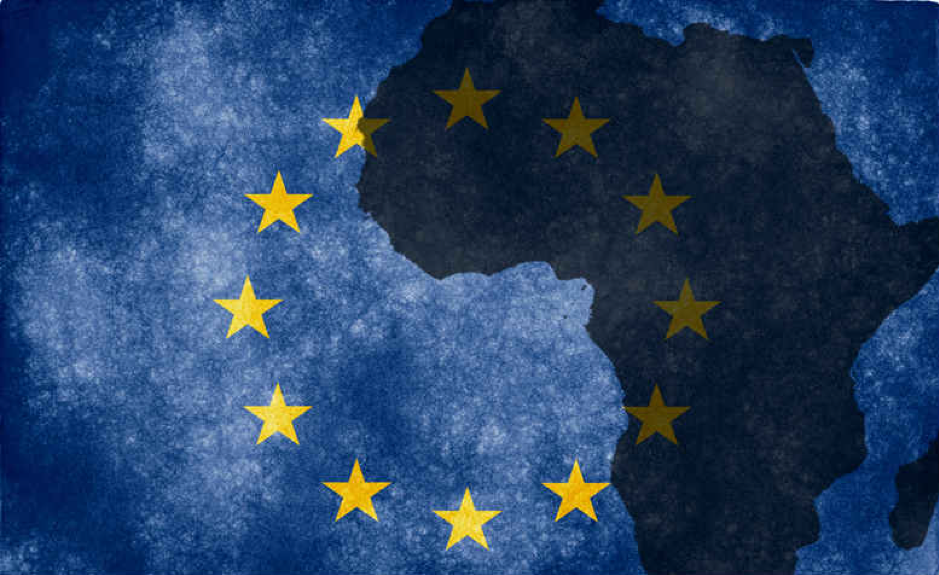
In 2021, we want to give fresh impetus to the partnership between the European Union and Africa. However, this partnership should not be limited to economic and political issues – culture and cultural exchanges should become a key part of it.
Culture is so present in our lives that it often becomes invisible. Whether in the form of music, dance, cinema, television, plastic arts, literature, theatre or gastronomy, culture feeds our imaginations and punctuates our daily lives.
It is also at the heart of our identity. By forging a common aesthetic, common references and narratives, together living culture and our cultural heritage – material and immaterial – define our place in, and our relationship with, the world.



Culture as an important economic resource
Culture is, in short, an important economic resource. Design, cinema and the creative industries are all sectors that generate employment and income. Archaeological heritage and museums attract tourism, which in turn encourages growth in other areas of activity, such as local production of artisan souvenirs, the hospitality industry and the tour guide sector…
Supporting the cultural sector has become all the more necessary now that these industries have been badly hit by the COVID-19 crisis, both in Africa and in Europe.
What’s more, a distinctive feature of cultures is that they themselves are enriched by mixing with other cultures. In this respect, the contribution made by Africa and its diaspora to global culture is considerable. Without the legacy of African and Afro-descendant music, there would be no pop, no RnB, no jazz, no blues, no rock, no funk, no disco, no salsa, no reggae and no rap. Similar observations could be made with respect to the whole spectrum of the arts.
In addition to these benefits it brings, I also share the belief that culture should be an integral part of the response to foreign policy challenges, whether they are health crises, conflicts or threats related to climate change.
Culture as a response to foreign policy challenges
It is precisely because it touches people’s hearts, resonating with what is most unique in each of us and at the same time common to humankind, that culture can help to find solutions where traditional policy tools fall short. Culture allows us to convey certain values – such as respect for human rights and the rule of law – to trigger reflexes of humanity, solidarity and assistance to others, and to encourage protection of those in danger.
Protecting cultural heritage can also contribute to (re)establishing what it is to be ‘a citizen’ and ‘a nation’. To cite just a few examples, the European Union is working with UNESCO in Mali to safeguard the mausolea and manuscripts of the Mali Empire that are under threat from jihadists. In Niger and Burkina Faso – because strengthening education and respect for other cultures is an essential part of the response to terrorism – the EU is supporting numerous projects that aim to strengthen civic values and solidarity by involving young people from the two countries in artistic co-productions. The European Union is also fighting the trafficking in works of art perpetrated by international terrorist organisations which finance their attacks by plundering museums and archaeological sites, thus depriving populations of their collective memory and their cultural treasures.
The Pan-African Film and Television Festival of Ouagadougou (Fespaco) is another example of European support being provided to cultural industries in Africa. Over the last 50 years, Fespaco has established itself as one of the main events for showcasing African cinema on the world stage. Through its support for the Ethical Fashion Initiative, the EU also helps to train and equip over 10 000 artisans who then supply large international fashion houses using their own traditional designs as a basis for their work. Other programmes involve a wide range of actions, such as providing support for production and distribution, organising training, ensuring access to microcredit and promoting cultural entrepreneurship.
The Youth Hub and the MAISHA project

On a smaller scale, the Youth Hub, which was set up by the African Union and the European Union, has in recent years allowed young people from the two continents to meet and to formulate concrete proposals for strengthening the partnership between Europe and Africa. In the same vein, a unique European and African music co-creation – the MAISHA project – was launched two years ago. It brought together 12 musicians from the two continents, and led to the creation of original pieces of music that were performed during a public concert held in Addis Ababa in 2019 to mark Europe Day and the founding of the African Union, and again virtually in 2020.
Now, at the start of 2021, it is my wish that we will succeed, together with our Member States, in establishing real European Houses of Culture, i.e. spaces in partner countries that, in the same way as national cultural institutes, represent both European cultures and those of the host countries and encourage dialogue between the two. This process has already been launched but I would like it to be strengthened.
In the same way, I would like to see an expansion of exchange programmes for individuals. Over 26 000 exchanges have taken place between Europe and Africa since 2014 through the Erasmus+ programme. We want to go further and to allow at least 105 000 African students to benefit from a mobility programme by 2027.
These examples show that culture can and should play a significant role in the partnership between Europe and Africa – a partnership we want to redefine. In this regard, the theme chosen by the African Union for the year 2021‘Arts, Culture and Heritage: Levers for Building the Africa We Want’ holds much promise for the future.

By Josep Borrell, High Representative of the European Union for Foreign Affairs and Security Policy/Vice-President of the European Commission