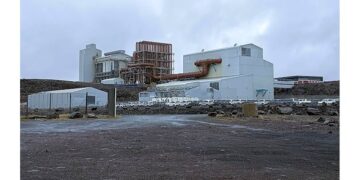
The Federal Government of Nigeria has formally endorsed the establishment of what is set to become one of Africa’s largest processing plants for rare earth elements and critical minerals. Located in the central state of Nasarawa, the project is projected to attract over USD 400 million in direct investment and generate more than 10,000 employment opportunities across the country, according to an official statement issued by the Ministry of Solid Minerals Development.
The project is spearheaded by Hasetins Commodities Limited, a Nigerian private-sector company focused on the extraction and processing of critical metals, including rare earths and platinum group metals. These materials are increasingly central to high-technology industries and advanced defence systems, positioning the initiative as strategically vital both economically and geopolitically.
Speaking on the development, the Minister of Solid Minerals Development, Dr Dele Alake, described the plant as a pivotal step in realising the Tinubu administration’s in-country value addition policy. This approach places priority on local processing and beneficiation of Nigeria’s mineral resources, reducing reliance on raw exports and enhancing downstream capabilities.



“The backing of this project signals a significant milestone in our broader efforts to revitalise and reposition Nigeria’s mining sector as a primary driver of economic growth,” Dr Alake stated. “By fostering investor confidence, encouraging skills transfer, and ensuring local beneficiation, we are laying the foundation for a more resilient and value-driven extractive industry.”
Preparatory work is already underway for the groundbreaking of the expanded facility. Hasetins Commodities Limited currently maintains an installed processing capacity of approximately 6,000 metric tonnes. The company plans to increase this capacity by an additional 12,000 metric tonnes, more than tripling its total throughput.
According to a company release, the plant’s operational design incorporates early-stage beneficiation—a process that allows for the preliminary separation and refinement of ores at the point of extraction. This strategy is expected to generate immediate financial returns for artisanal and small-scale miners (ASM), who are often excluded from the more capital-intensive phases of the mining value chain.
The firm also highlighted its commitment to inclusive development, noting the implementation of comprehensive training programmes for local miners, distribution of personal protective equipment (PPE), and broader community engagement mechanisms. These initiatives are in alignment with sustainable mining principles and the United Nations’ Sustainable Development Goals (SDGs), particularly those related to decent work, economic growth, and responsible consumption and production.

This announcement comes at a time when Nigeria is actively seeking to diversify its economy beyond hydrocarbons, with the mining sector identified as a key growth enabler under the government’s Solid Minerals Roadmap. The rare earth market, globally dominated by a few producers, offers a strategic window for Nigeria to carve out a meaningful position in the international supply chain—particularly as demand surges for metals used in green technologies, semiconductors, and defence infrastructure.
Given Nigeria’s vast untapped mineral potential, the establishment of the Nasarawa facility is poised to serve not only national economic objectives but also broader regional ambitions to enhance Africa’s position in global critical minerals production.
For further insights into Nigeria’s mining policy and developments, readers may refer to the Ministry of Solid Minerals Development or follow updates from Hasetins Commodities Limited.