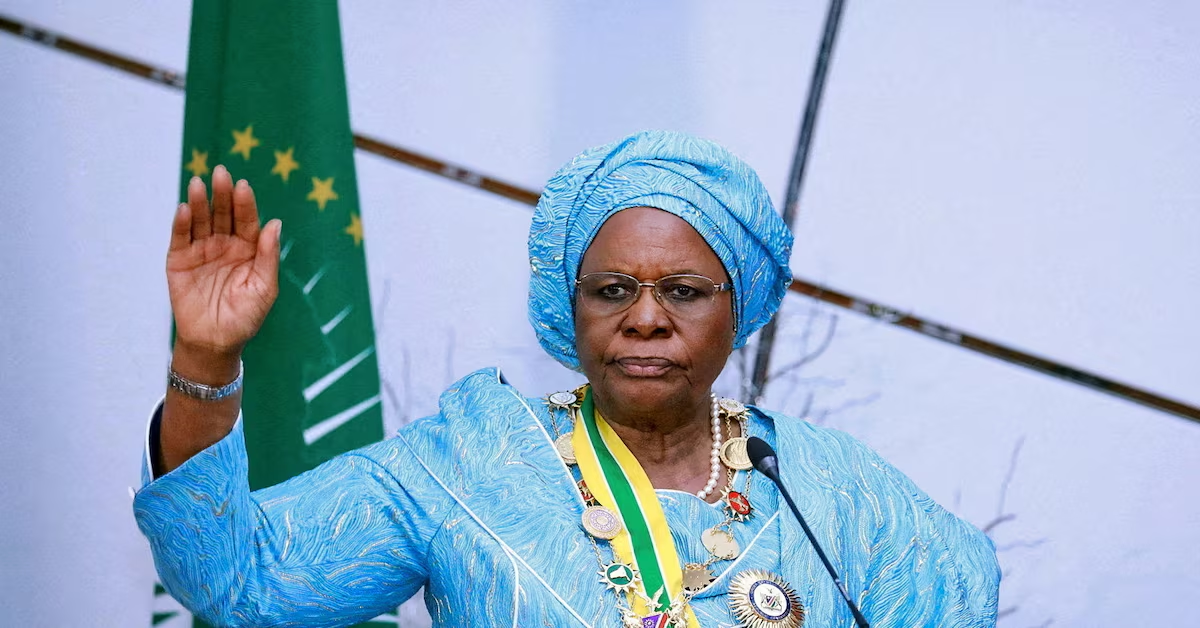
Namibia’s newly inaugurated president, Netumbo Nandi-Ndaitwah, has announced a significantly restructured cabinet, appointing Ericah Shafudah as the Minister of Finance. This move aligns with her broader agenda to streamline government operations, eliminate redundancies, and enhance fiscal efficiency.
Nandi-Ndaitwah, who assumed office following her SWAPO party’s victory in the November elections, has reduced the cabinet size from 21 ministers and 21 deputies to 14 ministers and seven deputies. This restructuring, she explained in a televised address, is intended to optimise governance, curb excessive public expenditure, and ensure seamless execution of national development programmes.
Ericah Shafudah, the newly appointed finance minister, brings extensive experience in Namibia’s fiscal management. Having served in the Ministry of Finance for over two decades, her most recent role before departing in 2021 was as the Executive Director of Finance. Following her resignation, she joined the World Food Programme (WFP) as Deputy Country Director, where she played a critical role in managing financial operations for humanitarian initiatives. Her return to government signals a strategic emphasis on fiscal prudence and economic stability.



In addition to Shafudah, President Nandi-Ndaitwah has appointed Lucia Witbooi as Vice President, Natangwe Ithete as Minister of Mines and Energy, and Selma Ashipala-Musavyi as Minister of Foreign Affairs and Trade. These selections reflect a commitment to experienced leadership in key economic and diplomatic sectors.
A notable shift in administrative oversight is the transfer of the oil and gas industry to the President’s Office. This decision underscores the strategic importance of Namibia’s burgeoning energy sector, particularly as the nation seeks to leverage its natural resources for long-term economic growth.
During her inauguration, the 72-year-old head of state reaffirmed her commitment to diversifying Namibia’s economy, which has traditionally been resource-driven. She emphasised the need to boost investment in agriculture, a sector that has the potential to create employment and enhance food security. This initiative is particularly crucial given Namibia’s persistently high unemployment rate, which has been a key economic challenge.
The reduction of government ministries is expected to contribute to cost savings and greater administrative efficiency. This reform aligns with broader fiscal policies aimed at maintaining sustainable government expenditure, particularly as Namibia navigates the global economic landscape amid fluctuating commodity prices.

Ericah Shafudah’s appointment signals a prioritisation of financial discipline and strategic economic planning. With her expertise, the Ministry of Finance is poised to focus on prudent fiscal management, revenue enhancement, and investment facilitation. The integration of resource governance under the President’s Office further suggests a hands-on approach to managing Namibia’s emerging oil and gas industry, ensuring that revenues are optimally channelled into national development.

As Namibia embarks on this new chapter under President Nandi-Ndaitwah’s leadership, the focus on economic diversification, fiscal responsibility, and governance efficiency will be closely observed by both domestic stakeholders and international investors.