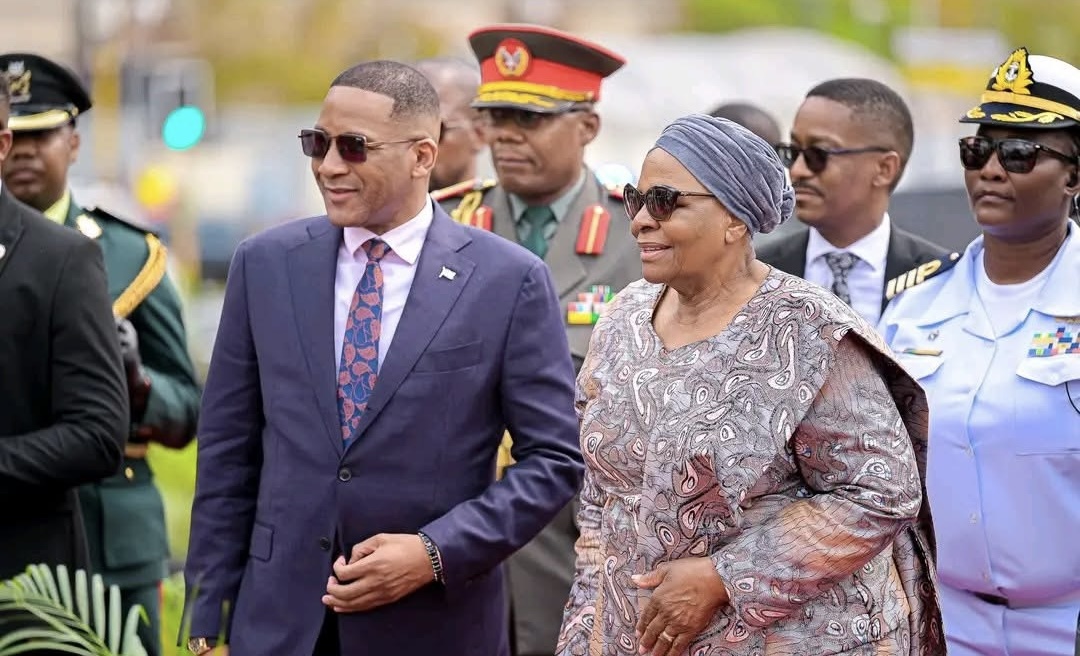
Namibia and Botswana have reaffirmed their commitment to deepening bilateral cooperation in trade, infrastructure development and natural resource management, in a move that reflects broader regional priorities around integration and economic resilience within Southern Africa.
During a working visit to Windhoek on 20 March 2026, Namibia’s President Netumbo Nandi Ndaitwah hosted Botswana’s President Duma Gideon Boko for consultations focused on reviewing existing agreements and identifying areas for expanded collaboration. According to an official statement from the Namibian Presidency, both leaders emphasised the importance of sustained engagement to ensure that prior commitments translate into tangible outcomes for their respective populations.
The discussions highlighted infrastructure as a central pillar of cooperation, particularly in relation to strategic transport corridors that connect landlocked and coastal economies. Projects such as the proposed Trans Kalahari Railway, which seeks to link Botswana’s resource rich interior with Namibia’s Atlantic coastline, were identified as critical to enhancing trade flows and reducing logistical constraints across the region. Existing scholarship has long underscored the significance of such corridors in facilitating intra African trade and reducing dependence on longer external routes, particularly for landlocked countries.



Namibia’s port of Walvis Bay featured prominently in the talks, reflecting its established role as a regional logistics hub. Positioned along key transport corridors that connect to Botswana, South Africa and beyond, Walvis Bay has been developed to serve as a gateway for goods moving into and out of Southern Africa. Studies on regional logistics systems have consistently noted that efficient port infrastructure, coupled with inland transport networks, can significantly lower trade costs and improve competitiveness for neighbouring economies.
The two leaders also addressed cooperation in natural resource management, an area of shared importance given the ecological interdependence of the region. Cross border coordination is particularly relevant in managing water resources, wildlife conservation and climate related challenges, which do not conform to national boundaries and require collective stewardship.

Their engagement comes at a time when global economic and geopolitical uncertainties continue to shape trade patterns and development strategies. Within this context, both Namibia and Botswana reiterated the value of strengthening regional partnerships as a means of enhancing economic sovereignty and resilience. This aligns with wider continental frameworks such as the African Continental Free Trade Area, which seeks to expand intra African trade and support industrial development through improved connectivity and policy coordination.
By reinforcing cooperation across multiple sectors, the two countries signal an approach that situates bilateral relations within a broader pan African vision of shared growth and mutual interdependence. Rather than viewing infrastructure and trade solely through external market lenses, the emphasis placed on regional linkages reflects an ongoing effort to consolidate African centred pathways to development that are responsive to local priorities and realities.