Financial and development specialists have argued that unlocking large scale private investment for development requires a structural shift in how opportunities are designed and presented to global markets.
Discussions at the European Investment Bank Global Forum in Luxembourg examined how the European Union’s Global Gateway programme could mobilise significantly greater private sector participation in industrial development and infrastructure across Africa and other emerging economies. The initiative forms part of the European Union’s strategy to mobilise up to €300 billion in global investment by 2027 while strengthening sustainable infrastructure, digital connectivity, climate and energy partnerships with partner regions including Africa.
According to the European Commission’s Global Gateway strategy, the programme seeks to combine public financing, development finance and private capital to support long term infrastructure and industrial projects in partner economies.



Participants at the forum suggested that the principal barrier to mobilising institutional capital is not a shortage of global liquidity but the design of investment opportunities themselves. Global institutional investors collectively manage assets estimated to exceed 300 trillion United States dollars through pension funds, sovereign wealth funds, insurance portfolios and other long term investment vehicles. However, such capital typically flows according to strict mandates that prioritise scale, governance standards, liquidity and transparent risk assessment.
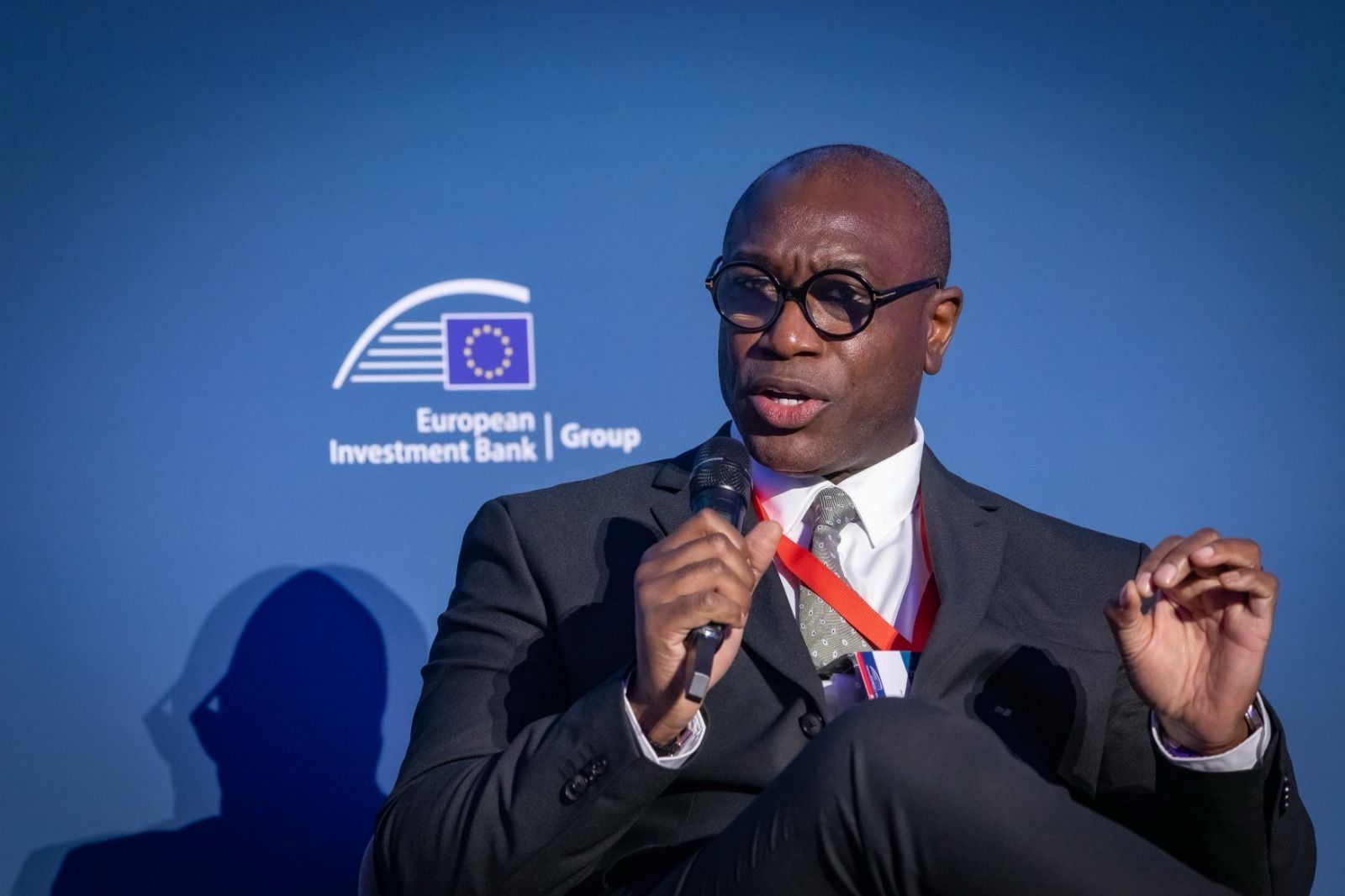
Hubert Danso, chairman of Africa investor, noted that development finance has historically focused on ensuring projects demonstrate developmental impact. In his assessment, attracting institutional capital requires an alternative approach in which development opportunities are structured so that they fit within existing investment asset classes and portfolio requirements.
Current development finance mobilisation ratios illustrate the scale of the challenge. Data from the Organisation for Economic Co operation and Development indicates that development finance institutions mobilise between 0.20 and 0.38 dollars of private capital for every development dollar invested in Africa. This remains far below the long discussed ambition of mobilising ten dollars of private investment for each dollar of public development finance.
At the same time, European financial instruments have demonstrated that higher leverage can be achieved under certain conditions. António Costa, president of the European Council, pointed to examples where European investment programmes have mobilised as much as fifteen euros of total investment for every euro of public funding through blended finance structures that combine public guarantees, concessional finance and private capital.
Speakers at the forum described the disconnect between available capital and investable opportunities as an investability gap. Closing this gap is increasingly viewed as central to strengthening economic cooperation between African and European economies while supporting industrial development and supply chain diversification.
The issue also reflects broader structural challenges in global finance. Estimates from development finance institutions suggest that developing countries collectively incur more than 15.6 billion dollars each year in additional financing costs due to higher risk premiums and structural barriers within global capital markets.
Some studies further indicate that institutional investors may have missed more than six trillion dollars in potential returns over the past two decades because infrastructure and development opportunities in emerging markets were not structured in ways that aligned with institutional investment frameworks.
Historically, new investment ecosystems have often emerged when institutional investors help shape asset classes themselves. Venture capital in the United States expanded significantly following early participation from large endowments such as Yale University. Infrastructure investment funds similarly grew through participation from major pension funds including the Canada Pension Plan Investment Board. Meanwhile sovereign wealth funds such as Norway’s Government Pension Fund Global have played a prominent role in shaping global responsible investment standards.
Experts at the Luxembourg forum suggested that two priorities may help unlock greater capital flows into emerging markets. The first involves improving access to reliable investment risk data for global emerging markets so that institutional investors can evaluate opportunities using consistent reporting frameworks and performance benchmarks.

The second priority concerns institutional collaboration. Participants highlighted the potential role of joint investment platforms developed by institutions such as the European Investment Bank, the European Commission and the European Bank for Reconstruction and Development. Such platforms could combine public guarantees, project preparation expertise and large scale investment pipelines capable of absorbing institutional capital.
Across Africa, policymakers and development institutions have increasingly emphasised the importance of strengthening domestic financial markets, improving regulatory frameworks and expanding project preparation capacity in order to reduce the cost of capital and ensure that infrastructure investments align with national and regional development priorities.
Participants noted that when development opportunities are structured to meet the mandates and benchmarks used by institutional investors, capital allocation can occur naturally within global portfolios rather than relying on periodic appeals for financing. In this view, mobilising private capital at scale is less a question of persuasion and more a matter of building the financial architecture capable of supporting investable development systems.
For African economies seeking to expand industrial capacity, energy systems and regional infrastructure, the discussion highlights the growing importance of aligning development priorities with investment structures that enable long term capital participation while preserving African agency in shaping development pathways.