

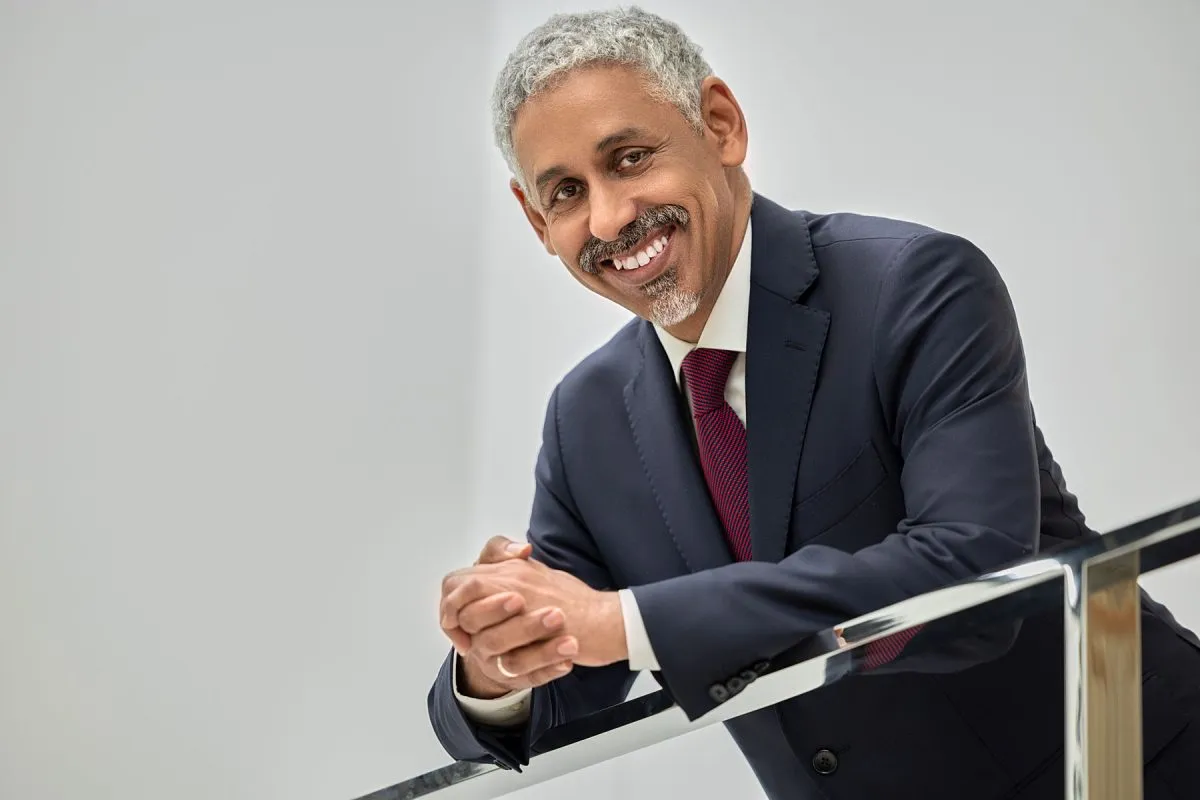
Mauritanian economist and seasoned development banker, Sidi Ould Tah, has formally assumed office as the ninth President of the African Development Bank (AfDB) following a swearing-in ceremony held at the institution’s headquarters in Abidjan, Côte d’Ivoire, on Monday.
The event was attended by key African leaders, including President Alassane Ouattara of Côte d’Ivoire and Mauritania’s President Mohamed Ould Cheikh Ghazouani, alongside representatives of the AfDB Board of Governors. Ould Tah’s oath of office was witnessed and certified by Ludovic Ngatse, Minister of Economy, Planning, and Regional Integration of the Republic of Congo, who also serves as Chair of the Board of Governors.
Elected on 29 May 2025 with more than 76 per cent of the vote—the largest margin ever achieved by a first-term candidate—Ould Tah begins a five-year mandate at a pivotal moment for the institution. His election underscores broad continental and international support for his vision to strengthen the Bank’s role as Africa’s premier development finance institution.




In his inaugural address, the 60-year-old outlined four strategic priorities: unlocking Africa’s financial resources; reforming and reinforcing fiscal sovereignty; transforming demographic dynamics into economic dividends; and fostering resilient infrastructure. These pillars, he noted, are designed to reflect Africa’s unique realities while positioning the continent as an active shaper of global economic narratives rather than a passive recipient.
Ould Tah brings over four decades of experience to the presidency, spanning leadership roles in banking, ministerial responsibilities in Mauritania, and development finance engagement across Africa and the Global South. Prior to his election, he served as Director-General of the Arab Bank for Economic Development in Africa, where he promoted South-South cooperation and financing for African-led initiatives.
Founded in 1964, the AfDB is the continent’s leading multilateral development finance institution. It brings together 81 member states, comprising 54 African countries and 27 non-African partners, reflecting both continental solidarity and international partnership. The institution has historically played a central role in mobilising resources for infrastructure, energy, agriculture, and social development projects across Africa.
The transition of leadership marks an important juncture for the Bank as it navigates Africa’s evolving development landscape—shaped by challenges such as debt sustainability, climate resilience, and demographic transformation—while seeking to strengthen African agency in global decision-making processes.


