Malawi has announced a suspension of the issuance of all mining licences and an immediate ban on the export of raw minerals, pending a comprehensive review of the country’s legal and regulatory framework governing the sector.
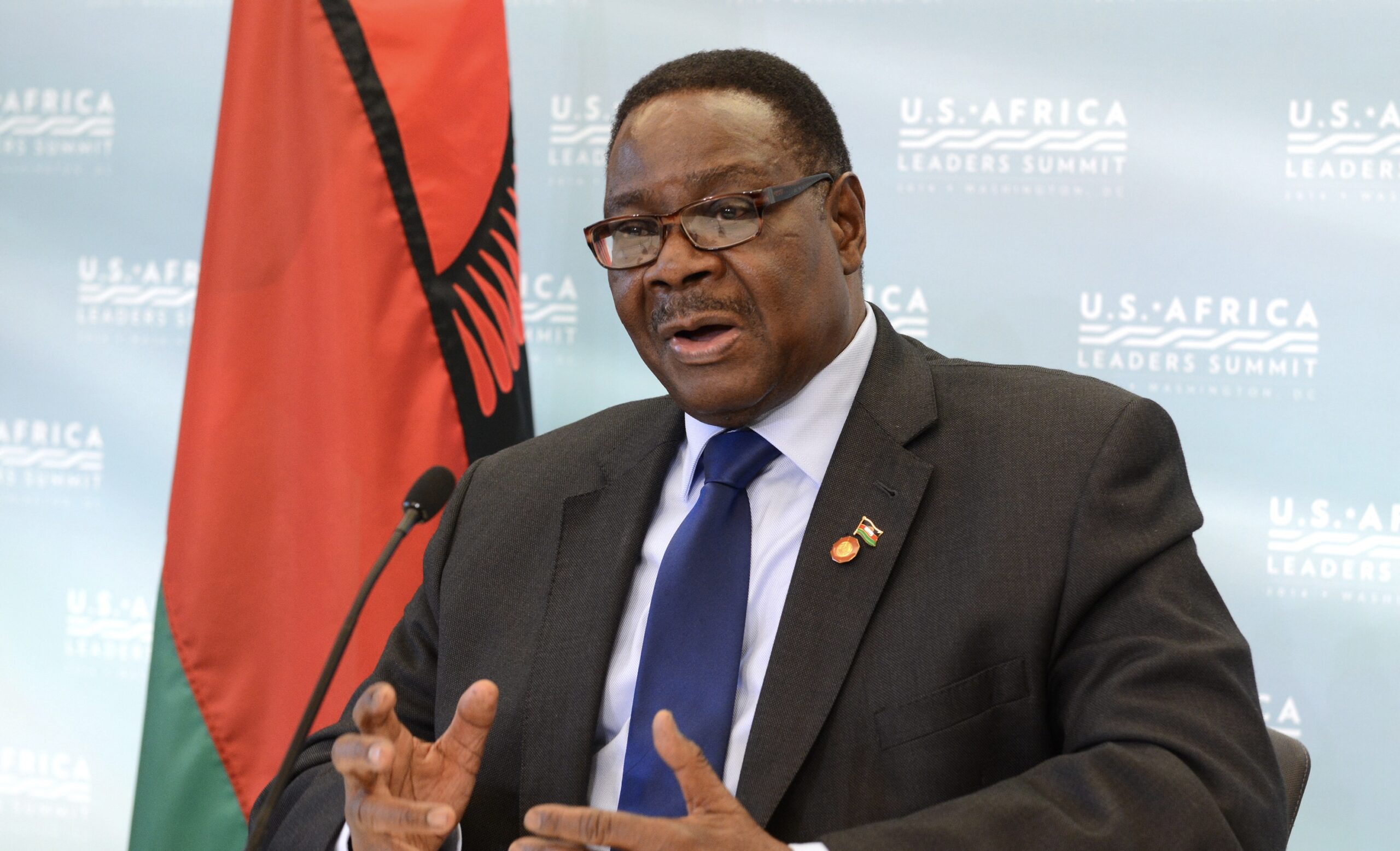
The measures were outlined by President Arthur Peter Mutharika during his State of the Nation Address delivered at the opening of Parliament’s national budget session in Lilongwe on 13 February 2026. The announcement signals a significant policy intervention in a sector widely regarded as central to Malawi’s long term economic transformation.
According to the address, the government will undertake a full audit of the mining licence registry and temporarily halt the granting of new prospecting, exploration and mining permits. The President stated that while mining has contributed to economic expansion, it has not generated commensurate fiscal returns for the country. He cited limited mineral exploration, gaps within the regulatory framework and constrained state capacity in negotiating Mining Development Agreements as structural challenges that require reform.



Malawi’s mining sector is regulated principally under the Mines and Minerals Act 2023, legislation intended to modernise governance and strengthen transparency within the industry. The Act is publicly referenced by the Malawi Extractive Industries Transparency Initiative at https://www.mweiti.gov.mw/reports/details/680. The government’s decision to suspend new licences appears to be positioned as an interim governance measure rather than a permanent closure of the sector.
In his address, President Mutharika directed the Minister of Finance and the minister responsible for mining to enhance Malawi’s technical and institutional capacity in negotiating mining agreements. He further indicated that the state owned Malawi Mining Investment Company is to be strengthened in order to undertake detailed geological exploration. Public records confirm the existence of the Malawi Mining Investment Company as a state entity tasked with promoting mineral development and investment.
The President also noted that the government is at an advanced stage of establishing a Sovereign Wealth Fund intended to manage proceeds from extractive industries for long term national benefit. Sovereign wealth mechanisms are increasingly used across Africa as fiscal stabilisation and intergenerational savings instruments, particularly in resource rich economies seeking to mitigate commodity price volatility.

Malawi’s mineral endowment includes uranium, rare earth elements, graphite, bauxite and gemstones such as rubies and sapphires. The country has attracted renewed investor attention in recent years due to the Kasiya Rutile Graphite Project, owned by Sovereign Metals Limited, an Australian company headquartered in Perth. Company disclosures and independent industry reporting describe Kasiya as one of the world’s largest known natural rutile deposits, with an estimated resource of approximately 538 million tonnes. Project information is available through Sovereign Metals at https://sovereignmetals.com.au/kasiya-project/ and through sector analysis published by Mining Technology at https://www.mining-technology.com/projects/kasiya-rutile-graphite-project-malawi/.
The decision to prohibit the export of raw minerals aligns with broader continental debates regarding beneficiation and value addition. Several African governments have sought to move beyond primary commodity export models by encouraging domestic processing and downstream industrial development. Malawi’s proposed reforms therefore situate the country within a wider African policy conversation centred on resource governance, fiscal justice and equitable development.
At the same time, temporary licence suspensions and export restrictions can introduce uncertainty for investors and project developers. Industry analysts often note that policy predictability is a key determinant of capital allocation within the mining sector. The effectiveness of the Malawian government’s reforms will likely depend on the clarity of the revised legal framework, the transparency of the audit process and the institutional capacity of regulatory bodies.
President Mutharika, who returned to office in 2025 according to publicly available biographical records at https://en.wikipedia.org/wiki/Peter_Mutharika, framed the reforms as corrective rather than punitive. His address emphasised the need for enhanced state negotiation capacity and improved public benefit from mineral wealth. Whether the measures translate into increased fiscal returns, stronger governance and broader socio economic development will depend on implementation, stakeholder engagement and regional market dynamics.
Malawi’s approach reflects a nuanced balancing act familiar across the continent. Governments seek to attract foreign direct investment while asserting policy autonomy and ensuring that natural resource extraction contributes meaningfully to national development. In this respect, the current reforms can be understood not as an isolated policy shift but as part of an ongoing African discourse on economic self determination and structural transformation within global commodity systems.