Malawians are casting their ballots in a closely watched presidential election that has placed the incumbent, President Lazarus Chakwera, against his predecessor, Peter Mutharika, in a contest framed as a choice between two familiar figures. The vote comes at a time when the country, one of the poorest in the world according to the World Bank, is grappling with acute economic challenges, fuel shortages, and the lingering effects of climate-related disasters.
Seventeen candidates are listed on the ballot paper, yet political analysts widely regard the contest as a rematch between Chakwera, 70, leader of the Malawi Congress Party (MCP), and Mutharika, 85, of the Democratic Progressive Party (DPP). The two last faced each other in the 2019 election, a disputed poll later annulled by the Constitutional Court, which ordered a fresh vote in 2020 that Chakwera went on to win with 59 percent of the vote.
The country’s economic crisis forms the central backdrop to this election. Inflation, which exceeded 27 percent earlier this year, has contributed to soaring costs of living, with the Centre for Social Concern reporting a 75 percent rise in household expenditure over the past 12 months. Malawi’s dependence on agriculture, compounded by two consecutive drought seasons and the devastating Cyclone Freddy in 2023, has deepened vulnerabilities. Around 70 percent of the population continues to live below the poverty line, underscoring the scale of structural challenges.



Both Chakwera and Mutharika have positioned themselves as stewards capable of reviving the economy, though critics point to legacies of corruption, cronyism, and missed opportunities during their respective administrations. Political commentator Chris Nhlane has characterised the election as one where citizens are forced to choose between “two disappointments,” reflecting public disillusionment with political leadership.
For many younger Malawians, who make up nearly 60 percent of the 7.2 million registered voters, the sense of political fatigue is palpable. “Nothing changes,” remarked Joseph, a 30-year-old entrepreneur, who said he would prioritise work over voting. Civil society groups and youth activists, however, have sought to counteract apathy, calling for greater participation to ensure that the country’s democratic process reflects the voice of its burgeoning youthful population.
Chakwera, drawing on the historic symbolism of the MCP, which led Malawi to independence from Britain in 1964, has appealed for continuity, highlighting infrastructure projects and pledging to address mismanagement within his administration. He has promised reductions in fertiliser costs to support smallholder farmers, a crucial constituency in a country where agriculture underpins livelihoods.

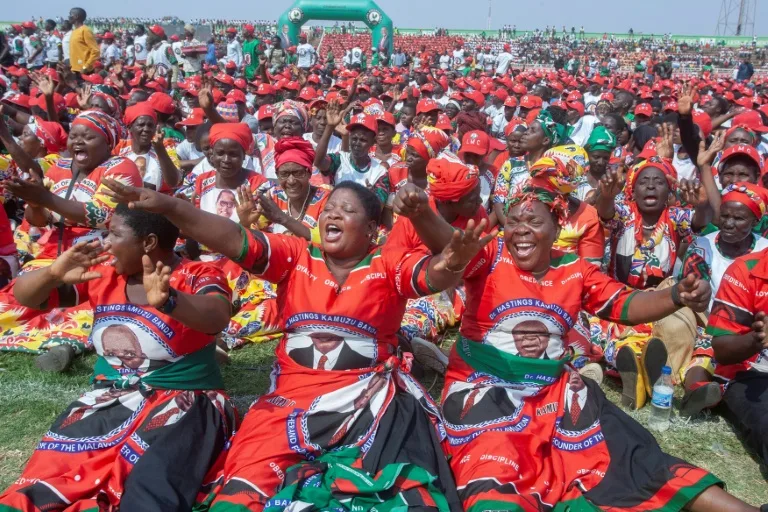
Mutharika, meanwhile, has emphasised a return to what he describes as “proven leadership,” with his campaign centred on economic reform and restoring fiscal stability. His rallies in Blantyre, the DPP’s stronghold, have drawn large crowds, with some citizens recalling his administration as a period of relative stability compared with current conditions.
Public sentiment remains divided. While some express nostalgia for Mutharika’s governance, others remain hopeful that Chakwera can deliver on pledges if given a renewed mandate. Lydia Sibale, a hospital administrator in Lilongwe, expressed continued support for the incumbent despite frustrations, noting that Malawi’s economic difficulties are also tied to broader global pressures.
The electoral framework requires the winning candidate to secure more than 50 percent of the vote, raising the possibility of a run-off within 60 days should no candidate achieve an outright majority.
Malawi’s democratic process continues to draw attention across the region, not only for the personalities involved but also for the broader implications for governance in southern Africa. As the electorate weighs its options, the outcome of the vote is likely to be interpreted as both a referendum on leadership and a test of democratic resilience in a nation confronting profound socio-economic hardship.