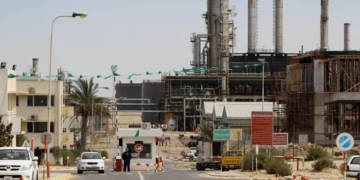
Libya’s National Oil Corporation has confirmed the allocation of oil and gas exploration rights to five international firms following a recent bid round held in Tripoli. The successful companies, based in Spain, Hungary, Nigeria, and Italy, have been awarded licences to explore blocks located in both onshore and offshore regions, including the Sirte and Murzuq basins and the offshore Sirte basin in the Mediterranean.
This marks the country’s first major upstream licensing initiative since the resumption of exploration activity in 2025, ending a 17 year pause in new exploration caused by sustained instability and conflict. The National Oil Corporation stated that a total of 20 blocks were offered in this round, following technical evaluations and seismic surveys aimed at attracting new investment.
Masoud Suleiman, Chairman of the National Oil Corporation, characterised the outcome as a potential milestone for the sector. He pointed to the participation of foreign firms as an indication of renewed international interest in Libya’s energy potential, while also noting the significance of restarting activity after years of limited engagement.




The inclusion of a Nigerian energy firm among the awardees is seen by observers as notable, given the evolving role of African companies in regional and international energy markets. While such developments may signal opportunities for intra African cooperation, analysts also caution that long term gains will depend on a range of structural and political conditions within Libya and the wider region.
Libya’s economy remains heavily reliant on oil and gas exports, and the reopening of its energy sector has implications for revenue generation and institutional rebuilding. However, previous efforts to expand or stabilise output have been disrupted by internal divisions and external pressures, and it remains unclear how these new licences will impact medium term production trends.
In recent years, the country’s hydrocarbons sector has been marked by volatility, with intermittent shutdowns and fluctuating investment patterns. The current licensing round may contribute to rebuilding capacity and investor engagement, though its success will depend on the sustainability of political and operational stability.
This development occurs in a context where many African states are seeking to shape their own energy futures, balancing domestic priorities with foreign investment and shifting global demand. Libya’s latest move may be interpreted as part of a broader regional pattern in which states revisit resource governance strategies amid evolving geopolitical and market conditions.
The full list of awarded blocks and participating companies has not yet been published in detail, and further updates are expected from the National Oil Corporation in the coming weeks.