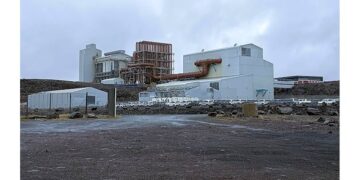
Jupiter Mines Limited has reported continued operational stability at its Tshipi Borwa Manganese Mine, located in South Africa’s mineral-rich Northern Cape, for the quarter ended 30 September 2025. According to the company’s Q1 FY2026 activities report, the mine recorded production of 829,798 tonnes and sales of 837,577 tonnes, maintaining performance levels consistent with the same period in FY2025.
The ASX-listed mining firm, which holds a 49.9% beneficial interest in Tshipi é Ntle Manganese Mining, noted that production remained steady despite persistent logistical constraints within South Africa’s rail and port infrastructure. The company highlighted that stockpiles were strategically managed to align with export schedules and shipping availability, reflecting adaptive operational practices rather than production expansion.
Tshipi Borwa remains one of the world’s largest standalone manganese operations, serving both the global steel and alloy sectors as well as emerging battery-grade manganese markets. The mine’s continued performance underscores the strategic significance of South Africa’s manganese resources in global industrial and energy transitions, as the demand for critical minerals—particularly those linked to clean energy technologies—continues to evolve.



Market conditions during the quarter remained largely range-bound, with 37% Mn CIF China prices fluctuating between US$4.20 and US$4.70 per dry metric tonne unit (dmtu), as reported by Fastmarkets. This reflects subdued Chinese downstream alloy demand and an uneven recovery in global steel production. Jupiter Mines noted that its near-term revenue performance for FY2026 will remain closely tied to market pricing trends and the reliability of export logistics networks.
The company cited continuing infrastructure bottlenecks within Transnet’s rail system as a key operational risk but observed that shipping performance has improved relative to earlier quarters. Capital expenditure for the period was directed primarily towards sustaining investment and ongoing maintenance at the Tshipi mine.

Jupiter Mines expressed cautious optimism about the next quarter, expecting operational conditions to remain stable amid broader logistical and market uncertainties. The company’s outlook signals the enduring importance of South Africa’s mining infrastructure, not only as a contributor to national revenue and employment but as a cornerstone of the regional industrial economy that extends beyond extractive output into value-chain participation.
The Tshipi Borwa operation remains emblematic of South Africa’s broader mining narrative—one that balances the demands of global commodity markets with the imperatives of domestic development, infrastructure resilience, and sustainable industry transformation.