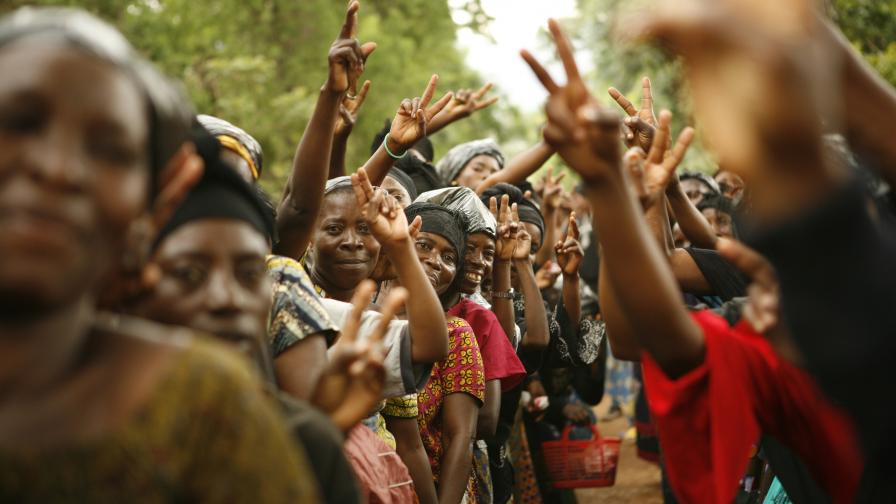
Women across continents gathered on 8 March 2025 to observe International Women’s Day, calling for an end to gender-based violence, advocating for equal rights, and demanding greater political representation. Demonstrations took place across Europe, Africa, and the Americas, highlighting persistent inequalities and reinforcing calls for structural change in policies affecting women worldwide.
In Istanbul, Turkey, thousands participated in a rally in Kadiköy, rejecting restrictive societal norms that confine women’s roles to marriage and motherhood. The demonstration was held in defiance of the government’s declaration of 2025 as the Year of the Family, which many activists view as an attempt to reinforce traditional gender roles. Critics argue that the government has weakened protections for women, particularly following Turkey’s 2021 withdrawal from the Istanbul Convention, a treaty aimed at preventing domestic violence. According to the organisation We Will Stop Femicides, 394 women were killed by men in Turkey in 2024.
Meanwhile, in Poland, activists inaugurated a centre opposite the parliament in Warsaw, offering access to medical abortions using pills. This symbolic act challenged Poland’s highly restrictive abortion laws, which are among the strictest in Europe. Elsewhere, in Madrid, protestors held up images of Gisèle Pelicot, a French woman who was drugged and assaulted over the course of a decade by her former husband and other men. Her case has become emblematic of the broader struggle against sexual violence in Europe.




In Berlin, German President Frank-Walter Steinmeier reaffirmed the need to advance gender equality and warned against any regression of progress made in previous decades. From Athens to Zurich, demonstrations focused on equal pay, access to gender-specific healthcare, and stronger legal protections against discrimination.
In Africa, large gatherings marked the day with celebrations and advocacy. In Lagos, Nigeria, thousands convened at Mobolaji Johnson Stadium, where women dressed in purple—the colour traditionally associated with women’s liberation—sang, danced, and commemorated their achievements. The atmosphere reflected both celebration and a renewed commitment to social change.
Elsewhere, the tone varied. In Russia, the observance remained largely ceremonial, with honour guard soldiers presenting yellow tulips to women in St. Petersburg. Meanwhile, in the United States, protests erupted in major cities, including Washington D.C., New York, and Los Angeles, with demonstrators rallying against policies enacted by President Donald Trump in his second term. These policies have included measures that critics argue undermine diversity, equity, and inclusion initiatives, alongside the rollback of long-standing protections against workplace discrimination.

The global demonstrations reaffirmed that while progress has been made in advancing women’s rights, significant barriers remain. The calls for policy reforms, stronger legal protections, and societal transformation continue to resonate across nations, reflecting an ongoing struggle for gender equality.