Thursday, April 30, 2026
  • Login
The Southern African Times
  • Home
  • Southern Africa
  • Business
    • African Start ups
    • African Continental Free Trade Area
  • Technology
    • Lifestyle
      • Health
      • Culture
      • Food and Drink
      • Entertainment
  • Opinion
  • Sports
  • SAT Jobs
    • Events
  • About Us
    • Advertise with Us
    • Contact Us
No Result
View All Result
  • Home
  • Southern Africa
  • Business
    • African Start ups
    • African Continental Free Trade Area
  • Technology
    • Lifestyle
      • Health
      • Culture
      • Food and Drink
      • Entertainment
  • Opinion
  • Sports
  • SAT Jobs
    • Events
  • About Us
    • Advertise with Us
    • Contact Us
No Result
View All Result
The Southern African Times
No Result
View All Result
Home Finance

IMF says Mideast, North Africa economies resilient in 2022

by SAT Reporter
October 31, 2022
in Finance
0
IMF says Mideast, North Africa economies resilient in 2022

The economies of Middle Eastern and North African countries were resilient this year, but double-digit inflation is expected to slow growth in 2023, the International Monetary Fund said Monday.

The IMF forecast GDP growth at 5% in 2022 for countries in the region. For oil-exporting nations, growth was projected at 5.2%, mainly due to high oil prices and robust GDP growth in other countries, which offset the impact of high food prices.

But the rate of growth is expected to slow in 2023, due in part to inflation driven by high food and commodity prices, the report said. And the outlook remained so dire for politically unstable Lebanon and war-scarred Syria that the IMF reported no economic projections for either.

Higher energy prices sustained oil-producing nations, such as Saudi Arabia, where economic growth is expected to hit 7.6% this year. Oil exporters are also benefitting from trade diversions caused by the war in Ukraine, as some European countries look to replace their oil purchases from Russia.

As a whole, the IMF expects that in the next five years, the level of additional inflows and financial reserves to Mideast oil-exporting countries will exceed $1 trillion.

The extra financial inflows are critical to Gulf Arab countries as they try to diversify their economies away from dependence on oil and as the world seeks greener technologies to power industry.

Growth in the region next year is projected at 3.6% due to worsening global conditions such as the consequences of the war in Ukraine for commodity prices and the slowing global economy. For oil exporters, growth will likely slow to 3.5% as oil prices weaken, global demand slows and OPEC production reduces.

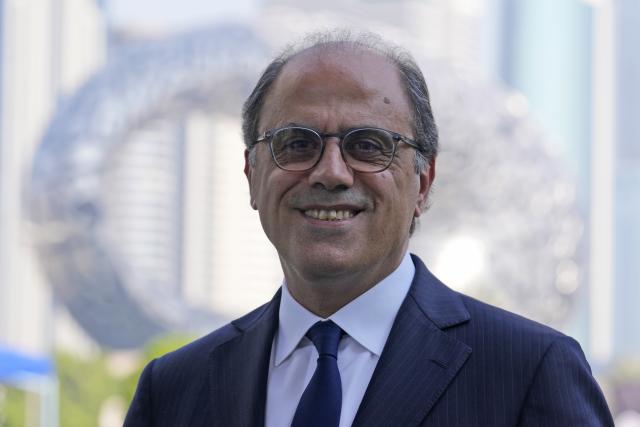
“We expect the outlook for next year to be less variable than this year, growth will go down for both oil-exporting countries and oil-importing countries,” Jihad Azour, director of the IMF’s Middle East and Central Asia department, told The Associated Press.

Inflation, meanwhile, is expected to remain in the double digits in the region in 2023, for the third consecutive year. For Sudan, the situation is particularly dire. Consumer price inflation has surpassed the double digits and is forecast to hit 154.9% this year. In 2021, the figure hit a whopping 359%, skyrocketing since the country’s 2019 ouster of autocrat Omar al-Bashir.

“Inflation surprised on the upside, this is the third year where you have double-digit inflation especially for the oil-importing countries … We expect still that inflation will remain high next year driven by high food and commodity prices,” Azour said.

The IMF has warned that high food and fertilizer prices can create severe food security challenges for low-income countries, which could lead to social unrest.

Food prices are still above their 2021 average and expected to increase by more than 14% year-on-year in 2022, according to the report. And although wheat prices are lower than their prewar levels, due to the agreement between Russia and Ukraine to resume Black Sea grain exports, they remain about 80% higher than their average in 2019. Russia’s invasion of Ukraine has impacted exports like sunflower oil, barley, and wheat worldwide.

However, Russia announced on Sunday it would immediately halt participation in the U.N.-brokered deal, prompting President Joe Biden to warn that global hunger could increase. Russia’s move came after it alleged that Ukraine staged a drone attack on Saturday against Russia’s Black Sea Fleet ships off the coast of occupied Crimea. Ukraine has denied the attack, saying that Russia mishandled its own weapons.

Egypt is the world’s largest wheat importer, most of which comes from Russia and Ukraine. Its economy has been hard-hit by the coronavirus pandemic and the war in Ukraine. Last week the IMF reached a preliminary agreement with Egypt that paves the way for the economically troubled Arab nation to access a $3 billion loan.

The IMF says one of the most pressing priorities now is to mitigate the cost-of-living crisis. To do so, Azour says the IMF must control inflation, shift social spending away from “an untargeted system that is now mainly driven by the subsidy on food and on energy to something that is more targeted,” and create more jobs — especially for middle-income people.


Previous Post

South Africa health minister hopes for more pharma investment

Next Post

Ghana’s President outlines measures to halt depreciation of the cedi

SAT Reporter

Related Posts

IFC and Standard Chartered Introduce 300 Million Dollar Trade Finance Facility
Finance

IFC and Standard Chartered Introduce 300 Million Dollar Trade Finance Facility

by SAT Reporter
April 30, 2026
Climate Finance Hits 92 Billion as Infrastructure Reshapes Africa’s Energy Future
Finance

Climate Finance Hits 92 Billion as Infrastructure Reshapes Africa’s Energy Future

by SAT Reporter
April 27, 2026
Investors pledge over $1.3bn towards Zambia–Angola rail corridor
Investment

Investors pledge over $1.3bn towards Zambia–Angola rail corridor

by SAT Reporter
April 25, 2026
BII Targets £9billion to Boost Investment in Africa’s Frontier Markets
Finance

BII Targets £9billion to Boost Investment in Africa’s Frontier Markets

by SAT Reporter
April 25, 2026
TDB Restructures Ownership to Reinforce Multilateral Status in Global Debt Debate
Finance

TDB Restructures Ownership to Reinforce Multilateral Status in Global Debt Debate

by SAT Reporter
April 23, 2026
Next Post
Ghana’s President outlines measures to halt depreciation of the cedi

Ghana’s President outlines measures to halt depreciation of the cedi

Browse by Category

  • Africa AI
  • African Continental Free Trade Area
  • African Debt
  • African Start ups
  • Agriculture
  • AI Africa
  • Algeria
  • All News
  • Analysis
  • Angola
  • Arts / Culture
  • Asia
  • Botswana
  • BOTSWANA
  • BREAKING NEWS
  • BRICS
  • Burkina Faso
  • Burundi
  • Business
  • Business
  • Business Wire
  • Cameroon
  • Central Africa
  • Chad
  • China
  • Climate Change
  • Climate Changev
  • Community
  • Congo Republic
  • Conservation
  • Côte d’Ivoire
  • COVID 19
  • CRYPTOCURRENCY
  • Culture
  • Democratic Republic of Congo
  • Diplomacy
  • Eastern Africa
  • Economic Development
  • Economy
  • Education
  • Egypt
  • Elections 2024
  • Energy
  • Entertainment
  • Environment
  • Eritrea
  • Ethiopia
  • Europe
  • Fashion
  • Feature
  • Finance
  • Financial Inclusion
  • Food
  • Food and Drink
  • Foods
  • GABON
  • Ghana
  • Global
  • Global Africa
  • Guinea
  • Health
  • Immigration
  • in Southern Africa
  • International news
  • International Relations
  • Investment
  • Ivory Coast
  • Just In
  • Kenya
  • Lesotho
  • Libya
  • Life Style
  • Lifestyle
  • Literature
  • Malawi
  • Malawi
  • Mali
  • Markets
  • Mauritius
  • Middle East
  • Mining in Africa
  • Morocco
  • Mozambique
  • Namibia
  • Niger
  • niger
  • Nigeria
  • North Africa
  • North-Eastern Africa
  • Obituaries
  • Obituary
  • Opinion
  • PARTNER CONTENT
  • Politics
  • Property
  • Racism
  • Rwanda
  • Rwanda
  • SADC
  • SAT Interviews
  • SAT Investigation
  • SAT Jobs
  • Saudi Arabia
  • Senegal
  • Seychelles
  • Somaliland
  • South Africa
  • South Sudan
  • Sports
  • Startup Africa
  • STOCK EXCHANGE
  • Sudan
  • Sustainability
  • Sustainablity
  • Tanzania
  • Technology
  • Telecommunications
  • The Editorial Board
  • The Power Of She
  • Togo
  • Trade
  • Travel
  • Travel
  • Tunisia
  • Uganda
  • Uncategorized
  • Wealth
  • West Africa
  • World
  • World
  • ZAMBIA
  • Zambia
  • Zimbabwe
  • ZIMBABWE

Browse by Tags

#NewsUpdate #SouthAfrica #SouthernAfricanTimes #TheSouthernAfricanTimes AfCFTA africa African Continental Free Trade Area African development African Development Bank African economies African economy African Union Agriculture Angola Botswana Business China Climate change Cyril Ramaphosa Economic Development economic growth energy transition fiscal policy industrialisation Inflation Infrastructure Infrastructure Development International relations Investment Kenya Mozambique Namibia news Nigeria Regional Integration renewable energy Rwanda SADC South Africa Southern Africa sustainable development Tanzania United States Zambia Zimbabwe
ADVERTISEMENT

WHO WE ARE

The Southern African Times is a regional bloc digital newspaper that covers Southern African and world news. The paper also gives a nuanced analysis on news and covers a wide range of reporting which include sports, entertainment, foreign affairs, arts and culture.

Welcome Back!

Login to your account below

Forgotten Password?

Retrieve your password

Please enter your username or email address to reset your password.

Log In

  • Home
  • Southern Africa
  • Business
    • African Start ups
    • African Continental Free Trade Area
  • Technology
    • Lifestyle
      • Health
      • Culture
      • Food and Drink
      • Entertainment
  • Opinion
  • Sports
  • SAT Jobs
    • Events
  • About Us
    • Advertise with Us
    • Contact Us
Are you sure want to unlock this post?
Unlock left : 0
Are you sure want to cancel subscription?