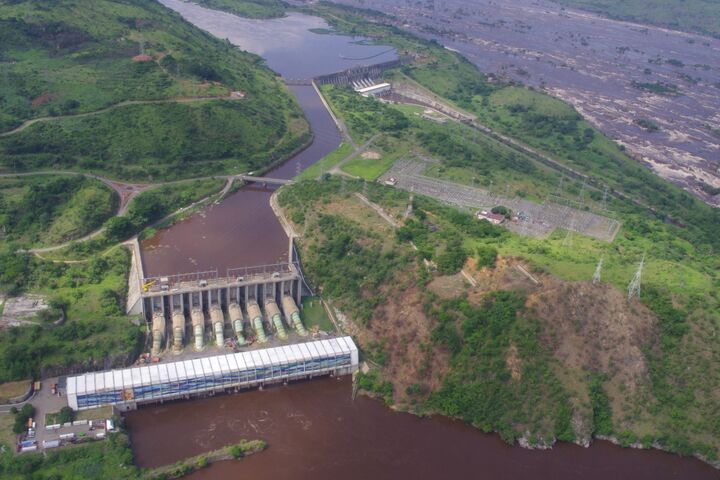
Five prominent development finance institutions have united in a concerted effort to propel forward the Grand Inga hydropower complex, a monumental electricity-generation initiative situated in the Democratic Republic of Congo. This ambitious project, which has languished for decades, aims to harness the immense potential of the Congo River, the world’s third-largest river by volume.
The consortium includes the Development Bank of Southern Africa and the Industrial Development Corporation, both state entities from South Africa, along with pan-African institutions such as the African Development Bank, African Export-Import Bank, and the New Development Bank representing the BRICS nations.
Mpho Kubelo, Chief Risk Officer of the Development Bank of Southern Africa, emphasised the collaborative approach adopted since a pivotal global summit in Paris last June. This initiative, backed by the leadership of South Africa and the Democratic Republic of Congo, seeks to reinvigorate a project hampered historically by governance challenges and daunting costs, estimated to exceed $80 billion.



Presently, the Inga complex consists of two dams with a modest installed capacity of 1.8 gigawatts, primarily supplying electricity to Congo’s vital copper and cobalt mines. If realized to its full potential of 40 gigawatts, Grand Inga would surpass China’s Three Gorges Dam as the largest electricity-generating facility globally.
Recent developments have seen shifting agreements, including a preliminary deal with Nigeria’s Natural Oilfield Services Ltd. to develop a 7-gigawatt plant, superseding previous arrangements with Australian mining magnate Andrew Forrest’s Fortescue Ltd. for a broader 40-gigawatt complex.
Despite these advancements, challenges persist regarding the project’s feasibility and operational logistics. The consortium acknowledges the imperative of attracting private investment to complement public funding efforts. Kubelo affirmed that while development finance institutions spearhead project preparation, its execution and management are envisioned under private-sector stewardship.

The Democratic Republic of Congo’s agency responsible for Inga declined to comment on recent inquiries, reflecting ongoing complexities surrounding the project’s implementation timeline and stakeholder dynamics.
The collaborative endeavour of these development finance institutions underscores a renewed commitment to advancing sustainable energy solutions in Africa, potentially transforming regional energy landscapes and bolstering socio-economic development across the continent.