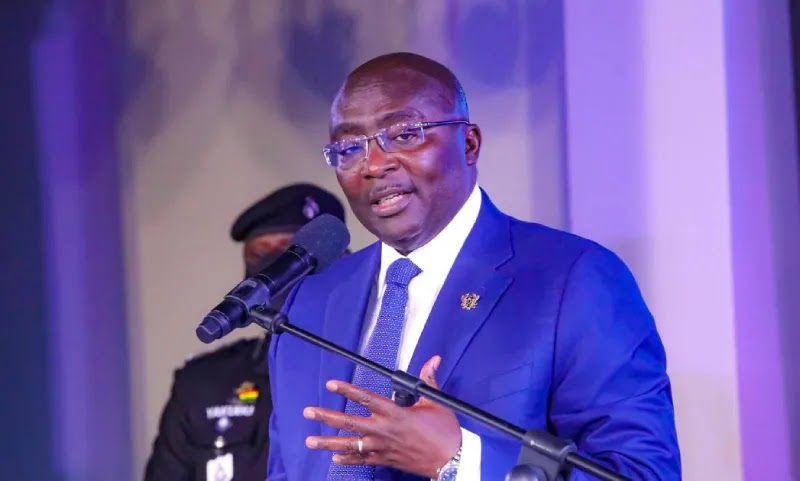
Ghana, Africa’s leading gold producer, has inaugurated its first commercial gold refinery, a significant step in the nation’s effort to maximise the economic benefits of a resource it has been extracting for centuries. Located in the capital city of Accra, the Royal Ghana Gold Refinery was officially opened on Thursday, August 8th, marking what Vice President Mahamadu Bawumia described as a “new era” for the country’s gold industry.
The establishment of this refinery is anticipated to curtail the rampant gold smuggling that has plagued the nation and ensure that more of the wealth generated from gold mining remains within Ghana. Historically, the country has exported its entire gold output in an unrefined state, resulting in considerable lost revenue. Vice President Bawumia highlighted that between 2018 and 2023, Ghana’s average annual gold production stood at 3.92 million ounces, equivalent to 122.5 tons, all of which was exported without refinement.
The Royal Ghana Gold Refinery possesses the capacity to process up to 400 kilograms of gold per day. Initially, it will source gold from small-scale and artisanal miners, a sector that has historically seen much of its output smuggled out of the country. As operations expand, the refinery plans to acquire the necessary licences to process gold from larger mining operators.
The refinery represents a partnership between India’s Rosy Royal Minerals and Ghana’s central bank, and is expected to create 80 to 120 direct jobs and approximately 500 indirect jobs. The move is seen as a strategic initiative to assert greater national control over Ghana’s valuable resources, a sentiment echoed by Osagyefuo Amoatia Ofori Panin, the traditional ruler of the Akyem tribe in eastern Ghana. Reflecting on the country’s historical exploitation, Ofori Panin expressed his relief at the establishment of the refinery, stating, “We’re poor because we were exploited. So when I got here and listened to all the speakers, I just took a big sigh of relief and said, finally, finally, we’re here.”
As the 2024 presidential election approaches, Vice President Bawumia, who is contesting for the presidency, emphasised the potential of the refinery to boost national earnings and contribute to the broader economic development of Ghana.