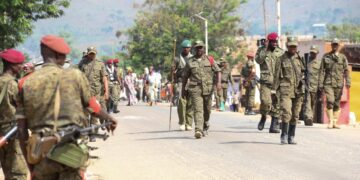
Fighting continued to spread across eastern Democratic Republic of Congo on Friday, only a day after United States President Donald Trump welcomed the leaders of Congo and Rwanda to Washington for the signing of agreements intended to move the region toward lasting peace. The commitments, presented as a breakthrough by the White House, were designed to calm a conflict that has simmered for decades in one of the most resource rich corners of the continent.
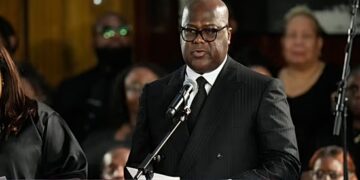
On Thursday, Congolese President Felix Tshisekedi and Rwandan President Paul Kagame renewed their pledges to uphold a United States mediated deal first reached in June. The arrangement seeks to stabilise the vast central African nation and encourage a larger flow of Western mining investment into territories holding cobalt, copper, gold and other critical minerals.
“We are settling a war that has been going on for decades,” Trump said as he hosted the two leaders. His administration has moved assertively on several international disputes, casting these efforts as a blend of peace making and support for American commercial interests.



Yet conditions on the ground told a different story on Friday. Reports from North Kivu and South Kivu described intense clashes, with both sides trading accusations. Confidence in the Washington process has been weakened by the fact that the rebel movement most responsible for recent escalation, the AFC or M23, is not part of the capital based agreement.
The M23, widely described by regional governments and foreign observers as supported by Rwanda, captured the two largest cities in eastern Congo earlier this year. In a statement on Friday the group accused Congo and Burundi of conducting broad attacks on civilian areas. It alleged that bombs launched from Burundi over more than three days had struck villages in both Kivu provinces, killing women and children, injuring civilians and damaging homes, schools and health centres. The group claimed that airstrikes using drones and heavy artillery had been coordinated from Burundi, a government strongly aligned with Congo.
Burundi has not responded to these accusations.
Congo’s army rejected claims that it was targeting civilians and said clashes were continuing as its forces attempted to repel rebel advances. It also accused Rwanda of carrying out strikes and said it had destroyed what it described as an enemy drone that entered Congolese airspace from the Rwandan town of Bugarama. The army insisted that M23 fighters had repeatedly violated the June ceasefire.

Casualty reports varied. M23 said twenty three people had been killed and others injured. A Congo army spokesperson said eleven civilians had died in the fighting.
Regional analysts note that the latest campaign of diplomacy from Washington managed to slow a dangerous escalation in the middle of the year but has not addressed the root causes of the conflict. Both Congo and Rwanda have struggled to implement the commitments they made in June, and mistrust remains high.

As the battles intensify, communities across the east continue to flee renewed violence, and the gap between announcements made in foreign capitals and realities on the ground appears wider than ever.