In an extraordinary intervention that has intensified both domestic and international scrutiny of Israel’s ongoing military campaign in Gaza, former Israeli Deputy Chief of Staff and opposition politician Yair Golan has publicly condemned the government’s approach, warning that the country risks becoming a “pariah state.” Golan’s remarks have reignited debate over the moral and strategic direction of Israel’s actions in Gaza, particularly amid escalating humanitarian catastrophe and increasing global condemnation.
Speaking in a widely circulated interview on Reshet Bet, Golan, now leader of the Democrats party, stated, “A sane country does not wage war against civilians, does not kill babies as a pastime, and does not engage in mass population displacement.” Drawing a stark parallel between Israel’s current policies and the apartheid era in South Africa, Golan referenced the Jewish historical experience of persecution, questioning the ethical implications of current military operations.
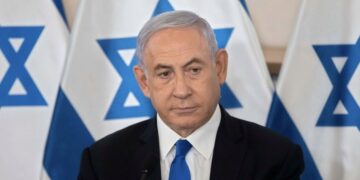
Prime Minister Benjamin Netanyahu responded with anger, labelling Golan’s statements “outrageous incitement against our heroic soldiers and against the State of Israel.” Israeli Defence Minister Israel Katz described the remarks as a “vile blood libel,” while Finance Minister Bezalel Smotrich accused Golan of intentionally maligning Israel’s international image. However, Golan found support from former Prime Minister Ehud Barak, who defended him as a “brave, direct man” whose criticism was directed at political leaders rather than military personnel.




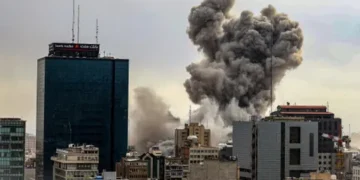
This public discord comes amid an intensification of Israeli bombardments in the Gaza Strip, where more than 600 Palestinians have reportedly been killed in the past four days alone, according to Dr Marwan Al-Hams, director of Gaza’s field hospitals. The offensive forms part of Netanyahu’s stated goal to “take control” of the entire enclave and secure the release of the remaining hostages held by Hamas. As of the latest estimates, 58 hostages remain in captivity, 23 of whom are believed to be alive.
The humanitarian implications of the military strategy are dire. The United Nations has warned that as many as 14,000 babies could die in the next 48 hours if substantial humanitarian aid is not allowed into Gaza. Tom Fletcher, the U.N.’s top humanitarian coordinator, confirmed that only five aid trucks entered Gaza on Monday, carrying critical supplies such as baby formula. He described the delivery as “a drop in the ocean of what is urgently needed,” highlighting the insufficiency of the measure following an 11-week aid blockade imposed on 2 March.

While Israel has accused Hamas of misappropriating aid—a claim denied by the group—critics argue that the blockade amounts to collective punishment of the civilian population. According to the U.N., at least 500 aid trucks and 50 fuel trucks must enter Gaza daily to avert catastrophe. However, Amjad Al-Shawa, chairman of the Palestinian NGO Network, stated that the aid delivered on Monday had yet to be distributed and remained stationary near the Kerem Shalom border crossing.

Recent Israeli airstrikes have claimed at least 88 more lives overnight. Evacuation orders issued to residents of Khan Younis have forced thousands to flee, triggering scenes of chaos and despair. NBC News recorded the harrowing testimony of 13-year-old Tasneen Baraka, who had fled the eastern neighbourhoods of Abasan al-Kabira. “Every day, we flee. We can’t take it anymore,” she wept, uncertain of her father’s whereabouts. Her mother, Huda Baraka, cradling her infant, added grimly, “I wish they would just kill us all now. We can’t live like this anymore.”
International reaction has grown increasingly pointed. The United Kingdom on Tuesday halted free trade negotiations with Israel and summoned its ambassador, expressing horror at the rising death toll. Prime Minister Keir Starmer’s administration imposed new sanctions on Israeli settlers in the West Bank and issued a joint warning with Canada and France that further “targeted sanctions” could follow unless humanitarian access improves substantially.

Foreign Secretary David Lammy articulated Britain’s dismay in Parliament, stating that the military escalation was “incompatible with the principles that underpin our bilateral relationship” and calling for an immediate end to the blockade. In response, Israel’s Foreign Ministry dismissed the concerns, asserting it was the British government’s prerogative “if it was willing to harm the British economy.”
The growing rift between Israel and its traditional allies was further exposed when Netanyahu decried the joint statement from France, Canada, and the UK as “a huge prize for the genocidal attack on Israel” that Hamas perpetrated on 7 October 2023, when 1,200 Israelis were killed and 250 taken hostage.
This increasingly fractious diplomatic climate has raised urgent questions about the trajectory of Israel’s military campaign and its broader geopolitical consequences. As the death toll in Gaza exceeds 53,000, according to the Palestinian Health Ministry, the warnings from global humanitarian agencies grow ever more desperate. The ethical debate provoked by Golan’s comments—echoed now in international corridors of power—suggests that without a radical policy shift, Israel’s position on the world stage may face enduring damage.