Tuesday, June 30, 2026
  • Login
The Southern African Times
  • Home
  • Southern Africa
  • Business
    • African Start ups
    • African Continental Free Trade Area
  • Technology
    • Lifestyle
      • Health
      • Culture
      • Food and Drink
      • Entertainment
  • Opinion
  • Sports
  • SAT Jobs
    • Events
  • About Us
    • Advertise with Us
    • Contact Us
No Result
View All Result
  • Home
  • Southern Africa
  • Business
    • African Start ups
    • African Continental Free Trade Area
  • Technology
    • Lifestyle
      • Health
      • Culture
      • Food and Drink
      • Entertainment
  • Opinion
  • Sports
  • SAT Jobs
    • Events
  • About Us
    • Advertise with Us
    • Contact Us
No Result
View All Result
The Southern African Times
No Result
View All Result
Home Just In

‘Every Arab country is keen to invest in Africa,’ says BADEA DG

by SAT Reporter
December 27, 2021
in Just In
0
‘Every Arab country is keen to invest in Africa,’ says BADEA DG

A conversation with Sidi Ould Tah

Africa presents many opportunities for Arab investors, but barriers to investment and trade need to be removed.

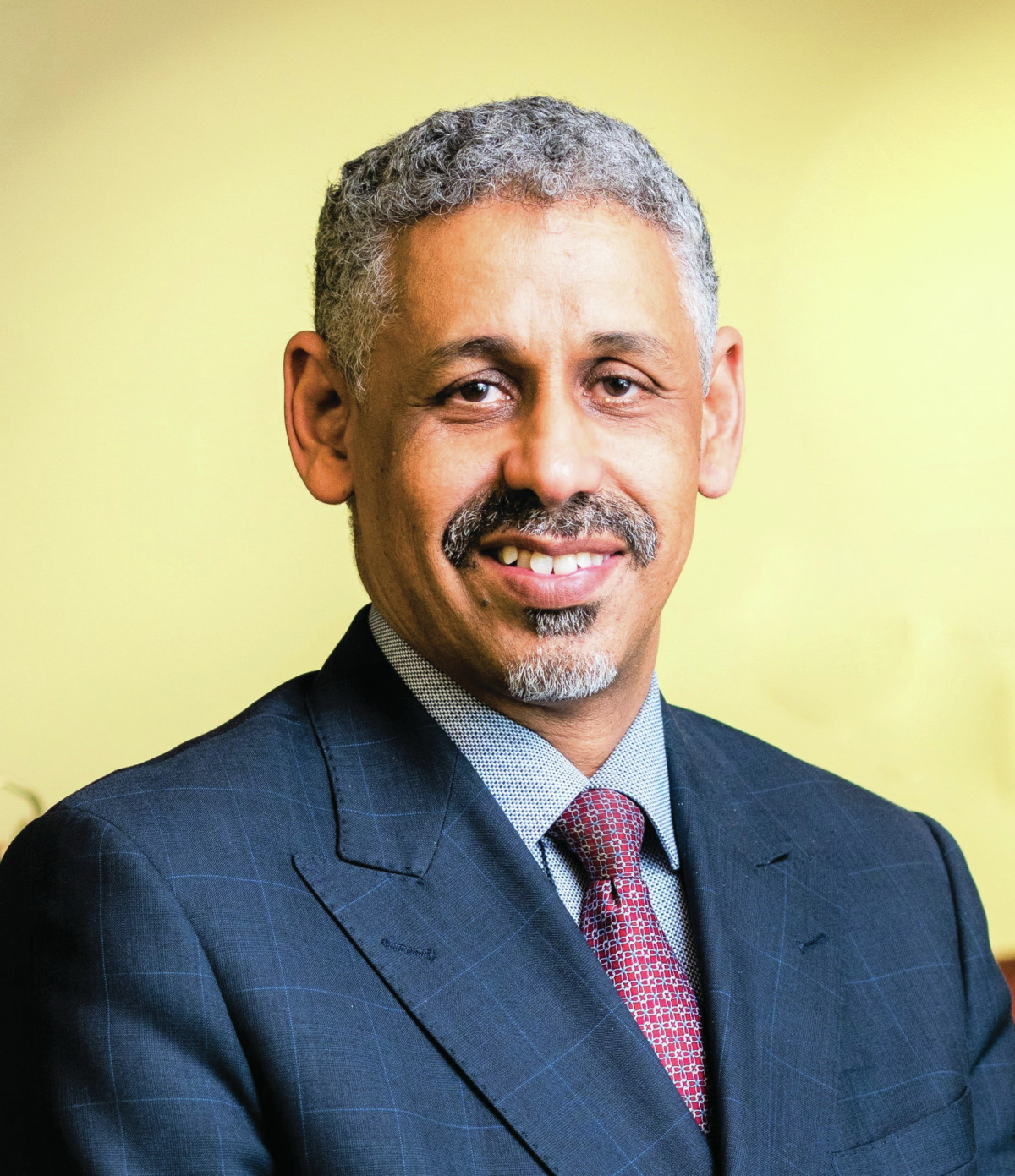
‘One out of four Africans is Arab and three out of four Arabs are African,” says Sidi Ould Tah, director general of the Arab Bank of Economic Development in Africa (BADEA). 

Since 1975, the Khartoum-based development bank has offered technical assistance and finance for public development projects across Africa. It disburses between $150m and $200m each year in a range of sectors including agriculture, infrastructure, energy and SMEs. 

ADVERTISEMENT

Speaking on the sidelines of the bank’s Second Arab-Africa Trade Forum in Cairo in October, the director general says that Arab countries have the potential to step up investment in Africa and remain bullish on the continent’s growth prospects. 

“Every Arab country is keen to invest in Africa. The image of Africa which was mainly negative has changed and now the various resources in most of the African countries are really attractive for investors around the world,” he says.

BADEA’s mandate 

The bank’s shareholders are all member states of the Arab League but the specific mandate of the bank is to invest shareholder capital in the African countries that do not belong to the collection of Arab states. 

This means that it operates in 44 countries which are predominantly in sub-Saharan Africa, not in North Africa. The last African country to join the Arab League was Comoros in 1993. 

BADEA says it was one of the first development finance institutions (DFIs) in Africa to respond to the outbreak of Covid-19 last year. 

“We took the decision in March 2020 to commit $100m to support eligible countries,” says Tah. “We have increased that amount substantially over the last year, we have been part of many initiatives together with other DFIs and Arab coordination groups.” 

In November 2020, BADEA, Afreximbank, and ITFC launched a $1.5bn Covid-19 Pandemic Response Facility (COPREFA) to support African economies with rapid financial assistance to reduce the impact of the pandemic. 

The bank’s investments are diverse. In August, the bank signed agreements with West African countries worth over $100m, including a road modernisation project in Guinea Bissau, the building and equipping of a university hospital centre in Abidjan, Côte d’Ivoire, and the development of watershed projects on three islands of Cabo Verde. 

In terms of capital, the bank’s last increase was in 2013 and the director general says that the bank has been “steadily” expanding its pipeline of projects since then. Rather than push for an increase in shareholder contribution, Tah says that he is happy with the pace of growth. 

“An institution has a speed at which it grows, so we don’t see the need for another capital increase. The member countries will be there if needed,” he says. 

The former minister for economic affairs and development in Mauritania explains that the bank is relatively unique as it has not issued bonds to raise funds. This puts the financial institution in a very flexible position where it could easily tap into public debt if it wanted to.

“We currently have zero debt,” says Tah. “We are allowed to borrow 200% of our shareholders’ equity so have room for mobilising resources from the market if need be.” 

One major pivot the bank has recently undertaken is a move towards lending to the private sector. In 2015, the bank began various types of private sector funding “to support trade between Arab countries and sub-Saharan Africa but also trade within Africa”.

 “The shift stems from the change in the structure of economies in Africa, as you know there is a growing role of the private sector and cross-border trade,” says Tah. 

“The African Continental Free Trade Area [AfCFTA] is there to boost intra-African trade and the bank started investing in trade in 2015.”

The bank entered its eighth five-year plan in 2020, which the director general says aligns to the objectives of the sustainable development goals (SDGs) and also the African Union’s Agenda 2063. 

Investment bottlenecks 

Despite the opportunities for Arab investors in Africa there are several barriers to investment and trade flows between the two regions. Tah says the business environment in many African countries needs improving, though this is “not very different” to other developing regions. 

“In sub-Saharan Africa we are working with many institutions and governments to make the business environment more conducive and the countries more attractive,” he says. 

“In this regard we have been supporting capacity development and we are developing ties with investment promotion agencies to try and help them adopt best practices.”

But African countries and companies must also be comfortable working with Arab investors. Tah says that Arab investors in Africa are generally seen in a very positive light. 

“The image of the Arab investor is one who is not only motivated by gain but also to the contribution and development impact of alleviating poverty in the countries,” he says. 

The ease in working relationships stems from shared values that are based on a long history of cooperation between the Arab world and Africa. 

“There is an inextricable link between two regions that have shared very strong ties,” Tah says. 

“The main capital of this relationship should be development. It makes it very easy for investment to flow from one region to another, based on mutually beneficial projects. The principle on which the bank has been created is equality.”

In fact, the reason why the bank is based in Khartoum is because Sudan is a very good example of the “co-existence of sub-Saharan Africa and the Arab-African populations”. 

“Sudan is a bridge between North Africa and sub-Saharan Africa so I think the location is very well selected,” says Tah.

Previous Post

It is time for the ICC to address crimes against asylum seekers

Next Post

In Africa, rescuing the languages that Western tech ignores

SAT Reporter

Related Posts

BREAKING NEWS| South Africa’s Reserve Bank Slashes Interest Rates by 25 Basis Points, Repo Now at 7%
Just In

BREAKING NEWS| South Africa’s Reserve Bank Slashes Interest Rates by 25 Basis Points, Repo Now at 7%

by Times Reporter
July 31, 2025
South Africa Struggles to Keep G20 Poverty Talks on Track Amid Aid Cuts and No-Shows
Just In

South Africa Struggles to Keep G20 Poverty Talks on Track Amid Aid Cuts and No-Shows

by SAT Reporter
February 26, 2025
Former Zimbabwean Vice-President Phelekezela Mphoko Passes Away
Just In

Former Zimbabwean Vice-President Phelekezela Mphoko Passes Away

by Leo Muzivoreva
December 6, 2024
President Ramaphosa to Announce New Cabinet on Sunday Evening
Just In

President Ramaphosa to Announce New Cabinet on Sunday Evening

by SAT Reporter
June 30, 2024
Madagascar’s Ruling Party Loses Parliamentary Majority
Just In

Madagascar’s Ruling Party Loses Parliamentary Majority

by SAT Reporter
June 12, 2024
Next Post
In Africa, rescuing the languages that Western tech ignores

In Africa, rescuing the languages that Western tech ignores

Browse by Category

  • Africa AI
  • African Continental Free Trade Area
  • African Debt
  • African Start ups
  • Agriculture
  • AI Africa
  • Algeria
  • All News
  • Analysis
  • Angola
  • Arts / Culture
  • Asia
  • BOTSWANA
  • Botswana
  • BREAKING NEWS
  • BRICS
  • Burkina Faso
  • Burundi
  • Business
  • Business
  • Business Wire
  • Cameroon
  • Central Africa
  • Chad
  • China
  • Climate Change
  • Climate Changev
  • Community
  • Congo Republic
  • Conservation
  • Côte d’Ivoire
  • COVID 19
  • CRYPTOCURRENCY
  • Culture
  • Democratic Republic of Congo
  • Diplomacy
  • Eastern Africa
  • Economic Development
  • Economy
  • Education
  • Egypt
  • Elections 2024
  • Energy
  • Entertainment
  • Environment
  • Eritrea
  • Ethiopia
  • Europe
  • Fashion
  • Feature
  • Finance
  • Financial Inclusion
  • Food
  • Food and Drink
  • Foods
  • GABON
  • Ghana
  • Global
  • Global Africa
  • Guinea
  • Health
  • Humanitarian Aid
  • Immigration
  • in Southern Africa
  • International news
  • International Relations
  • Investment
  • Ivory Coast
  • Just In
  • Kenya
  • Lesotho
  • Libya
  • Life Style
  • Lifestyle
  • Literature
  • Malawi
  • Malawi
  • Mali
  • Markets
  • Mauritius
  • Middle East
  • Mining in Africa
  • Morocco
  • Mozambique
  • Namibia
  • Niger
  • niger
  • Nigeria
  • North Africa
  • North-Eastern Africa
  • Obituaries
  • Obituary
  • Opinion
  • PARTNER CONTENT
  • Politics
  • Property
  • Racism
  • Rwanda
  • Rwanda
  • SADC
  • SAT Interviews
  • SAT Investigation
  • SAT Jobs
  • Saudi Arabia
  • Senegal
  • Seychelles
  • Somaliland
  • South Africa
  • South Sudan
  • Sports
  • Startup Africa
  • STOCK EXCHANGE
  • Sudan
  • Sustainability
  • Sustainablity
  • Tanzania
  • Technology
  • Telecommunications
  • The Editorial Board
  • The Power Of She
  • Togo
  • Trade
  • Travel
  • Travel
  • Tunisia
  • Uganda
  • Uncategorized
  • Wealth
  • West Africa
  • World
  • World
  • Zambia
  • ZAMBIA
  • ZIMBABWE
  • Zimbabwe

Browse by Tags

#NewsUpdate #SouthAfrica #SouthernAfricanTimes #TheSouthernAfricanTimes AfCFTA africa African Continental Free Trade Area African development African Development Bank African economies African economy African Union Agriculture Angola Botswana China Climate change critical minerals Cyril Ramaphosa Economic Development economic growth energy transition governance industrialisation Inflation Infrastructure Infrastructure Development International relations Investment Kenya Mozambique Namibia news Nigeria Regional Integration renewable energy Rwanda SADC South Africa Southern Africa sustainable development Tanzania United States Zambia Zimbabwe
ADVERTISEMENT

WHO WE ARE

The Southern African Times is a regional bloc digital newspaper that covers Southern African and world news. The paper also gives a nuanced analysis on news and covers a wide range of reporting which include sports, entertainment, foreign affairs, arts and culture.

Welcome Back!

Login to your account below

Forgotten Password?

Retrieve your password

Please enter your username or email address to reset your password.

Log In
  • Home
  • Southern Africa
  • Business
    • African Start ups
    • African Continental Free Trade Area
  • Technology
    • Lifestyle
      • Health
      • Culture
      • Food and Drink
      • Entertainment
  • Opinion
  • Sports
  • SAT Jobs
    • Events
  • About Us
    • Advertise with Us
    • Contact Us
Not enough quota to unlock this post
Unlock left : 0
Are you sure want to cancel subscription?