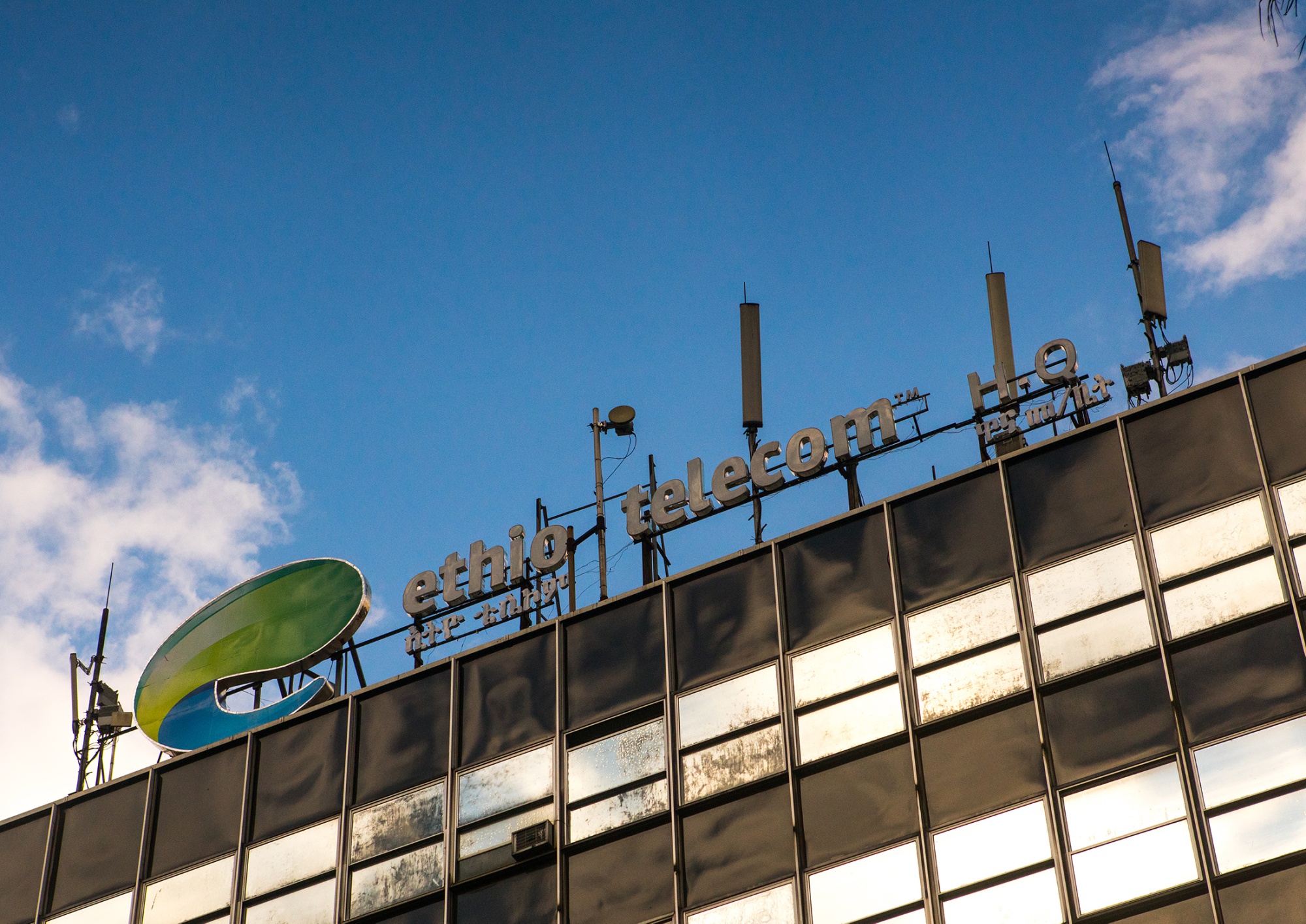
On Saturday, the news broke that an American led consortium, consorting of British and Japanese firms, had won a $850 million contract to create Ethiopia’s 5G telecommunications network, beating a South African backed rival to the bid. The consortium was backed by the US international development finance corporation (DFC) whom preconditioned the loan on the grounds that the money would not be used to procure Huawei or ZTE equipment in order to build the network. The mainstream media quickly depicted it as a win for America “Over China” in Africa.
Despite this, the next day the US Department of State rushed to implement a spree of sanctions over Ethiopia’s leaders and security forces concerning the conflict in the Tigray Region, wherein the government have been fighting separatist insurgents. America accuses Ethiopia of committing atrocities and human rights abuses. The sanctions also include “wide-ranging restrictions on economic and security assistance to Ethiopia” and according to a report from Bloomberg, may extend to a further ban on international lending to the East African nation through the World Bank and the International Monetary Fund (IMF).
These two developments stand in sharp contradiction to each other. The latter could easily overpower the former, but if not one thing is clear: The US is giving with one hand and taking away with the other in Africa and is seeking to impose their strategic designs over the country. Whilst the Telecommunications bid was won by a fair corporate auction as opposed to geopolitical means, with the US led offer much more lucrative than the MTN group one, nonetheless Addis Ababa must be wary in its relationship with Washington and recognize that such investments have obvious political strings attached, which in line with growing sanctions will be leveraged in order to subjugate Ethiopia in line with its foreign policy preferences.



The US DFC: Trojan Lending
A famous Greek myth tells the story as to how soldiers hid inside a giant wooden horse as a gift in order to deceive the city of Troy, only to proliferate a surprise attack and destroy the city. In the 1980s, as the Cold War beckoned to a close, many African and Latin American countries turned to US led Bretton Woods institutions, including the International Monetary Fund seeking fiscal support, whom imposed strident political and economic conditions on them of “opening up” and “restructuring” their economies towards neoliberal systems in line with the global trend of that time. These requirements consisted of dramatic scale privatization, zero tariff barriers. Such actions served to effectively dismantle the economy of the given states, leading to a decimation of industry, agriculture, increased inequality and severe depletions of the standard of living, even inducing famine in some.
Such has always been the modus operandi of the United States when it comes to lending, it often attaches ideological and political strings to its support which can undermine the prosperity and sovereignty of the country targeted. The US DFC, created in 2019, is an institution of the US government designed to be an American counterweight to China’s Belt and Road initiative (BRI) which offers low interest rate loans to development countries. Although this sounds promising, to receiving financing from it comes with strident political strings which forces the recipient to fall in line with anti-China requirements, as well as privatizing national infrastructure to US investors.
In early 2021, the corporation made a deal with Ecuador’s neoliberal government in order to clear its debt of which Washington attributed to China. The agency would pay off debt payments early in exchange for first nationally signing up to Pompeo’s “clean network” initiative, excluding Huawei and ZTE on a national scale, and then secondly the privatization of the country’s oil assets to American investors, with the United States always making a foreign policy point out of controlling strategic energy reserves in the Americas (hence its bid to pursue regime change in Venezuela).
China Respects African Sovereignty

The US is now targeting Ethiopia as a country of strategic interest, namely because it sits near a critical juncture between the Red Sea and the Indian Ocean, and has a close relationship with Beijing. Whilst promising financing for 5G, it is moving to block other forms of aid and assistance over the Tigray Conflict, of which both factors accumulated will allow the US to increase its influence over Ethiopia and subjugate it to its own foreign policy goals.
It is worth noting in contrast, China’s lending and investment in Africa does not come with the political conditionality that other countries or companies are excluded, and nor does Beijing’s dealings on the continent attempt to upend national sovereignty in the way the US have sanctioned Ethiopia’sarmy over fighting the Tigray conflict. This creates an ironic twist, although the United States have long accused China of “predatory lending” and “debt trap diplomacy” the reality is in fact reversed, the US uses lending to procure political and ideological change in respective countries, whereas China does not.
This is precisely why African nations primarily choose China as a partner, as such nations especially on the backdrop of the disastrous “restructuring” in the 1980s and the legacy of western colonialism, are seeking to sustain national sovereignty in the light of multiple socio-political challenges which African countries have faced, which have often induced such instability and political conflict seen in the Tigray. The reports coming out of this region in Ethiopia cannot be easily verified, and they are nonetheless unsettling, but the failure to defeat a separatist occupying force would otherwise result in the partition of Ethiopia, something the US seems happy to explose.
In this case, I believe Ethiopia now risk being pulled into a trap by the United States, it is a classic example of Trojan lending. The way the deal was concluded was legitimate and on the best market premise, yet if this was also an attempt to try and appease Washington by Addis Ababa it has quite obviously, miscalculated. The country is now left in a precarious position and I believe that the deal should be reconsidered, if it has not yet already been jettisoned asfurther sanctions leverage, with South Africa’s MTN group returning with a better offer without the political conditionality of anti-Huawei politics.

Tom Fowdy is a Political Columnist for The Southern African Times. He is a British political and international relations analyst and a graduate of Durham and Oxford universities. He writes on topics pertaining to China, the DPRK, Britain, and the U.S.