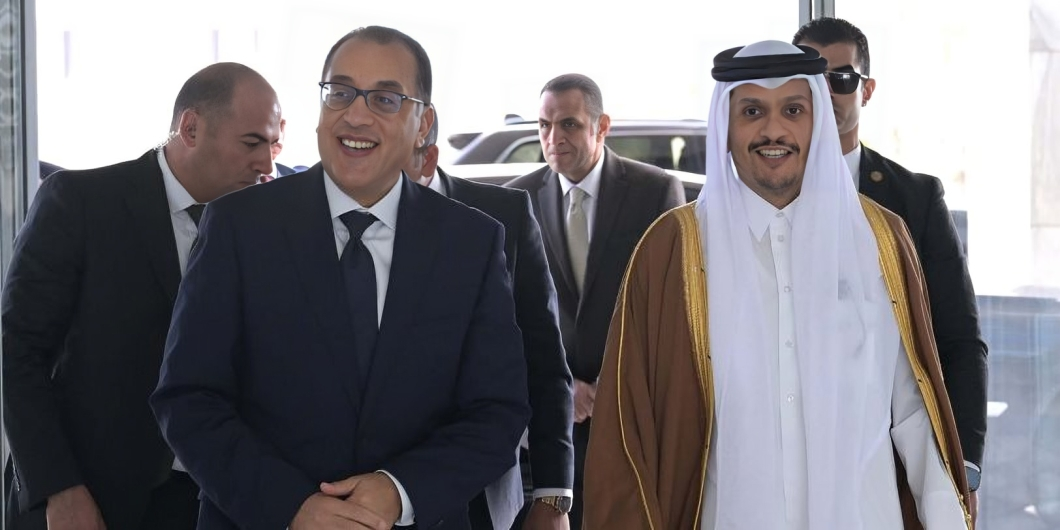
Egypt has secured 3.5 billion US dollars as part of a Qatari-backed investment agreement aimed at developing a major real estate and tourism project along its Mediterranean coast, according to an official statement released by the Egyptian cabinet on Tuesday.
The payment represents the cash component of an investment accord signed in early November between Egypt’s New Urban Communities Authority (NUCA) and Qatari Diar Real Estate Investment Company, a Doha-based firm with extensive experience in large-scale urban and tourism developments across the Middle East and Africa.
The agreement involves the development of a coastal area in Samla and Alam Al-Roum in Egypt’s Matrouh province, a region known for its natural coastal beauty and strategic proximity to Mediterranean trade routes. The Egyptian cabinet indicated that NUCA will receive 15 percent of the project’s net profits once investment costs are fully recovered, reflecting a structure designed to ensure long-term national returns from foreign direct investment.



This initiative forms part of a broader framework under which Egypt and Qatar have agreed to mobilise approximately 29.7 billion US dollars in investments to establish an integrated coastal destination covering more than 20 million square metres. The planned development will include residential communities, tourism and commercial facilities, hospitality infrastructure, educational institutions, and government service centres.
The project aligns with Egypt’s long-term vision to strengthen its tourism-led growth strategy and diversify sources of foreign investment. It also demonstrates a growing trend of intra-regional investment across the African and Arab worlds, where Gulf-based sovereign and private capital is increasingly directed toward African infrastructure and urbanisation projects.
Analysts view this development as a reflection of Cairo’s broader strategy to attract capital that promotes sustainable growth and employment opportunities while reducing dependence on short-term financing instruments. The emphasis on public-private partnerships, as seen in this agreement, suggests a maturing model of African economic cooperation that recognises the continent’s agency in shaping mutually beneficial investment terms.

For Qatar, the project underscores Doha’s expanding portfolio of strategic investments across Africa’s urban and coastal economies, particularly in nations seeking to leverage tourism and infrastructure as engines of post-pandemic recovery. It also builds upon existing economic collaborations between Egypt and Qatar, whose relations have improved significantly in recent years following diplomatic realignment within the Gulf region.
While the project has been welcomed as a positive signal for Egypt’s investment climate, economic observers note that the long-term impact will depend on governance transparency, environmental sustainability, and equitable local participation in development benefits. The focus on coastal tourism carries both opportunities and challenges, particularly in balancing economic growth with ecological preservation and community inclusion.
This investment therefore stands not only as a financial transaction but also as a test case for how African nations can harness international capital to advance home-grown development objectives. By structuring projects that retain domestic value, such as the profit-sharing model outlined in this deal, Egypt’s approach may serve as a blueprint for other African economies seeking to negotiate fairer and more strategic investment partnerships.
As Africa continues to reimagine its developmental pathways, initiatives such as this one signal a gradual but notable shift in the continent’s economic narrative—from one of dependency to one of collaborative and sovereign agency.