Durban will once again become the continental stage for words, rhythm and performance as Poetry Africa returns this October, and among the voices featured will be Zimbabwean filmmaker and poet Kudakwashe Rice whose short film We Are Safe has been shortlisted for the Poetry Africa Film Festival. Established in 1996 and organised by the Centre for Creative Arts at the University of KwaZulu-Natal, the festival has grown into one of Africa’s longest running gatherings dedicated to poetry and the many forms it takes. Over nearly three decades, it has earned a reputation not only as a showcase of talent from across Africa and the world but also as a forum where art meets activism, where themes of democracy, justice, identity and memory are interrogated through performance.
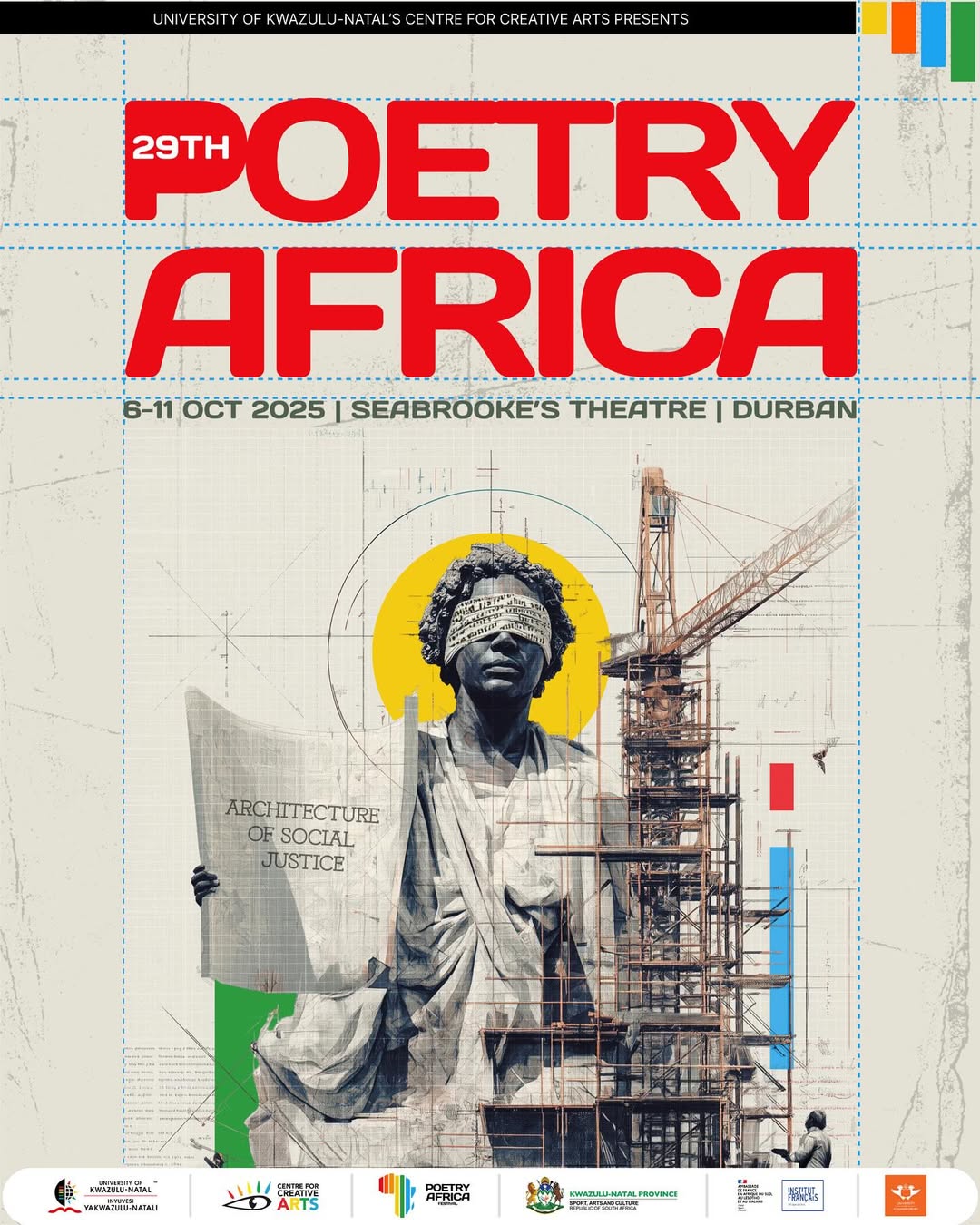
The 2025 edition will run from 6 to 11 October at the Seabrookes Theatre in Durban, and it carries with it a rich programme that reflects both continuity and innovation. Beyond its signature evening performances, slam competitions and open mic sessions, the festival will again reach into schools, offer mentorship to emerging voices and champion poetry in indigenous languages. It is a space where young and seasoned writers find common ground, and where the written word is given the immediacy of the stage.
In recent years, the organisers have expanded the scope of the festival by launching the Poetry Africa Film Festival, an initiative that situates poetry within moving images. This offshoot has become a competitive international platform that welcomes short films, documentaries, animations and experimental work that place poetry at their core. Each piece is designed to bring poetry into dialogue with visual storytelling, offering audiences an alternative way of engaging with verse. Films are typically no longer than ten minutes, enabling them to slot seamlessly into the rhythm of the live festival.




This year, We Are Safe, written, directed and performed by Rice, is among the works that stand out. It is a poetic short film that combines spoken word with visual storytelling to probe questions of artistic expression, resilience and the constant tension between freedom and control. The film is deliberately pared back yet emotionally charged, using striking locations and a carefully measured delivery to hold the audience in a space of both beauty and unease. It asks what it means to remain truthful to oneself in the face of pressure, and whether creativity can ever be contained.
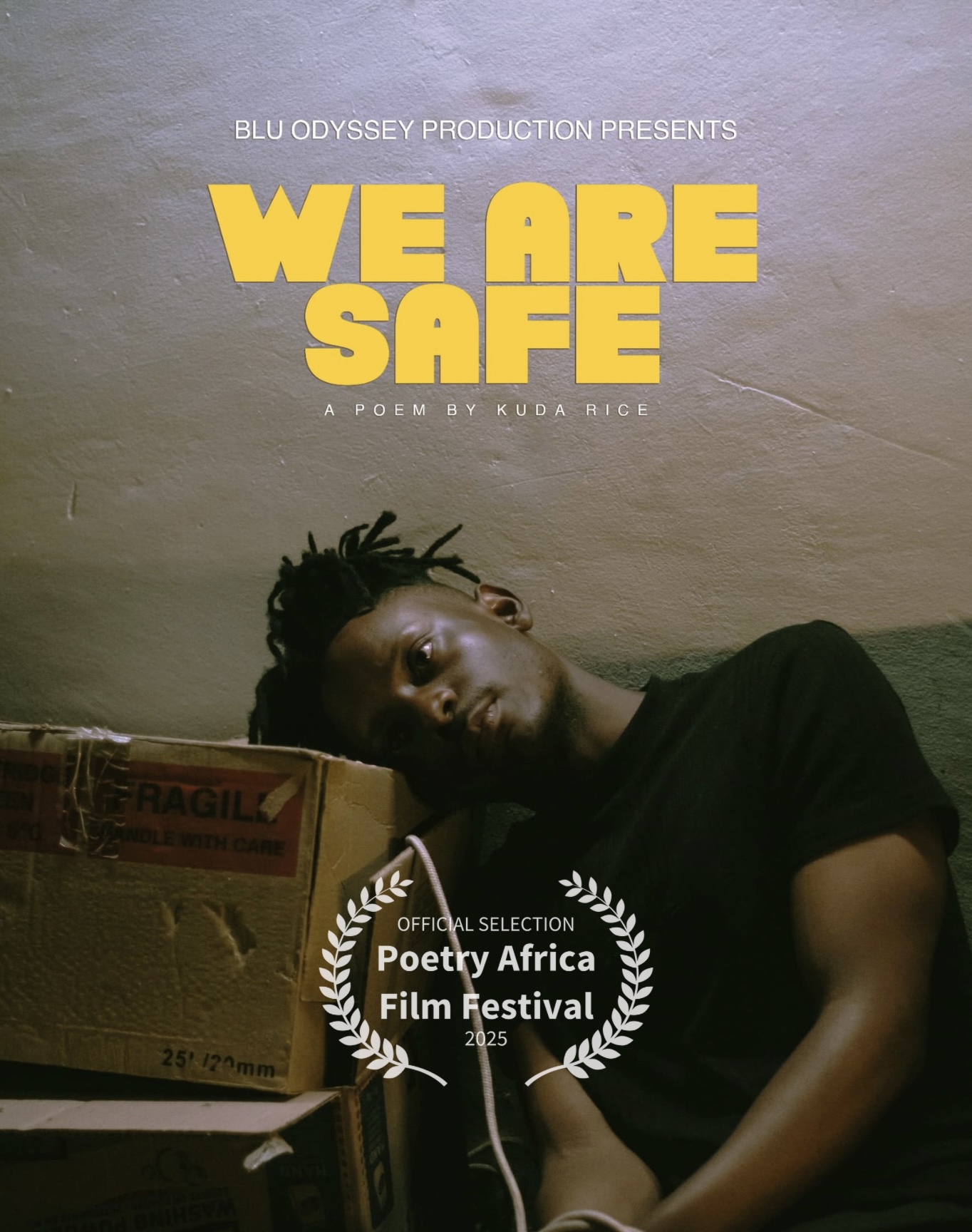
Rice, who also appears in the film alongside actor Koshesayi Kachambwa, speaks of the selection with gratitude. “It is an honour to share this work with audiences in such a vibrant and inspiring setting,” he said ahead of the screening scheduled for 8 October. He views Poetry Africa not just as a showcase but as a cultural meeting point where African voices are amplified and where conversations across borders become possible.
Behind the project is a small but committed team. Assistant director and co-producer Tamudaishe Ngwaru worked closely with Rice to shape the narrative arc, while cinematographer Kudakwashe Chino framed the images with an eye for contrast and mood. The production design was handled by Tsitsi Madhodha, with behind-the-scenes photography by Thabiso Nyoni and technical support from Tanaka Maxwell Chembezi. The music score by Jason Gwanzura layers a subtle sonic texture beneath the words, while the production house Blu Odyssey provided the structure that enabled the vision to be realised.
For Zimbabwean cinema, which often struggles for resources and international platforms, the inclusion of We Are Safe in Durban is more than a single screening. It is a signal of how film and poetry can converge to create new avenues for African storytelling, and how younger artists are finding ways to situate their work within continental conversations. Rice’s film joins a programme curated to highlight experimentation, an element that has become central to the festival’s identity.
What Poetry Africa demonstrates year after year is that poetry is not a static form but a living and adaptive mode of expression. It is able to carry the weight of history, to interrogate the present and to imagine futures that are yet to be written. By extending itself into film, the festival underscores that words do not only live on the page or on the stage. They can move through images, sound and performance, reaching audiences who might never have encountered poetry in its traditional form.
The return of Poetry Africa is therefore not just an event on the cultural calendar but a reaffirmation of the role that art can play in public life. For Durban, it means a week of international attention, with poets and artists converging from across the world. For Zimbabwe, it is the chance to see one of its own voices resonate on that stage, reminding us that creativity often flourishes most strongly where it confronts challenges. And for audiences, it is a promise of evenings where the power of words will once again prove that they can both unsettle and inspire.