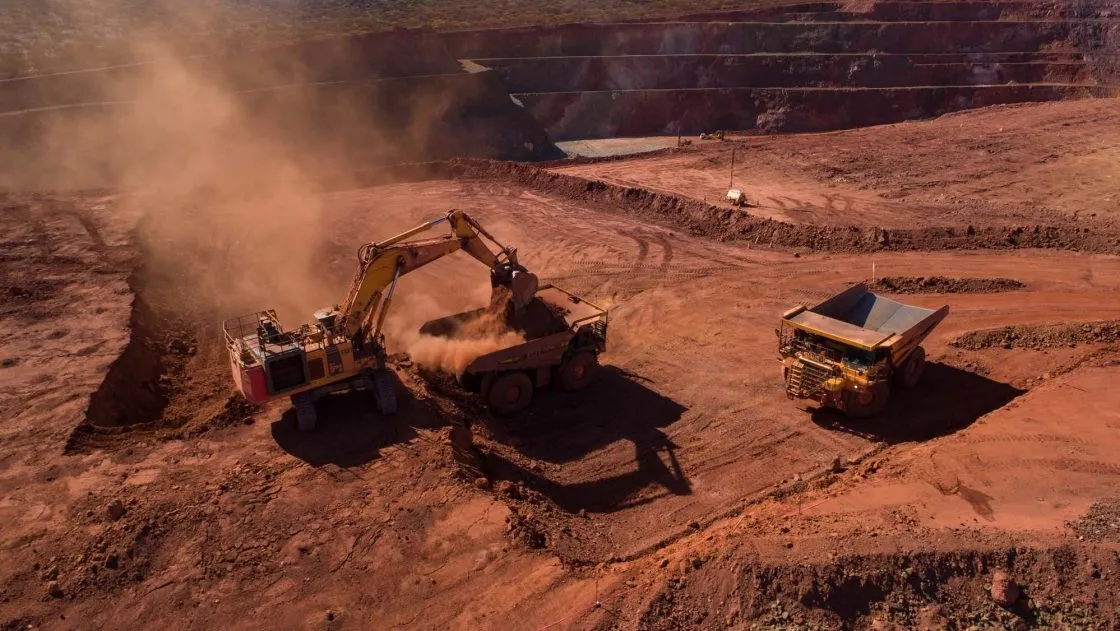
The Democratic Republic of Congo has formally announced the Grande Orientale Iron Ore Project, referred to as Mifor, an industrial scale mining and infrastructure initiative which government officials describe as foundational to the country’s future economic architecture. The project is expected to leverage the country’s largely untapped iron ore reserves, estimated at between 15 and 20 billion tonnes with an average grade exceeding 60 percent, positioning the DRC among the world’s key resource holders.
The planned investment, outlined during a recent Council of Ministers session, is estimated at $28.9 billion in its first phase. Projections over a 25 year horizon suggest a cumulative economic impact surpassing $679 billion. According to the same government briefing, the initiative anticipates generating a net cash flow surplus of $308 billion, with models indicating a high internal rate of return under conservative market assumptions. While the net present value was reported as negative, the broader macroeconomic benefits were considered robust, owing to the strategic design of the programme.
International iron ore prices currently fluctuate around $108 per tonne. As an upstream commodity, iron ore plays a foundational role in the steel manufacturing value chain, where a tonne of stainless steel is priced at approximately $900. By anchoring future processing and value addition within its borders, the DRC aims to gradually shift away from its historical role as a raw material exporter and towards being a value-added participant within global supply chains.



Government spokesperson Patrick Muyaya confirmed that Mifor is intended not merely as a mining venture but as an integrated national development platform. The programme incorporates mineral extraction, infrastructure development, and industrial processing. It is designed to strengthen sovereign capabilities and promote regional economic equity while enhancing long-term state revenue. Mifor is also framed as a mechanism for macroeconomic stabilisation and the development of durable structural assets.
The government has established an interministerial commission to supervise strategic planning, coordinate institutional mandates, and implement the project in phases in line with national guidelines. Preliminary studies and consultations have reportedly attracted significant interest from global institutional investors with track records in financing large scale economic development programmes.

This project arrives at a moment when iron ore continues to demonstrate resilience in global markets, withstanding disruptions such as those brought about by the COVID-19 pandemic and associated supply chain instabilities. By comparison, the DRC’s historic mining focus has concentrated largely on copper and cobalt, minerals critical for global energy transitions but also vulnerable to cyclical market shocks. The shift towards iron ore development introduces new dimensions into the country’s extractive landscape.
While Africa has historically been recognised for its substantial mineral wealth, the challenge of translating resource endowments into sustainable national development remains acute. In this context, the DRC’s move aligns with a broader continental imperative to move beyond raw commodity extraction and build internal capacities for processing, logistics, and industrialisation. Countries such as South Africa, Guinea, Mauritania, and Cameroon have long-standing iron ore industries, though many remain externally financed and export oriented. The Mifor project therefore seeks to redefine this model by embedding sovereign infrastructure and national value chains at its core.
As African nations continue to chart development pathways rooted in self-determination, initiatives like Mifor are seen as pivotal in recalibrating historical relationships between the continent and global commodity markets. Yet questions remain about governance, environmental oversight, community inclusion, and long-term fiscal management. Observers note that while the potential economic returns are considerable, realising them will depend on institutional integrity, public accountability, and inclusive planning.
In this regard, the DRC’s decision to embed the project within a national coordination framework may provide an initial foundation. If successful, Mifor could reshape not only the Congolese economy but also contribute meaningfully to emerging discourses on equitable resource governance in Africa.