Wednesday, February 11, 2026
  • Login
The Southern African Times
  • Home
  • Southern Africa
  • Business
    • African Start ups
    • African Continental Free Trade Area
  • Technology
    • Lifestyle
      • Health
      • Culture
      • Food and Drink
      • Entertainment
  • Opinion
  • Sports
  • SAT Jobs
    • Events
  • About Us
    • Advertise with Us
    • Contact Us
No Result
View All Result
  • Home
  • Southern Africa
  • Business
    • African Start ups
    • African Continental Free Trade Area
  • Technology
    • Lifestyle
      • Health
      • Culture
      • Food and Drink
      • Entertainment
  • Opinion
  • Sports
  • SAT Jobs
    • Events
  • About Us
    • Advertise with Us
    • Contact Us
No Result
View All Result
The Southern African Times
No Result
View All Result
Home World Travel

Discovering the Indian Ocean’s Hidden Treasures: Madagascar and Mozambique

by SAT Reporter
May 19, 2025
in Travel
0
Discovering the Indian Ocean’s Hidden Treasures: Madagascar and Mozambique

When envisioning far-flung escapes and untouched coastlines, many travellers instinctively turn their gaze to Bali, the Seychelles or the Maldives. However, two countries situated on the south-eastern seaboard of the African continent – Madagascar and Mozambique – offer a rarer and arguably more rewarding experience. Divided by the Mozambique Channel yet united by vibrant ecosystems and deeply rooted cultures, these nations beckon the discerning traveller with authenticity, complexity, and arresting beauty.

Madagascar, the fourth-largest island in the world, is often referred to as a “laboratory of evolution.” Isolated for over 80 million years, it boasts a biodiversity unmatched anywhere else on Earth. An estimated 90 per cent of its wildlife is endemic, including emblematic species such as the indri lemur (Indri indri), the panther chameleon (Furcifer pardalis), and the iconic baobab trees (Adansonia spp.). From the highlands of Antananarivo to the eastern rainforests of Andasibe-Mantadia National Park, the island’s terrain offers striking ecological diversity.

Travellers may be drawn to the coral-ringed beaches of Nosy Be or Île Sainte-Marie, where humpback whales migrate from July to September. Others venture south to explore the spiny forest and semi-arid ecosystems near Ifaty and Toliara, where evolutionary adaptations are manifest in flora and fauna found nowhere else. The island’s rich cultural mosaic – a blend of Austronesian, African, and Arab influences – finds expression in daily life, from communal ceremonies such as famadihana (the reburial of ancestors) to culinary staples like coconut rice and zebu stew. Madagascar’s colonial past under French rule remains evident in its administrative systems, language, and architectural forms.


ADVERTISEMENT

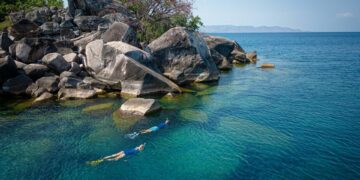
Across the channel, Mozambique offers a similarly captivating, though distinct, experience. Its extensive Indian Ocean coastline stretches over 2,400 kilometres, comprising palm-fringed beaches, mangrove estuaries, and coral reefs of exceptional vibrancy. The Quirimbas and Bazaruto Archipelagos are marine biodiversity hotspots, supporting nesting sea turtles, dugongs, and an array of coral species. Snorkelling and diving in these waters reveal ecosystems that remain largely intact, with conservation efforts such as the Marine Megafauna Foundation working to preserve their integrity.

The capital, Maputo, is an urban centre characterised by Portuguese colonial architecture, broad jacaranda-lined avenues, and a thriving cultural scene. The National Art Museum and the Franco-Mozambican Cultural Centre reflect the country’s artistic vitality. Located to the south, the Maputo Special Reserve is part of the Lubombo Transfrontier Conservation Area and supports elephants, hippos, and a significant number of avian species.

Mozambique’s culinary identity is deeply shaped by Portuguese colonial influence, and dishes such as peri-peri prawns, matapa (cassava leaves simmered in peanut sauce), and pãozinho (Portuguese rolls) speak to this legacy. Traditional music genres like marrabenta and timbila, recognised by UNESCO as intangible cultural heritage, continue to serve as conduits of history and social commentary.

Despite their geographical proximity, the colonial trajectories of Madagascar and Mozambique diverged significantly, shaping their respective linguistic, religious, and governance structures. While French is the official language of Madagascar, Portuguese predominates in Mozambique. Catholicism, introduced by the Portuguese, remains dominant in Mozambique, while Madagascar displays a mix of Christianity and indigenous beliefs, with increasing Islamic influence along its coasts.

Nevertheless, both countries share resilience and warmth. The hospitality of the Malagasy and Mozambican people often leaves a lasting impression on visitors, manifesting in spontaneous music gatherings, community feasts, and a genuine curiosity for cultural exchange.

These nations are also confronting numerous challenges. Environmental degradation, driven by deforestation, illegal mining, and climate change, threatens both terrestrial and marine biodiversity. Economic underdevelopment and political instability pose additional hurdles. However, sustainable tourism initiatives are providing tangible benefits to local communities. Projects like Anjajavy le Lodge’s conservation programme in Madagascar and community-led tourism in Mozambique’s Ilha de Moçambique exemplify efforts to align travel with preservation and inclusive growth.

For travellers considering these destinations, a few practical considerations apply. Both countries require visas for most foreign nationals, and infrastructure can be limited, particularly outside urban centres. Guided tours are recommended for more remote regions. The dry season from April to October is the most suitable period for exploration, offering optimal conditions for wildlife viewing and beach activities. Visitors are also encouraged to learn basic phrases in Malagasy or Portuguese and to observe local customs, including modest attire and respectful photography practices.

Ultimately, Madagascar and Mozambique are more than geographical coordinates on a map; they are storied landscapes where nature and culture converge in rare harmony. In an age where authentic experiences are increasingly commodified, these Indian Ocean gems offer something different – something slower, deeper, and profoundly human.

Tags: African biodiversityAfrican island biodiversityAfro-Portuguese cultureAndasibe Mantadia National Parkcultural travel Africaeco-tourism Indian OceanIndian Ocean travelMadagascar tourismMalagasy traditionsmarine conservation AfricaMozambique holidaysQuirimbas Archipelagosustainable travel Africa
Previous Post

Gweru’s Lyshanda Moyas Crowned Miss Universe Zimbabwe 2025

Next Post

DP World Accelerates $3 Billion Infrastructure Drive Across Sub-Saharan Africa

SAT Reporter

Related Posts

Ethiopian Airlines Reports $4.4 Billion Revenue in Six Months
Travel

Ethiopian Airlines Reports $4.4 Billion Revenue in Six Months

by SAT Reporter
February 11, 2026
Choice Hotels Launches Major African Expansion Starting in Kenya
Travel

Choice Hotels Launches Major African Expansion Starting in Kenya

by SAT Reporter
February 10, 2026
Africa’s Top 10 Travel Destinations by Tourism Revenue in 2024
Travel

Africa’s Top 10 Travel Destinations by Tourism Revenue in 2024

by SAT Reporter
February 10, 2026
Africa Is Not One Country and the Cost of a Singular Tourism Narrative
Travel

Africa Is Not One Country and the Cost of a Singular Tourism Narrative

by SAT Reporter
February 6, 2026
Top African Passports in 2026 Reflect Shifting Patterns of Global Mobility
Travel

Top African Passports in 2026 Reflect Shifting Patterns of Global Mobility

by SAT Reporter
February 3, 2026
Next Post
DP World Accelerates $3 Billion Infrastructure Drive Across Sub-Saharan Africa

DP World Accelerates $3 Billion Infrastructure Drive Across Sub-Saharan Africa

Browse by Category

  • Africa AI
  • African Continental Free Trade Area
  • African Debt
  • African Start ups
  • Agriculture
  • AI Africa
  • Algeria
  • All News
  • Analysis
  • Angola
  • Arts / Culture
  • Asia
  • Botswana
  • BOTSWANA
  • BREAKING NEWS
  • BRICS
  • Burkina Faso
  • Burundi
  • Business
  • Business
  • Business Wire
  • Cameroon
  • Central Africa
  • Chad
  • China
  • Climate Change
  • Climate Changev
  • Community
  • Congo Republic
  • Conservation
  • Côte d’Ivoire
  • COVID 19
  • CRYPTOCURRENCY
  • Culture
  • Democratic Republic of Congo
  • Diplomacy
  • Eastern Africa
  • Economic Development
  • Economy
  • Education
  • Egypt
  • Elections 2024
  • Energy
  • Entertainment
  • Environment
  • Eritrea
  • Ethiopia
  • Europe
  • Fashion
  • Feature
  • Finance
  • Financial Inclusion
  • Food
  • Food and Drink
  • Foods
  • GABON
  • Ghana
  • Global
  • Global Africa
  • Guinea
  • Health
  • Immigration
  • in Southern Africa
  • International news
  • International Relations
  • Ivory Coast
  • Just In
  • Kenya
  • Lesotho
  • Libya
  • Life Style
  • Lifestyle
  • Literature
  • Malawi
  • Malawi
  • Mali
  • Markets
  • Mauritius
  • Middle East
  • Mining in Africa
  • Morocco
  • Mozambique
  • Namibia
  • niger
  • Niger
  • Nigeria
  • North Africa
  • North-Eastern Africa
  • Obituaries
  • Obituary
  • Opinion
  • PARTNER CONTENT
  • Politics
  • Property
  • Racism
  • Rwanda
  • Rwanda
  • SADC
  • SAT Interviews
  • SAT Investigation
  • SAT Jobs
  • Saudi Arabia
  • Senegal
  • Seychelles
  • South Africa
  • South Sudan
  • Sports
  • Startup Africa
  • STOCK EXCHANGE
  • Sudan
  • Sustainability
  • Sustainablity
  • Tanzania
  • Technology
  • Telecommunications
  • The Editorial Board
  • The Power Of She
  • Togo
  • Trade
  • Travel
  • Travel
  • Tunisia
  • Uganda
  • Uncategorized
  • Wealth
  • West Africa
  • World
  • World
  • ZAMBIA
  • Zambia
  • ZIMBABWE
  • Zimbabwe

Browse by Tags

#NewsUpdate #SouthAfrica #TheSouthernAfricanTimes AfCFTA africa African Continental Free Trade Area African development African Development Bank African economy African Union Agriculture Angola Botswana Business China Climate change Cyril Ramaphosa Donald Trump Economic Development economic growth energy transition Finance food security Ghana industrialisation Infrastructure Infrastructure Development International relations Investment Kenya Mozambique Namibia news Nigeria Pan-Africanism Regional Integration renewable energy Rwanda SADC South Africa Southern Africa sustainable development Tanzania Zambia Zimbabwe
ADVERTISEMENT

WHO WE ARE

The Southern African Times is a regional bloc digital newspaper that covers Southern African and world news. The paper also gives a nuanced analysis on news and covers a wide range of reporting which include sports, entertainment, foreign affairs, arts and culture.

Welcome Back!

Login to your account below

Forgotten Password?

Retrieve your password

Please enter your username or email address to reset your password.

Log In

  • Home
  • Southern Africa
  • Business
    • African Start ups
    • African Continental Free Trade Area
  • Technology
    • Lifestyle
      • Health
      • Culture
      • Food and Drink
      • Entertainment
  • Opinion
  • Sports
  • SAT Jobs
    • Events
  • About Us
    • Advertise with Us
    • Contact Us
Are you sure want to unlock this post?
Unlock left : 0
Are you sure want to cancel subscription?