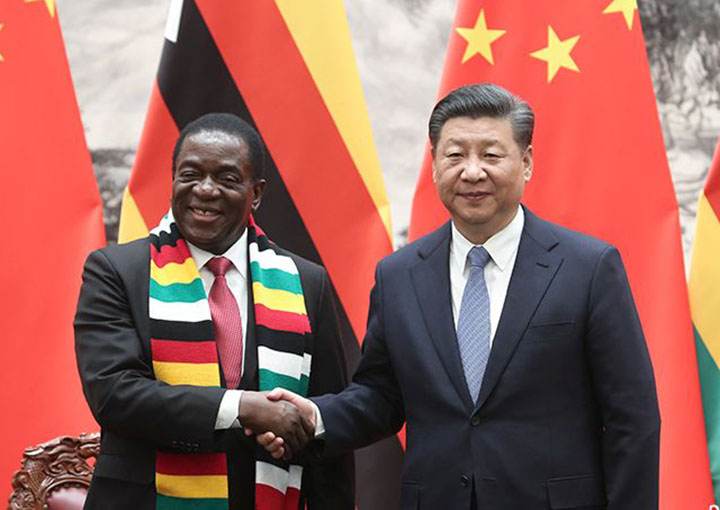
Zimbabwe, a southern African nation endowed with abundant natural resources, is capitalizing on the worldwide shift toward renewable energy to stimulate its economy. Chinese investments in Zimbabwe’s lithium industry are expected to play a crucial role in realizing the country’s ambition to become a major contributor to the value addition in the lithium battery supply chain. Recent developments have seen Chinese companies establish two lithium plants in Zimbabwe, injecting momentum into the nation’s drive to solidify its position as a leading battery materials producer.
On July 5, Zhejiang Huayou Cobalt, through its local subsidiary Prospect Lithium Zimbabwe (PLZ), inaugurated a state-of-the-art processing plant worth $300 million at its Arcadia Lithium Mine near Harare, Zimbabwe’s capital. This move aims to consolidate Zhejiang Huayou Cobalt’s standing as one of the world’s top battery materials producers. The acquisition of the Arcadia Lithium Mine in 2022, valued at $422 million, demonstrated the company’s commitment to the sector.
China emerges as a significant source of foreign investment in Zimbabwe, particularly within the mining sector, with a specific focus on the lithium sub-sector, according to the Zimbabwe Investment and Development Agency’s first-quarter report. The global surge in renewable energy has led to an increase in investor interest, prompting a surge of applications in this sector.



With the completion of the processing plant at Arcadia Mine, PLZ currently possesses the capacity to process 4.5 million tonnes of lithium ore annually, producing 450,000 tonnes of concentrate. Trevor Barnard, the deputy general manager of PLZ, confirmed that plans are underway to further process this concentrate and manufacture value-added lithium products within the country. Feasibility studies are currently being conducted to facilitate the subsequent phases of the project.
President Emmerson Mnangagwa acknowledged the significant role that Chinese businesses play in Zimbabwe’s lithium sector during the commissioning ceremony. He emphasized the importance of lithium as a mineral of both present and future, emphasizing that beneficiation and value addition by Prospect Lithium Zimbabwe would position the country as a competitive player within the global lithium value chain. The President regarded these investments as a vote of confidence in Zimbabwe’s investment climate.

In another development, Sinomine Resource Group’s local unit, Bikita Minerals, announced the commencement of trial production at a new spodumene and petalite plant in Zimbabwe’s Masvingo Province. Upon reaching full production capacity, the expansion project at Bikita Minerals Lithium Mine is projected to yield 300,000 tonnes of high-quality chemical-grade spodumene concentrate annually. The beneficiation production lines are expected to enhance the company’s lithium concentration supply capability and future business performance. Sinomine Resource Group had acquired Bikita Minerals in 2022 and invested $200 million to expand operations at the mine.
The Zimbabwean government aims to achieve a $12 billion mining economy by the end of 2023, with lithium anticipated to contribute at least half a billion dollars towards this target. To promote value addition, the government implemented a ban on the export of raw lithium last year. Mines and Mining Development Minister Winston Chitando emphasized the need for lithium miners to surpass concentrate production and develop the capacity to produce battery-grade lithium.
Zimbabwe’s partnership with Chinese investors in the lithium industry signals a significant step towards realizing the country’s economic ambitions. By leveraging its abundant lithium resources and the growing global demand for renewable energy, Zimbabwe is poised to establish itself as a key player in the thriving lithium market.