Thursday, April 16, 2026
  • Login
The Southern African Times
  • Home
  • Southern Africa
  • Business
    • African Start ups
    • African Continental Free Trade Area
  • Technology
    • Lifestyle
      • Health
      • Culture
      • Food and Drink
      • Entertainment
  • Opinion
  • Sports
  • SAT Jobs
    • Events
  • About Us
    • Advertise with Us
    • Contact Us
No Result
View All Result
  • Home
  • Southern Africa
  • Business
    • African Start ups
    • African Continental Free Trade Area
  • Technology
    • Lifestyle
      • Health
      • Culture
      • Food and Drink
      • Entertainment
  • Opinion
  • Sports
  • SAT Jobs
    • Events
  • About Us
    • Advertise with Us
    • Contact Us
No Result
View All Result
The Southern African Times
No Result
View All Result
Home Mining in Africa

China Unfazed in US Led Minerals Push as Africa Weighs Its Stakes

by SAT Reporter
February 18, 2026
in Mining in Africa
0
China Unfazed in US Led Minerals Push as Africa Weighs Its Stakes

The geopolitics of critical minerals has re emerged as a defining feature of twenty first century industrial strategy. Recent remarks by senior United States officials signal a reassessment of globalisation after the Cold War, with growing emphasis on industrial resilience and supply chain sovereignty. Washington’s position reflects concerns that decades of trade liberalisation coincided with the relocation of mineral processing and advanced manufacturing capacity beyond its borders.

According to the United States Geological Survey, China accounted for roughly 60 per cent of global rare earth mine production in 2023 and controls between 85 and 90 per cent of rare earth processing and separation capacity. While China holds approximately one third of known global rare earth reserves, its strategic advantage lies in midstream processing, magnet production and advanced materials engineering developed over several decades.

The International Energy Agency has similarly documented the high geographic concentration of supply chains for lithium, cobalt, graphite and rare earth elements. Its Global Critical Minerals Outlook 2024 notes that refining capacity for many energy transition minerals remains heavily concentrated in China, even where mining itself is more geographically diversified.


ADVERTISEMENT

In the United States, official assessments underscore structural vulnerabilities. Data from the United States Geological Survey indicate that the country is 100 per cent net import reliant for at least a dozen critical minerals and more than 50 per cent reliant for several dozen others. Policy responses have included financing initiatives, strategic stockpiling and diplomatic outreach. Statements and programme details are available through the White House and the Export Import Bank of the United States, which has expanded support for domestic and allied critical mineral projects.

Washington’s strategy has included convening allied governments to coordinate investment, regulatory standards and mineral sourcing. The stated objective is to reduce exposure to supply disruptions that could affect sectors such as electric vehicles, renewable energy systems, telecommunications infrastructure and defence manufacturing.

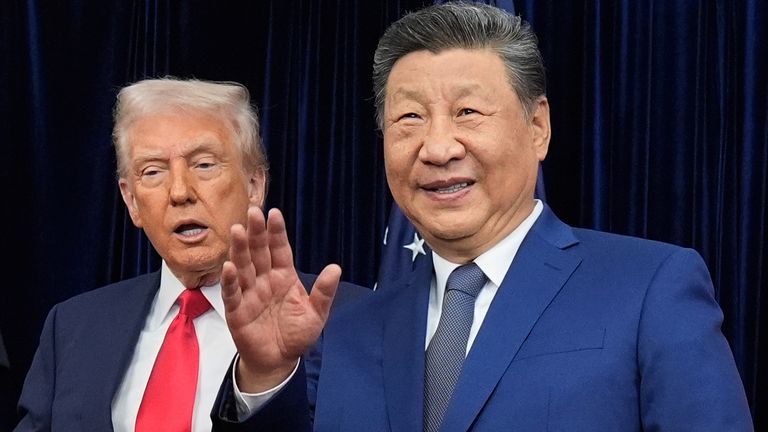
Beijing’s response has been measured rather than confrontational. Chinese officials have reiterated support for open and inclusive trade frameworks, while opposing exclusive blocs that may fragment global industrial chains. Structural realities underpin this confidence. China’s long investment cycle in separation technologies, including countercurrent solvent extraction systems, has produced cost efficiencies and technical expertise that cannot easily be replicated in the short term.

However, the emerging realignment extends beyond a binary rivalry. For African economies, the renewed global focus on critical minerals presents both opportunity and risk. The African Development Bank estimates that Africa holds around 30 per cent of the world’s mineral reserves, including cobalt in the Democratic Republic of Congo, platinum group metals in South Africa and Zimbabwe, manganese in Gabon and South Africa, graphite in Mozambique and Tanzania and rare earth deposits in Malawi and Namibia. These resources are central to the global energy transition.

At continental level, the African Union has articulated through the Africa Mining Vision a policy framework that prioritises local beneficiation, industrialisation and value addition rather than continued export of raw ores. This reflects a broader shift towards resource sovereignty and developmental transformation.

African states are navigating a complex landscape of partnerships. China remains a significant investor in mining, infrastructure and downstream processing across the continent. At the same time, Western governments are proposing diversified supply chain partnerships that may include investment guarantees, technology transfer and infrastructure financing. For many African governments, strategic autonomy requires maintaining diversified economic relations rather than aligning exclusively with any single bloc.

There are also governance and environmental dimensions. Mineral extraction carries ecological and social implications that demand transparent contracts, community engagement and regulatory oversight. The scale of projected demand for battery minerals and rare earth elements raises questions about sustainable mining practices and equitable distribution of benefits.

Analysts suggest that building fully independent processing ecosystems outside China could require a decade or more, given permitting timelines, capital requirements and technological complexity. This temporal dimension underscores why Beijing has expressed confidence in its entrenched position, even as Washington mobilises alliances and financing mechanisms.

For Africa, the evolving minerals landscape should not be reduced to a contest between external powers. Rather, it represents a moment to recalibrate bargaining power, deepen regional integration and strengthen domestic industrial capacity. The continent’s agency lies in shaping contracts, enforcing standards and ensuring that mineral wealth translates into inclusive development.

In a world marked by strategic competition, Africa is neither peripheral nor passive. Its resources, markets and policy choices will influence the architecture of emerging supply chains. The central question is whether this renewed global interest will entrench extractive patterns or catalyse a more equitable and industrially transformative model of growth.


Tags: africaChinacritical mineralsgeoeconomicsglobal tradeindustrial policyrare earthsresource governancesupply chainsUnited States
Previous Post

Zimbabwe reach Super 8s as rain ends Australia’s hopes

Next Post

United Kingdom Restricts Botswana Red Meat Imports Following Foot and Mouth Outbreak

SAT Reporter

Related Posts

Zimbabwe moves to localise mineral certification in shift towards value addition
Mining in Africa

Zimbabwe moves to localise mineral certification in shift towards value addition

by SAT Reporter
April 16, 2026
Zimbabwe Grants Lithium Export Quota to Chinese Firm
Mining in Africa

Zimbabwe Grants Lithium Export Quota to Chinese Firm

by SAT Reporter
April 15, 2026
Ghana Transfers Major Damang Gold Mine to Local Operator
Mining in Africa

Ghana Transfers Major Damang Gold Mine to Local Operator

by SAT Reporter
April 10, 2026
Africa pilots innovative bond to formalise artisanal mining
Mining in Africa

Africa pilots innovative bond to formalise artisanal mining

by SAT Reporter
April 10, 2026
Ghana signals shift towards domestic ownership in gold sector
Mining in Africa

Ghana signals shift towards domestic ownership in gold sector

by SAT Reporter
April 9, 2026
Next Post
United Kingdom Restricts Botswana Red Meat Imports Following Foot and Mouth Outbreak

United Kingdom Restricts Botswana Red Meat Imports Following Foot and Mouth Outbreak

Browse by Category

  • Africa AI
  • African Continental Free Trade Area
  • African Debt
  • African Start ups
  • Agriculture
  • AI Africa
  • Algeria
  • All News
  • Analysis
  • Angola
  • Arts / Culture
  • Asia
  • Botswana
  • BOTSWANA
  • BREAKING NEWS
  • BRICS
  • Burkina Faso
  • Burundi
  • Business
  • Business
  • Business Wire
  • Cameroon
  • Central Africa
  • Chad
  • China
  • Climate Change
  • Climate Changev
  • Community
  • Congo Republic
  • Conservation
  • Côte d’Ivoire
  • COVID 19
  • CRYPTOCURRENCY
  • Culture
  • Democratic Republic of Congo
  • Diplomacy
  • Eastern Africa
  • Economic Development
  • Economy
  • Education
  • Egypt
  • Elections 2024
  • Energy
  • Entertainment
  • Environment
  • Eritrea
  • Ethiopia
  • Europe
  • Fashion
  • Feature
  • Finance
  • Financial Inclusion
  • Food
  • Food and Drink
  • Foods
  • GABON
  • Ghana
  • Global
  • Global Africa
  • Guinea
  • Health
  • Immigration
  • in Southern Africa
  • International news
  • International Relations
  • Ivory Coast
  • Just In
  • Kenya
  • Lesotho
  • Libya
  • Life Style
  • Lifestyle
  • Literature
  • Malawi
  • Malawi
  • Mali
  • Markets
  • Mauritius
  • Middle East
  • Mining in Africa
  • Morocco
  • Mozambique
  • Namibia
  • Niger
  • niger
  • Nigeria
  • North Africa
  • North-Eastern Africa
  • Obituaries
  • Obituary
  • Opinion
  • PARTNER CONTENT
  • Politics
  • Property
  • Racism
  • Rwanda
  • Rwanda
  • SADC
  • SAT Interviews
  • SAT Investigation
  • SAT Jobs
  • Saudi Arabia
  • Senegal
  • Seychelles
  • South Africa
  • South Sudan
  • Sports
  • Startup Africa
  • STOCK EXCHANGE
  • Sudan
  • Sustainability
  • Sustainablity
  • Tanzania
  • Technology
  • Telecommunications
  • The Editorial Board
  • The Power Of She
  • Togo
  • Trade
  • Travel
  • Travel
  • Tunisia
  • Uganda
  • Uncategorized
  • Wealth
  • West Africa
  • World
  • World
  • ZAMBIA
  • Zambia
  • Zimbabwe
  • ZIMBABWE

Browse by Tags

#NewsUpdate #SouthAfrica #SouthernAfricanTimes #TheSouthernAfricanTimes AfCFTA africa African Continental Free Trade Area African development African Development Bank African economies African economy African Union Agriculture Angola Botswana Business China Climate change Cyril Ramaphosa Economic Development economic growth energy transition fiscal policy food security industrialisation Inflation Infrastructure Development International relations Investment Kenya Mozambique Namibia news Nigeria Regional Integration renewable energy Rwanda SADC South Africa Southern Africa sustainable development Tanzania United States Zambia Zimbabwe
ADVERTISEMENT

WHO WE ARE

The Southern African Times is a regional bloc digital newspaper that covers Southern African and world news. The paper also gives a nuanced analysis on news and covers a wide range of reporting which include sports, entertainment, foreign affairs, arts and culture.

Welcome Back!

Login to your account below

Forgotten Password?

Retrieve your password

Please enter your username or email address to reset your password.

Log In

  • Home
  • Southern Africa
  • Business
    • African Start ups
    • African Continental Free Trade Area
  • Technology
    • Lifestyle
      • Health
      • Culture
      • Food and Drink
      • Entertainment
  • Opinion
  • Sports
  • SAT Jobs
    • Events
  • About Us
    • Advertise with Us
    • Contact Us
Are you sure want to unlock this post?
Unlock left : 0
Are you sure want to cancel subscription?