

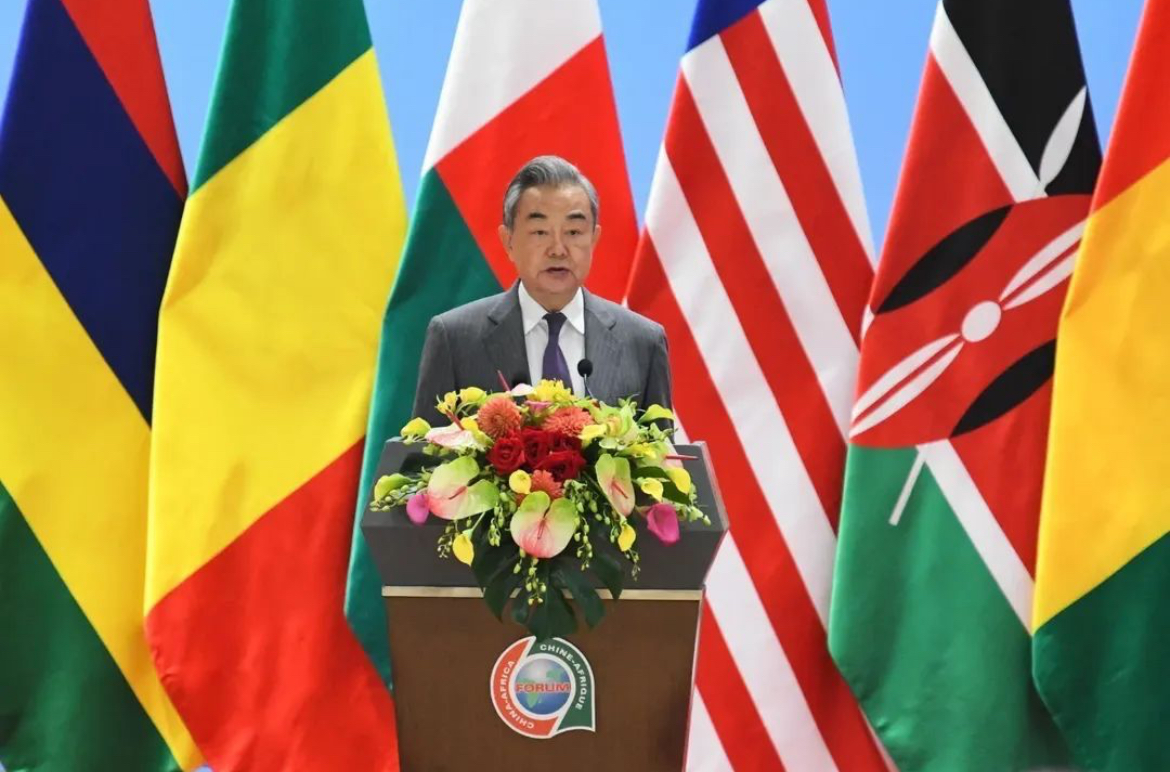
China has formally declared its readiness to abolish all tariffs on imports from the 53 African countries with which it maintains diplomatic ties, a move that could significantly recalibrate Africa’s global trade relations. The announcement was made during a high-level China-Africa cooperation meeting and follows mounting uncertainty surrounding future US-Africa trade relations, particularly in light of proposed tariff hikes by the United States.
Beijing’s commitment to zero-tariff access extends a policy first introduced in 2024, which removed duties on imports from 33 African countries classified by the United Nations as “least developed.” The expanded initiative will now encompass major African economies, including Nigeria and South Africa, two of the continent’s largest exporters to China. The Chinese government has not provided a timeline for the implementation of this measure.
According to China’s Ministry of Commerce, Africa exported approximately $170 billion (around £125 billion) worth of goods to China in 2023, underscoring China’s position as Africa’s foremost trading partner for the past 15 consecutive years. Much of this trade comprises raw materials and mineral resources, including copper and cobalt from the Democratic Republic of Congo and bauxite from Guinea, reflecting China’s ongoing demand for essential industrial inputs.



In a joint ministerial communiqué issued during the meeting, African and Chinese representatives criticised what they described as attempts by “certain countries” to undermine the global economic order through the unilateral imposition of tariffs. The statement explicitly called for international trade disputes to be addressed on the basis of “equality, respect and mutual benefit.” Though unnamed, this was widely interpreted as a direct reference to the United States.
The timing of China’s announcement coincides with heightened trade tensions between the US and several African countries. In April 2025, US President Donald Trump proposed significant tariff increases on a range of imported goods, including punitive duties of up to 50% on certain products from Lesotho, 30% from South Africa, and 14% from Nigeria. The rationale cited for the increases was to protect American industries and reduce trade deficits, but the policy has drawn criticism from both domestic stakeholders and international partners.
The implementation of the US tariffs has been temporarily suspended until July, with US Treasury Secretary Scott Bessent indicating that exemptions may be granted to countries that engage in “good faith” negotiations with Washington. However, uncertainty remains over the future of the Africa Growth and Opportunity Act (AGOA), a longstanding US policy that provides eligible African countries with duty-free access to the American market. In 2024, the US imported $39.5 billion worth of goods from Africa, a significant portion of which entered under AGOA’s preferential terms.

Eswatini remains the sole African country excluded from China’s tariff elimination scheme, due to its diplomatic recognition of Taiwan, which Beijing regards as a breakaway province. China maintains a strict “One China” policy and does not engage in full diplomatic relations with countries that recognise Taiwan as an independent state.
This development marks a pivotal moment in global trade relations for African economies. By aligning more closely with China’s tariff-free market, African exporters may find a valuable alternative amid the uncertainty posed by American protectionist measures. However, analysts caution that long-term benefits will depend on African states’ capacity to diversify exports and upgrade domestic manufacturing, ensuring that preferential market access translates into sustainable economic development.
As the geopolitical landscape evolves, Africa finds itself navigating between the competing interests of major global powers, each offering differing visions of partnership and economic cooperation. The decisions made in the coming months could determine the continent’s trade trajectory for years to come.


