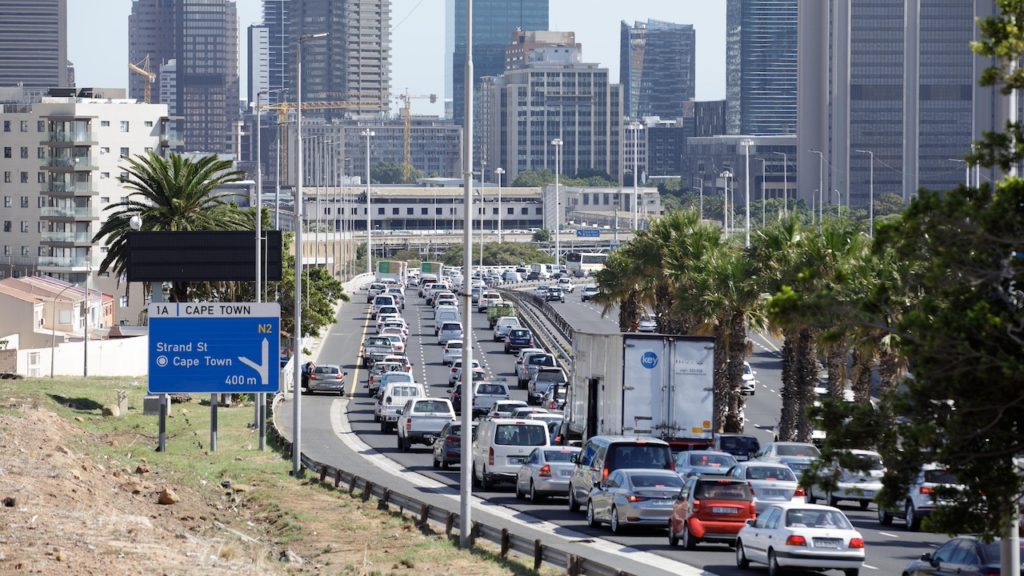
Cape Town, South Africa’s legislative capital, has been ranked the sixth most congested city globally, according to the INRIX 2025 Global Traffic Scorecard. The report, which analysed congestion across nearly one thousand cities, found that drivers in Cape Town lose approximately 96 hours annually due to traffic delays.
The study notes that while congestion levels in the city increased by only two per cent compared with the previous year, overall traffic delays have surged by sixteen per cent since 2023. This places Cape Town behind Istanbul, Mexico City, Chicago, New York, and Philadelphia in terms of congestion severity. Johannesburg, the country’s economic hub, was ranked twenty ninth, with motorists losing an average of 59 hours each year.
According to the INRIX analysis, congestion occurs when travel demand exceeds road capacity, leading to inefficiencies that affect both individuals and the broader economy. As the report explains, time lost in traffic translates into wasted fuel, reduced productivity, and additional costs for freight transport. These disruptions contribute to inflationary pressures and exacerbate environmental degradation. While the report does not quantify these secondary effects, it acknowledges that congestion diminishes overall quality of life and has tangible social and economic consequences.



Cape Town’s growing congestion reflects not only its expanding population and vehicle ownership but also broader structural challenges in African urban design. Many African cities are experiencing rapid urbanisation without corresponding investment in public transport, road infrastructure, or spatial planning that centres on accessibility and equity. The result is that mobility becomes a privilege rather than a right, disproportionately affecting working-class commuters who spend hours navigating congested routes daily.

Urban planners across the continent are increasingly calling for transport systems that integrate sustainability and inclusivity. The issue is not limited to congestion alone but extends to the social and economic implications of how African cities grow and move. Mobility is deeply intertwined with questions of environmental justice, urban design, and equitable access to opportunity.
In this context, Cape Town’s ranking should not be viewed merely as a traffic statistic but as an indicator of broader systemic pressures shaping African cities. It invites reflection on how to build transport networks that support both economic growth and human dignity. Efforts such as the expansion of public transport, investment in non motorised mobility, and regional cooperation in infrastructure development could serve as pathways toward more efficient and humane urban systems.
While global comparisons often measure African cities against Western benchmarks, it is essential to situate these findings within Africa’s unique historical and socio economic realities. Cities like Cape Town embody both the promise and the pressure of African urbanisation. Addressing congestion, therefore, is not simply about reducing travel time but about reimagining how African cities function and for whom they are built.