Leaders from the BRICS nations are poised to convene in South Africa to deliberate on the transformation of their loose coalition of countries into a formidable geopolitical force capable of challenging the prevailing Western influence in global affairs. The summit, scheduled from August 22 to 24, is anticipated to be a pivotal moment as the bloc contemplates expanding its membership and explores avenues for collaboration that align with their shared goals.
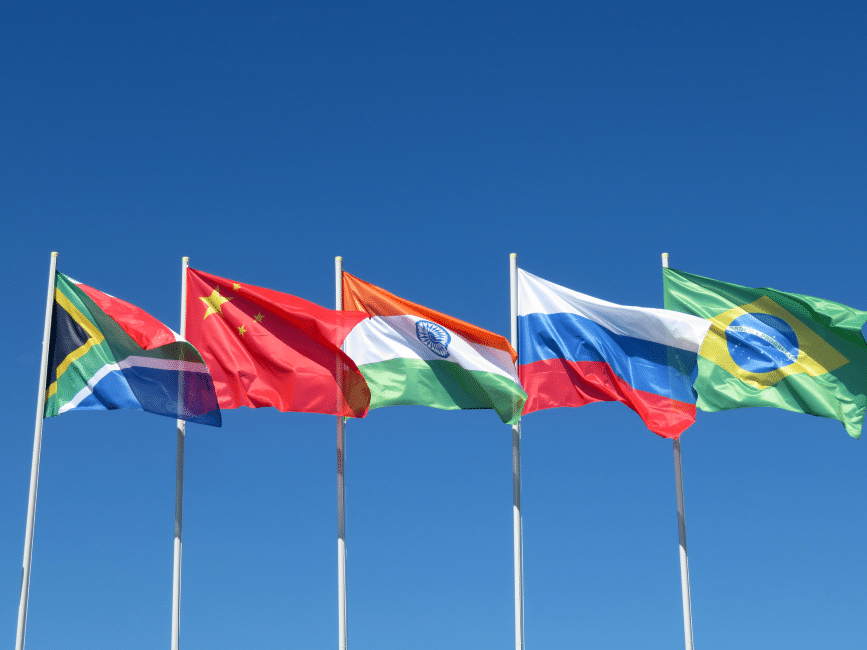
The BRICS coalition, consisting of Brazil, Russia, India, China, and South Africa, collectively accounts for a quarter of the global economy. While diverse in their geographical locations and economic systems, these nations share a common skepticism towards the existing world order, which they perceive as primarily serving the interests of Western powers led by the United States.
Amidst this backdrop, the Russian President Vladimir Putin, who currently faces an international arrest warrant over alleged war crimes in Ukraine, will be notably absent from the summit. The absence underlines the complex dynamics within the BRICS coalition, particularly concerning the question of expansion. Disagreements have arisen over whether to include numerous “Global South” nations that have expressed interest in joining the coalition, with as many as 40 nations, including Saudi Arabia, Argentina, and Egypt, expressing their desire to be part of the bloc.



The central theme of this 15th BRICS summit, “BRICS and Africa,” highlights the importance of fostering closer ties between the coalition and the African continent. This focus resonates with the current global trend where Africa is increasingly becoming a focal point of competition among major world powers.
China, seeking to enhance its geopolitical influence and counterbalance the United States, is pushing for swift expansion of the BRICS coalition. On the contrary, Brazil is exercising caution against rapid expansion, concerned that an already unwieldy coalition might lead to the dilution of its significance.
While China supports membership expansion, other members, including Russia and South Africa, are also keen to extend their diplomatic reach through new memberships. India, however, finds itself in a more reserved position on this matter.

At the core of the BRICS summit discussions lies the ambition to display global leadership in addressing the development and inclusion needs of the “Global South” within multilateral systems. This aspiration is underscored by a shared desire to reform global governance structures to amplify the representation of developing nations and emerging markets, thus providing a counterpoint to the Western-dominated international norms.
The summit will also undoubtedly bring attention to the BRICS New Development Bank (NDB), which seeks to challenge the influence of conventional financial institutions like the World Bank. However, despite its intentions, the NDB has only approved a fraction of loans compared to other established institutions. Moreover, the recent imposition of sanctions on member Russia has added hurdles to the NDB’s operations.
Climate change, a topic of global concern, may make an appearance in the discussions. With BRICS nations collectively contributing 40% of the world’s population and an equivalent share of greenhouse gas emissions, the coalition holds substantial sway over climate-related matters. While officials from Brazil, China, and South Africa suggest that climate change might be broached, it may not take precedence in the agenda. The BRICS countries, laying blame on developed nations for driving global warming, aim to persuade richer countries to assume a greater role in decarbonizing the global energy supply.

As the BRICS summit approaches, the world watches closely to see how this eclectic coalition navigates the delicate balance between expanding its influence, addressing pressing global challenges, and cementing its role as a robust alternative to Western-dominated paradigms.