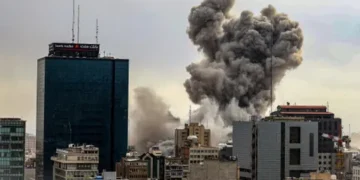
In an unprecedented escalation, Israel has initiated a series of precise military strikes against what it describes as “military targets” in Iran. The Israeli Defense Forces (IDF) stated that the action comes in response to Iran’s ballistic missile attack on Israeli territories on October 1, which marked a significant intensification of hostilities in the region. According to official sources, these strikes are part of Israel’s broader defensive stance, aimed explicitly at neutralising military assets linked to Tehran’s aggressive posturing in the Middle East.
The operations, ongoing since 00:35 local time, are reported to be focusing strictly on Iranian military installations. While Israeli authorities have refrained from detailing specific locations or targets, the IDF has affirmed that the strikes are “precise,” underscoring a measured approach intended to counter immediate threats. An IDF statement emphasized that, “like every other sovereign nation, the State of Israel has the right and the duty to respond,” attributing Iran’s actions to its proxies, which Israel asserts have been responsible for a series of attacks against it since early October.
U.S. Response and Monitoring
U.S. President Joe Biden has been briefed on the developments, and according to the National Security Council, he is “closely following” the situation. A spokesperson from the council reiterated the White House’s understanding that Israel’s actions constitute “self-defense” against an active threat. While the U.S. response remains diplomatically restrained, there is an apparent alignment with Israel’s rationale for its military operations.




Regional Reactions and Potential Fallout
The Iranian government has responded through state media, which reported that Iran’s air defense systems were activated amidst the strikes, leading to a series of loud explosions across targeted areas. However, Tehran’s two main airports, according to state-run news agency AFP, continue to operate without disruptions, suggesting that civilian infrastructure remains unaffected at this stage.
Iranian officials have neither confirmed nor denied the extent of the damage or specific sites hit by the Israeli strikes, maintaining that operations continue “as normal” across key state-run facilities. However, reports from local media indicate that Tehran has ramped up defensive measures in anticipation of potential further escalations.
Israel’s Position and Statements
In a statement, the IDF has affirmed its commitment to both “defensive and offensive capabilities,” a stance reflective of its long-held security doctrine aimed at maintaining an operational edge over hostile state and non-state actors in the region. “We will do whatever necessary to defend the State of Israel and the people of Israel,” the IDF declared, signaling a possible continuation of such strikes should Iranian provocations persist.
In conclusion, the current situation underscores a notable rise in hostilities between Israel and Iran, with potential ramifications across an already volatile region. As both nations bolster their respective defensive postures, international observers are watching closely for any signs of de-escalation or, conversely, further intensification.