

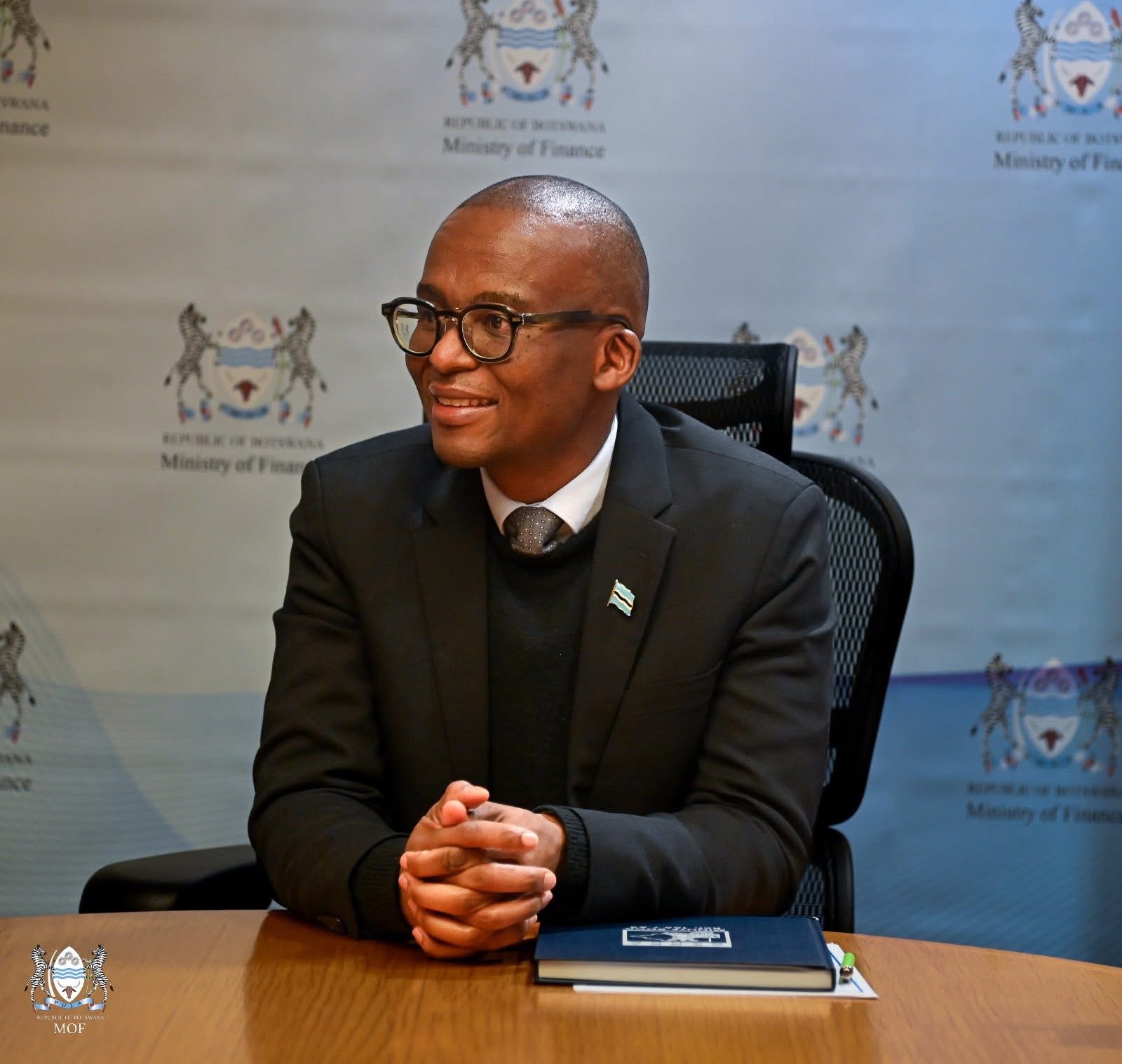
Botswana has launched an ambitious partnership with the Massachusetts Institute of Technology (MIT) to pivot from a mineral-dependent economic model to one anchored in innovation, entrepreneurship, and knowledge. The initiative, unveiled by Vice President and Minister for Finance Ndaba Gaolathe, represents a bold recalibration of the nation’s development trajectory and aims to reposition Botswana as a regional leader in science-driven economic growth.
The partnership is spearheaded through MIT’s Kuo Sharper Center, which brings to the table a history of enabling innovation ecosystems in emerging markets. Botswana’s engagement with the institution will focus on nurturing research-driven startups, embedding entrepreneurial culture within academic institutions, and advancing institutional reform.
Speaking on the occasion, Vice President Gaolathe highlighted that Botswana’s development strategy no longer rests solely on its legacy as a stable mineral exporter. Instead, the country is investing in “ideas over extraction”, signalling its readiness to become a creator of globally relevant solutions. The five-pronged transformation agenda—fiscal discipline, institutional strengthening, strategic infrastructure, state-owned enterprise reform, and education system overhaul—forms the foundation of this shift.



Botswana’s historical reputation for good governance and rule of law provides a unique advantage in creating the stable environment necessary for innovation to thrive. This political stability has, over time, garnered international confidence, and the Government now seeks to leverage this for inclusive economic opportunity through knowledge-intensive industries. Innovation-driven entrepreneurship is viewed as a mechanism to catalyse job creation, reduce dependency on traditional employment, and shift citizens towards being job creators themselves.
Over a five-year implementation window, the partnership is expected to result in the rollout of Research, Entrepreneurship, and Acceleration Programmes (REAP) and Sandbox innovation models at institutions such as the Botswana International University of Science and Technology (BIUST) and the University of Botswana. These initiatives are designed to enable young people to transition from ideation to real-world problem-solving, and eventually to market-ready ventures. The aim is not merely academic enrichment but a cultural shift that encourages risk-taking, ownership, and solution-oriented thinking.
Botswana’s leadership envisions that these programmes will foster new industries in areas such as health technology, climate-resilient agriculture, financial technology, and renewable energy. The government also anticipates direct contributions to employment growth and export diversification. According to the Vice President, Botswana’s startups—particularly those focused on agriculture, health, and climate resilience—are already engaging with grassroots challenges, and the MIT collaboration is expected to scale these efforts through structured mentorship and access to international innovation networks.
The broader education system is also undergoing reform to align with the demands of the Fourth Industrial Revolution. Curricula across secondary schools, technical colleges, and teacher training institutions are being realigned to integrate skills such as artificial intelligence, data science, sustainability, and enterprise development. The objective is to embed innovation as a cross-cutting national competency.
In a regional context, Botswana is positioning itself as a logistical and intellectual hub for southern and central Africa. With strategic investments in rail infrastructure, freight corridors, and dry ports, the country is leveraging its geography not as a limitation but as a conduit for regional integration. These infrastructural projects are framed within the Southern African Customs Union (SACU) and the African Continental Free Trade Area (AfCFTA), where Botswana intends to transition from a raw materials exporter to a provider of services and high-value goods.
Botswana’s collaborative stance is evident in its willingness to share models and methodologies with neighbouring states. Rather than pursuing a prescriptive approach, the government seeks to document progress transparently and provide platforms for peer collaboration across the continent. This includes co-development efforts in supply chain integration, regulatory harmonisation, and innovation policy.
At the core of this reform drive is the Botswana Economic Transformation Programme (BETP)—a newly launched, time-bound initiative designed to accelerate structural reforms and eliminate inefficiencies in government execution. BETP promotes co-creation between ministries, private sector actors, and development partners. In just 12-week cycles, the programme develops investment-ready projects across critical sectors including logistics, agriculture, healthcare, energy, and digital infrastructure. A national Call for Ideas via www.cfi.gov.bw invites entrepreneurs, businesses, and civic actors to submit scalable solutions for public-private collaboration.

By embedding performance dashboards, prioritisation labs, and clear accountability mechanisms, BETP is seeking to institutionalise a delivery-first culture. This approach represents a departure from legacy bureaucratic processes, aligning with global best practices in adaptive governance and economic transformation.
Botswana’s collaboration with MIT is not only a signal to international investors and innovation communities, but a statement of national intent. The country is deliberately moving away from extractive growth models and instead investing in long-term human capital and system-building. The ambition is to create a sustainable, inclusive, and opportunity-rich economy that sets a precedent for other African nations.
Should this partnership yield its intended outcomes, Botswana will have positioned itself as a test case for how stable governance, forward-thinking policy, and strategic partnerships can collectively re-engineer a national economy. The future, as envisioned by its leadership, is not anchored in the ground, but built in the minds of its people.


