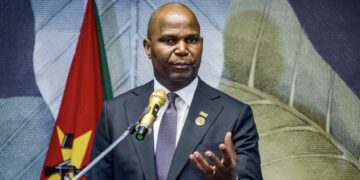
Botswana has projected a return to economic growth in 2026 following two consecutive years of contraction. The forecast, announced by Finance Minister Ndaba Gaolathe in his national budget address, anticipates real GDP growth of 3.1 percent for the year. This marks a significant improvement compared to the estimated 0.4 percent contraction in 2025 and a sharper decline of 2.8 percent recorded in 2024.
The forecasted recovery follows a protracted downturn in the global diamond market, a development that has had pronounced implications for Botswana’s economic stability. The diamond sector contributes roughly one third of the country’s national revenue and approximately three quarters of its foreign exchange earnings. This heavy reliance has rendered the economy vulnerable to external shocks, particularly those affecting global commodity cycles. The recent decline in natural diamond demand, influenced by shifting consumer trends and the increasing market share of lab-grown alternatives, has placed pressure on both export earnings and public finances.
Despite the projected rebound, the government’s fiscal position remains a source of growing concern. Minister Gaolathe disclosed that the budget deficit for the upcoming fiscal year, commencing in April, is expected to reach 26.35 billion pula, equivalent to 8.9 percent of GDP. This marginally exceeds the previous year’s anticipated deficit of 25.48 billion pula. The minister attributed the sustained fiscal imbalance to what he described as a structurally overstretched fiscal framework, where spending commitments continually outpace realistic revenue mobilisation.



As a result of persistent deficits, Botswana’s public debt trajectory is set to breach its statutory ceiling. The debt-to-GDP ratio is expected to rise to 38.77 percent by March 2026 and further to 44.66 percent by March 2027, surpassing the 40 percent legal threshold. While acknowledging that this may raise concerns regarding fiscal credibility, Gaolathe argued that the potential risks associated with rapid fiscal consolidation could be more damaging in the near term, particularly in the context of an economy attempting to regain its footing.
The minister underscored the urgent need for accelerated economic diversification and the expansion of non-mining growth sectors. Diversification has long been a central policy objective in Botswana, but progress has remained incremental. The current fiscal and external sector challenges may, however, serve as a catalyst for renewed momentum in sectors such as tourism, manufacturing, financial services, and green technology.

Botswana’s economic story has often been presented through the lens of diamond-led success, underpinned by political stability and prudent macroeconomic management. However, the evolving realities of global markets and the demands of inclusive development increasingly call for a broader and more human-centred economic vision. In this light, fiscal sustainability cannot be disentangled from the structural transformation of the economy. Botswana’s policy trajectory, therefore, offers a valuable reflection point for many African economies grappling with similar developmental tensions: balancing short-term fiscal realities with long-term socio-economic aspirations.
In reshaping the economic narrative, Botswana’s experience reinforces the imperative of moving beyond singular commodity dependencies towards more resilient and inclusive growth models. As global shifts continue to challenge traditional pathways, there is an emerging consensus within Africa that sustainable development must be grounded in contextually relevant strategies that prioritise national agency and regional integration.
Botswana’s challenge, then, is not simply one of fiscal arithmetic but of economic imagination. Its capacity to transform its revenue base, invest in human capital, and reframe its growth strategies in ways that align with both national ambitions and pan-African priorities will determine how meaningfully it navigates the road ahead.