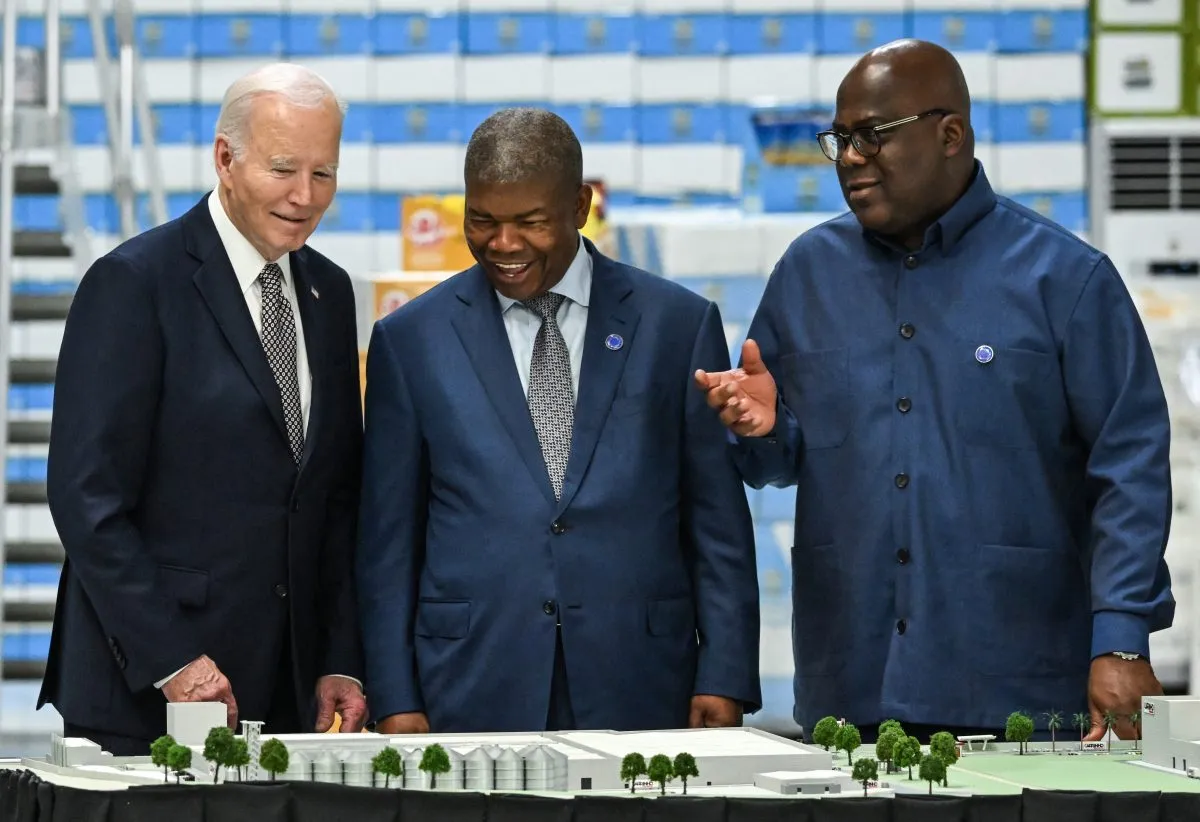
US President Joe Biden has pledged more than $560 million towards the Lobito Corridor infrastructure project during his first—and potentially final—visit to Africa as president. The initiative, touted as the most ambitious US-backed infrastructure endeavour on the continent, aims to modernise and expand transport connectivity in Southern Africa, linking Angola’s Port of Lobito to Zambia and beyond.
Speaking in Benguela at the Carrinho Food Processing Factory, Biden emphasised the importance of the Corridor as a nexus for trade, clean energy, and agricultural development. He was joined by Angolan President João Lourenço, Zambian President Hakainde Hichilema, Congolese President Felix Tshisekedi, and Tanzanian Vice President Philip Mpango, underscoring the project’s regional significance. The US leader described the investment as an opportunity to secure “a shared future” for Africa and its international partners.
Launched under the Partnership for Global Infrastructure and Investment (PGI) at the 2023 G7 Summit, the Lobito Corridor project represents a concerted effort to enhance transcontinental trade and integration. Biden’s latest commitment brings US funding for the project to over $4 billion, with international contributions pushing the total to more than $6 billion. According to the White House, the new funding is expected to catalyse an additional $200 million in private sector investments, further augmenting the project’s scope.



The Corridor’s expansion plans include extending its rail and logistical connectivity to Tanzania’s Port of Dar es Salaam, thereby linking the Atlantic and Indian Oceans. The strategic vision is to foster enhanced regional trade and economic collaboration across East and Southern Africa, transforming the Corridor into a conduit for agricultural exports, clean energy initiatives, and mineral resources.

This visit comes at a critical juncture for Biden, who is nearing the conclusion of his presidency and appears intent on solidifying his administration’s legacy in fostering US-Africa relations. His remarks echoed a broader narrative of partnership and investment, framing the initiative as an economic boon not only for the continent but also for global trade networks.
The Carrinho Food Processing Factory, the backdrop for Biden’s announcement, symbolises the Corridor’s potential impact on local economies. As a regional hub for agribusiness, the factory illustrates how improved infrastructure can bolster supply chains, create jobs, and stimulate growth. However, questions remain over the sustainability of such investments and the extent to which they will address systemic issues of inequality and underdevelopment in the region.
As the Corridor progresses, it is set to become a cornerstone of Southern Africa’s trade network, linking resources and markets while fostering a more integrated regional economy. Whether these ambitions are fully realised will depend on sustained funding, efficient execution, and collaborative governance across the participating nations.