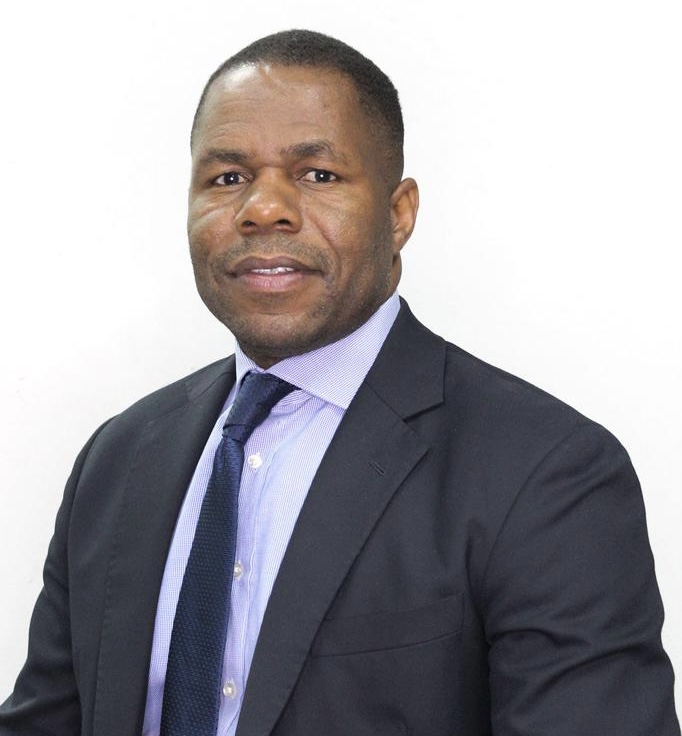
Phibeon Mutibura, a name to be reckoned with in the African financial sector, Director: Head of Regional Corporates & South Africa Outbounds at Absa Bank. Proudly of Zimbabwean heritage, a proud father, caring brother,a loyal employee in his own words and a servant leader. He classifies himself as a pan Africanist who has moved around much of Africa not staying longer than five years in one country, which has given better understanding of the African continent.
Mr Mutibura is a proud holder of an MBA at one of Africa’s prestigious academic establishments.1. Who is Mr Phibeon Mutibura?
A proud father, caring brother, responsible son and dependable neighbour and friend. A loyal employee and a servant leader. I am a philanthropist and entrepreneur who strives to make a positive impact in people’s lives directly and indirectly as well as the environment we live. I am passionate about leaving the earth a better place than I found it, hence I am a champion of green environment, and climate change. I practice this by planting trees, preserving the natural ecosystem and educating people about the importance of going green. At household level, I practice this through informed consumption, conservation of my garden and use of solar energy, as opposed to electricity which draws from coal.



“I now cover the region; I now cover 54 countries. Our model is follow the client for example if our client wants to go into Egypt we follow them”.
2. From my findings, you are a seasoned Corporate and Investment Banker with a regional responsibility in Africa. You also started your career in Zimbabwe. Can you tell more about your banking career?
My banking career started in Zimbabwe. Over the ten years I was in Zimbabwe, I worked in all the core banking divisions of the bank, i.e.,Operations, Retail, Credit, Markets and Coverage. My success in banking is attributed to and anchored on the solid foundation that was laid in Zimbabwe. I hope and trust that one day, I will go back home and plough back my knowledge and experience that I have now acquired due to the exposure into the global and regional markets where I now operate from.
I am currently the Director: Head of Regional Corporates & South Africa Outbounds for the Absa Group. Absa Bank is a diversified financial service provider listed on the Johannesburg Stock Exchange (JSE) with direct presence in Botswana, Ghana, Kenya, Mauritius, Mozambique, Seychelles, South Africa, Tanzania, Uganda and Zambia. It also has representative offices in Namibia, Nigeria, United States and United Kingdom. I am responsible for formulating and driving the Bank’s regional corporates strategy with a view to facilitating intra Africa trade and advancing regional economic integration, through provision of suitable funding, transactional and liquidity solutions.

“We want trade to go up like economic blocks”.
Prior to this role, I was the Vice President: Head of Global Corporates (Alt (is this Alternate? If yes, write if in full), Corporate Director) in Botswana where I was responsible for the execution of the Global Corporates strategy. My mandate was to ensure that Absa Group (Barclays Bank as it thenwas), is positioned as the front and centre and trusted financial advisor for all corporates wishing to invest into Africa, and Botswana in particular, from the various corridors such USA, UK/Europe, Asia, China, MEA and rest of the world. By the time he left Botswana, Absa Bank had been named the number one Corporate and Investment Bank in Botswana. I pride myself for being the originator and deal team lead for the single biggest transaction of USD100 million (which was partly booked offshore and onshore), ever undertaken by the bank since its formation in 1975. The significance of the deal was of paramount because it saved a mine from shutting down due to financial viability issues, and directly preserved over five thousand jobs, several businesses and families that depended on the mine’s ecosystem. The mine also contributed close to 5% of the GDP at the time and was one of the leading tax payers to government.
“As a regional banker with a view to connect Africa the definition of risk, we need to become comfortable with risk”.
I was seconded to Mozambique by Barclays Bank of Zimbabwe as part of the Corporate and Investment Banking (CIB) team that was selected from different countries and regions, to go and set up the global corporates division following the acquisition of a predominantly retail bank by Absa Group. I spent close to four years executing the strategy, setting up systems, recruiting and training talents, growing the balance sheet and stabilizing the division.
During my stint in Mozambique (what year?), I was involved in a USD70 million hotel funding deal that involved multi jurisdictions of Mozambique, Mauritius and Nigeria. The transaction was later voted the deal of the year. In the same year, I was nominated as the most hardworking and promising banker in Barclays Africa at a Global Corporates conference held in South Africa. More importantly, I immersed myself with the local culture, spoke the language and essentially became a Mozambican, due to his fluency in speaking Portuguese.
Probably the proudest moment came when I returned to Zimbabwe. I was promoted to be the Head of CIB division, Southern Region as a reward for a job well done in Mozambique. The CIB in Zimbabwe is split into two regions, and I looked after the Southern Region, which covered the industrial hub of the country, Bulawayo. My excitement was short-lived when I was told by the now Managing Director for CBZ, Lawrence Nyazema, that my appointment had been overtaken by events as the Group has decided instead to deploy me to Botswana to head up the Global Corporates business. I must say, this was the consolidation, and confirmation of my career as a regional banker.
“Banks need to come up with instruments that help the people and minimise risk”.
3. I understand that you are a proud and true Pan Africanist with extensive experience and exposure to the geopolitics of Africa and the world at large. Why are you passionate about African politics? Are there any links between African politics and the continent’s economic developments?
In Africa, unlike in developed world, politics lead economics, not the other way round. In order to navigate and be effective in business development in Africa, one has to appreciate the political landscape as it informs whether you succeed or fail. I am generally fascinated by the relationship between leadership and economic progress in Africa. Often, those with ideas have no power and those with power have no ideas. The problem being that politics is a dirty game in Africa, so most people with professional qualifications (the middle class) don’t want to participate in politics.
The political landscape is then left to the people of various opinions, often the uninformed, poor and vulnerable (POVO), to determine the fate of a country. It’s not surprising that successful countries like Singapore and other Asian Tigers, employ people based on meritocracy as opposed to political allegiance. The challenge that needs to be solved for Africa is to ensure that the public sector attracts and reward the best brains to run the economy and even politics. It is against this background that, I believe there lies the solution for Africa renaissance.
The signing of the Intra African Continental Free Trade Area (AfCFTA) is a significant milestone in the history of Africa economically and politically, as it strives to achieve the ambitious Agenda 2063. But important to note that the realization of this agenda 2063, whose objectives are so well meaning requires much more than rhetoric. It requires political will, commitment of resources and more importantly; the expertise to drive the vision, not from political front but from the economic front. Africa suffers from brain drain, but this is the point in time, where all resourceful people and skilled and well experienced technocrats need to support their continent to take it out of poverty through increased economic integration and connectivity.

The World Trade organisation (WTO) is the oldest economic block, followed by the Association of Southeast Asian Nations (ASEAN), and now the AfCFTA, which will cover a market of 1.2 billion customers and an estimated USD3 trillion in combined GDP, with a potential to boost intra-Africa trade by over 50%, once import duties and non-tariff barriers are removed. This mission can be made easy by leveraging already existing regional economic blocks such as the Southern African Development Community (SADC), Common Market for Eastern and Southern Africa (COMESA), East African Community (EAC), Economic Community of West African States (ECOWAS) and Economic Community of Central African States (ECCAS), among others.
“We need to create more awareness for disadvantaged groups, opening gateways of what opportunities are open to them”.
4. What is Affirmative Action Group (AAG) and what are its main objectives?
Formed in 1994 as an empowerment and lobby group, to respond to the realities of economic exclusion of the poor majority, at the hands of the privileged few, whose hold on economic lever wasnot reflective of the demographics of the population then. The organization has since enhanced and pivoted its focus to establish an investment platform for all the Zimbabweans in the diaspora by encouraging them to come back and invest back home. Twenty-seven years after its formation, AAG has since expanded globally with presence in Africa, Australia, China, USA, UK, EU, Canada, New Zealand and United Arab Emirates (Dubai). It works closely and in collaboration with embassies and indeed investment authorities in Zimbabwe with a view to attracting investmentsprimarily from Zimbabweans in the diaspora, by making it easy and seamless to invest back home.
“There a need to demystify banking perceptions in Africa , there is a lot of people who have successfully mastered ways to do banking, government is leading by example”.
5. How do you intend to use AAG to reposition Zimbabwe as the regional trade powerhouse and investment destination of choice (for both Zimbabweans in diaspora and foreigners)?
Zimbabwe is endowed with natural resources. Its mineral resources include, amongst others, gold, coal, chromium ore, nickel, copper, iron ore, vanadium, tin, platinum group metals (such as palladium) and diamonds. Globally, it is a significant producer of lithium, chrysotile asbestos and vermiculite. The discovery of oil and gas in Muzarabani is a testimony of boundless investment opportunities that exist in Zimbabwe for both the locals and foreigners.
The government has opened up the mining space to the locals commonly known as artisanal miners. Mining contributes about 16% of the GDP and accounts for more than 60% of its foreign earnings.

It is estimated that there are over 500,000 small scale miners who are responsible for nearly half of the county’s total gold output. The opportunities that exist with AAG is to connect these small-scaleminers with equipment suppliers, technical partners who bring in latest technology to mine more efficiently and responsibly to ensure that land degradation is minimized while output is maximized.
Agriculture remains the back bone of Zimbabwe’s economic mainstay. Historically within the regional economic block of SADC, Zimbabwe was the bread basket responsible for production of grains to feed the region. Today, agriculture contributes close to 20% of the GPD, from predominantly local farmers. AAG is fully engaged with investors and technical partners to bring in smart agriculture and latest technology to enhance yields and improve farming methods.
At the core, AAG ensures that locals are included in the mainstream of economic participation. There are sectors that have been reserved for locals, at the request of AAG. Locals are given opportunities to be part of the supply chain and ecosystem that drives the enterprise supply development through partnering with big corporates as preferred suppliers.
6. It would appear that AAG has very ambitious initiatives and have declared its full and unequivocal support for President Mnangagawa’s economic policies. Which of those critical sectors your organisation will prioritise in the short, medium and long term?
AAG works and support the government policies. Currently, the development strategy is focused on delivering the National Development Strategy-1 (NDS-1) whose focus is on five main sectors for economic growth, namely; Agriculture, Mining, Manufacturing, Tourism and Power sector.
7. How can you ensure robust, flexible and effective collaborations between your organisation, the diaspora and international investors with keen interests in Zimbabwe?
Our focus is to target Zimbabweans first and foremost. We have over 3 million Zimbabweans who are scattered globally. If we create opportunities for Zimbabweans, the rest of foreign investors will follow suite. It’s the perception that need to be managed not forgetting the impact of sanctions on potential investors, hence our primary target would be Zimbabweans.
8. In September 2021, you led your organisation, AAG and its leadership to meet with Zimbabwe’s Ambassador to South Africa, Mr David Hamadzipiri and pledged to work with the Embassy in advancing the National Development Strategy economic blueprint and Vision 2030. What economic benefits will the Development Strategy economic blueprint and Vision 2030 bring to Zimbabwe?
The development of Zimbabwe is based on the National Development Strategy 1 (NDS-1), as the road map. Lots of investments have been concluded and many more are at various stages of implementation since the rollout of the strategic document. Key among them are national and provincial flagship projects being undertaken despite COVID-19 slowing down economic progress globally. Notable projects are the LAKE Gwayi-Shangani that will spur and drive agriculture projects and ensure adequate water supply in Bulawayo. Marovanyati Dam in Buhera is another landmark infrastructure that has potential to boost both irrigation and tourism. In Mwenezi, Masvingo province, about 150 jobs have been created during the construction of the Amarula Processing Plant which is designed to value add and commercialize indigenous Mapfura fruit through the brewing of alcoholic and non-alcoholic beverages and several by products.
9. I was wondering what attracted an investment banker into engineering, technology, telecommunications and construction. Can you explain why you set up Pula Ventures PL, a civil engineering company specialising in civil engineering, electrical engineering, structural engineering and fibrenetworking engineering?
This is a passion. I was born in a family of builders and contractors. My uncle was a renowned builder, who during the early 1980s had already made a name in countries such as Botswana and South Africa. It runs in the blood, and I find energy in doing it.
10. How do you relax away from work?
I travel. I find joy in adventures. Road trips are my thing, and every year as family, we visit a new country as part of getting exposure for the kids and indeed ourselves.
11. How will you ensure that Zimbabwe continues to remain united, prosperous and economically viable for the benefits of all its citizens?
Zimbabwe is united, and has always been. There is need to manage the media polarization which exaggerate the differences between Zimbabweans, sometimes on political, and tribal lines.
“Venture capital the growth of tech is not matched by the funders what can we do to turbo charge especially for young entrepreneurs”.
12. For people wanting to invest in Africa which countries should people invest to get the strongest return?
In the recently released list of 2021 Top 10 investment attractive African Countries, Egypt was ranked number 1, followed by Morocco then South Africa.
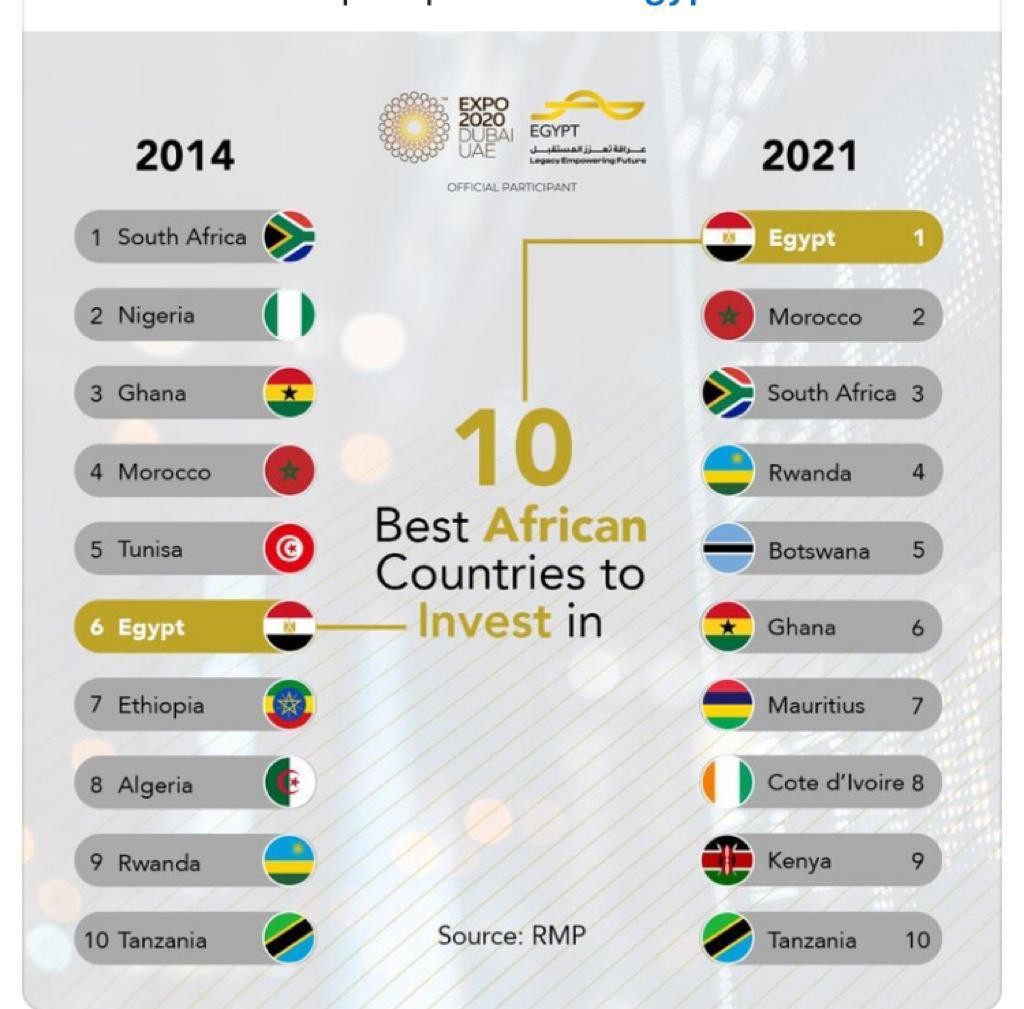
In my humble opinion, different investors come with either short term, long term broader view,blocks has been without war Botswana, ECOWAShelps you move your business.
Namibia quiet and peaceful, Zambia, Zimbabwe are very central brightest brains Human Resources climate infrastructure, Mozambican is becoming the Norway oil and gas found recently in abundance. Four thousand stretch of land, we have a lot of regional players companies like Dangote competing with multi National cooperation they understand Africa better, the returns are huge and big.
There is a lot of trade flow, oil fuel Mozambique don’t think twice within east Africa block. (This paragraph needs further review) Tanzania has not gone into lockdown it’s projected to be the biggest economy surpassing Kenya etc … it’s a land full of opportunities. The only downfall they suffered from is their neighbouring country being closed.
Interviewed by The Southern African Times Editor At Large Mercy Gilbert who is the Chairman of Petts Wood & Knoll Conservative