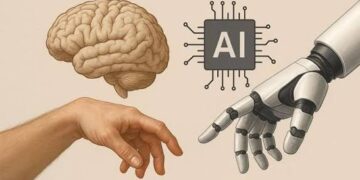
When I recently reflected on Trevor Ncube’s warning about the disruptive power of artificial intelligence across professions, I focused on what that transformation might mean for healthcare. His argument was a necessary wake-up call. But as the conversation about AI in Africa continues to unfold, another question is beginning to emerge — one that may ultimately matter even more for the future of medicine on our continent. Before we ask what artificial intelligence will do to our healthcare systems, we must first ask a simpler and more fundamental question: what exactly is it being trained on, and whose language does it understand?
Artificial intelligence is increasingly entering healthcare systems across the world. Hospitals and clinics are beginning to experiment with decision-support algorithms that assist with diagnosis, predictive models that identify patients at risk of deterioration, and new digital tools that promise to reduce administrative burdens on clinicians. One of the most talked-about innovations is the emergence of “ambient scribes” — artificial intelligence systems that listen to conversations between doctors and patients and automatically generate medical notes. In theory, such technology could free clinicians from hours of documentation and allow them to spend more time focusing on patient care. For overstretched health systems, including many across Africa, the promise is understandably attractive.
Yet the effectiveness of these systems depends entirely on the data used to train them. Artificial intelligence does not simply “understand” medicine. It learns patterns from enormous volumes of information — clinical records, medical literature, images, laboratory results, and increasingly speech data. If the populations represented in those datasets do not reflect African realities, then the technology that emerges from them will inevitably struggle when applied in African settings. This is not a theoretical concern. A diagnostic model trained primarily on data from Europe or North America may perform less accurately in African populations where disease patterns, genetic diversity, environmental exposures, and healthcare pathways differ significantly. In medicine, small differences in context can produce large differences in outcomes.



Language adds another layer to this challenge. Much of the world’s artificial intelligence infrastructure is built around a limited set of dominant languages, particularly English. Yet anyone who has spent time in an African clinic knows that consultations rarely follow the neat linguistic boundaries imagined by software designers. A patient may begin describing symptoms in English and then move into Shona, Ndebele, Swahili or another local language to express something more precisely. A clinician may respond in a mixture of languages, reflecting the normal rhythm of everyday communication. Cultural expressions, idioms, and metaphors often carry important clinical meaning. This multilingual reality is not an exception in Africa; it is the norm.
When speech recognition systems or digital scribes are trained primarily on standardised English speech patterns, they struggle to interpret this reality. Accents may be misunderstood. Words may be transcribed incorrectly. Entire meanings may be lost in translation. In healthcare, such mistakes are not merely inconvenient. A clinical note that misrepresents what was said in the consultation can become part of the patient’s permanent record. From that record flow clinical decisions, prescriptions, and referrals. What begins as a technical misunderstanding can quietly evolve into a clinical risk.
The encouraging news is that Africa is not standing still while these challenges emerge. Across the continent, researchers and technology communities are beginning to build the foundations required for more inclusive artificial intelligence. The Masakhane research community, for example, brings together African scientists working on natural language processing for African languages, developing tools and datasets designed specifically for the linguistic diversity of the continent. At the same time, initiatives such as the Deep Learning Indaba have helped nurture a new generation of African machine-learning researchers and strengthen collaboration across universities and research centres.
Equally important are efforts focused on data itself. The global divide in artificial intelligence is often less about algorithms and more about the availability of high-quality, representative data. Organisations such as the Lacuna Fund have begun supporting the creation of datasets in low- and middle-income contexts so that machine-learning systems can reflect the realities of the communities they serve. In parallel, new projects are developing speech datasets that include African accents, recognising that voice-based technologies will play a growing role in clinical documentation and digital health tools.

These developments are still early, but they signal something important: Africa is beginning to recognise that language and data are strategic infrastructure in the digital age. For healthcare in particular, this recognition is essential. A system that cannot understand the way patients describe their symptoms or the way clinicians communicate cannot safely assist medical practice. Language inclusion is therefore not simply a cultural consideration; it is a matter of patient safety.
At the policy level, Africa has also begun to articulate a continental approach. The African Union’s emerging artificial intelligence strategy acknowledges the importance of responsible development and the need for governance frameworks that guide how AI technologies are deployed. For healthcare systems, this governance will need to address questions of data stewardship, privacy protection, algorithmic bias, and clinical validation. Without such safeguards, the risk is that Africa becomes a consumer of imported systems whose assumptions were shaped elsewhere.
Zimbabwe, like many African countries, now faces an important opportunity. We can treat artificial intelligence as a finished product imported from abroad, or we can participate in shaping the data, languages, and governance structures that will define how these technologies function in our healthcare systems. Universities, health institutions, technologists, and policymakers all have a role to play in ensuring that the digital infrastructure of the future reflects African realities.
Artificial intelligence will undoubtedly transform medicine in the coming decades. But whether it strengthens healthcare in Africa or quietly introduces new forms of inequality will depend on the decisions made today. The debate is no longer about whether AI will enter African medicine. It already has. The real question is whether we will shape it deliberately and responsibly, or whether we will inherit systems trained to understand somewhere else.
If artificial intelligence is to serve Africa well, it must do more than process data. It must learn to recognise African patients, African voices, and African health systems. In short, Africa must not only adopt artificial intelligence. Africa must help train it to recognise Africa.
Dr Brighton Chireka is a Zimbabwean-born UK-based primary healthcare physician, healthcare leadership educator, and international consultant. He writes and speaks on the responsible adoption of artificial intelligence in healthcare, focusing on human-centred innovation, ethical data governance, and the future of African health systems.
He can be contacted at brighton@docbeecee.co.uk

Disclaimer: The views expressed in this article are those of the author and do not necessarily reflect the editorial position of The Southern African Times.