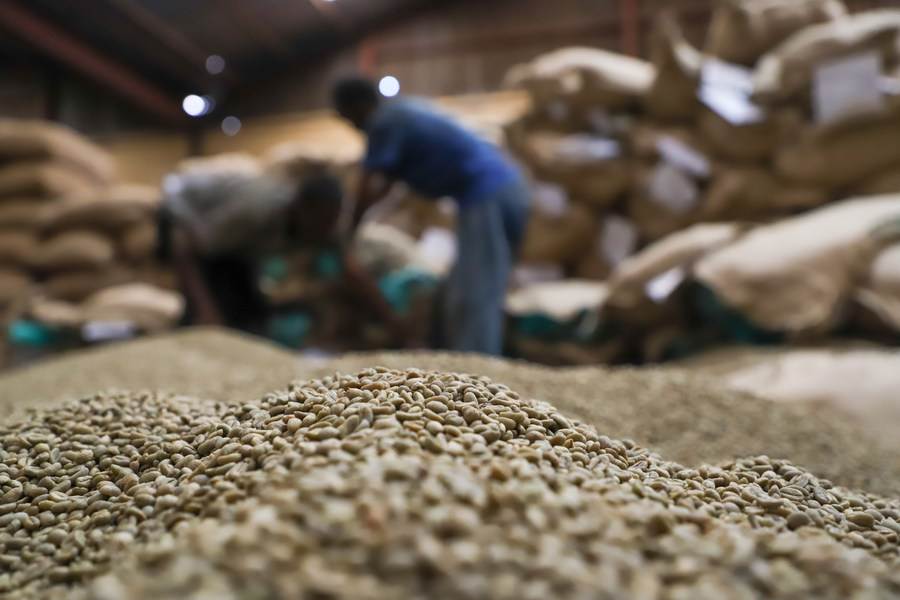
High-level representatives from 25 coffee-producing countries in Africa recently concluded a four-day summit in Uganda, pledging to enhance the continent’s equitable standing in the worldwide coffee value chain. Under the banner of the 2nd G-25 Heads of State Africa Coffee Summit, this gathering centered on the theme “Transforming the African Coffee Sector through Value Addition.” Building on the previous summit held in Nairobi last year, participants engaged in comprehensive discussions about redefining the performance and positioning of Africa’s coffee industry.
At the heart of these deliberations was a recognition of the unfavorable dynamics prevailing in the international coffee market, where a significant portion of African coffee is exported with minimal value enhancement. This reality has prompted young entrepreneurs like Gerald Katabazi, owner of an indigenous coffee roastery in Uganda’s capital city, Kampala, to take action. Katabazi and others like him are fervently endeavoring to augment the value of one of Africa’s longest-standing cash crops, thereby augmenting household incomes.
In an interview, Katabazi articulated his passion for coffee, explaining, “Coffee is not just a trade; it’s an avenue for education, employment, and infrastructure development. By investing in coffee’s value addition, we pave the way for more jobs and revenue for our nations.”




This concerted effort to drive coffee consumption among the burgeoning middle class in Africa has garnered support from various governments, each contemplating policies to bolster the industry. As highlighted by the Inter-African Coffee Organization (IACO), which co-organized the summit, coffee holds profound significance for African economies, providing livelihoods for approximately 60 million people across the continent. Uganda, for instance, boasts a coffee value chain that supports over 5 million households engaged in diverse coffee-related activities, from cultivation to export.
IACO, established in 1960 to champion the interests of the African coffee sector, believes that African coffee-producing nations can harness the potential of value addition to bolster the continent’s contribution to the global coffee trade, valued at an estimated $466 billion USD. While Africa accounts for 12 percent of worldwide coffee production, it’s Ethiopia (39 percent) and Uganda (23 percent) that together distribute 62 percent of coffee beans within the continent.
Emmanuel Iyamulemye, the managing director of Uganda Coffee Development Authority, emphasized the multiplier effect of value addition, stating, “Value addition translates to a six-fold increase in income.” He further revealed that Uganda will collaborate with other African countries to advocate for coffee as a priority crop within the African Union.
Former Ugandan finance minister, Ezra Suruma, noted that collective unity among African countries will enhance their bargaining power in the global coffee market. “By presenting a unified front, African nations can amplify their influence and negotiate more effectively on the international stage,” he remarked.
Solomon Rutega, Secretary General of IACO, underscored the importance of fostering intra-continental trade alongside targeting emerging markets like China. Rutega’s insight emphasizes the significance of economic cooperation to stimulate Africa’s socioeconomic transformation.
The 2nd G-25 Heads of State Africa Coffee Summit marked a pivotal step toward revitalizing the continent’s coffee industry. With a renewed focus on value addition and international collaboration, African coffee-producing nations are primed to ascend the global value chain, ensuring sustainable growth and equitable benefits for millions across the continent.