(The Southern African Times) – On 15 March, Britain’s parliament turned to the question of the moment: how to reopen pubs, cinemas, and soccer stadiums.
Almost half the adult population, after all, has gotten a Covid-19 shot, and Prime Minister Boris Johnson has declared that the end of the crisis “really is in sight.”
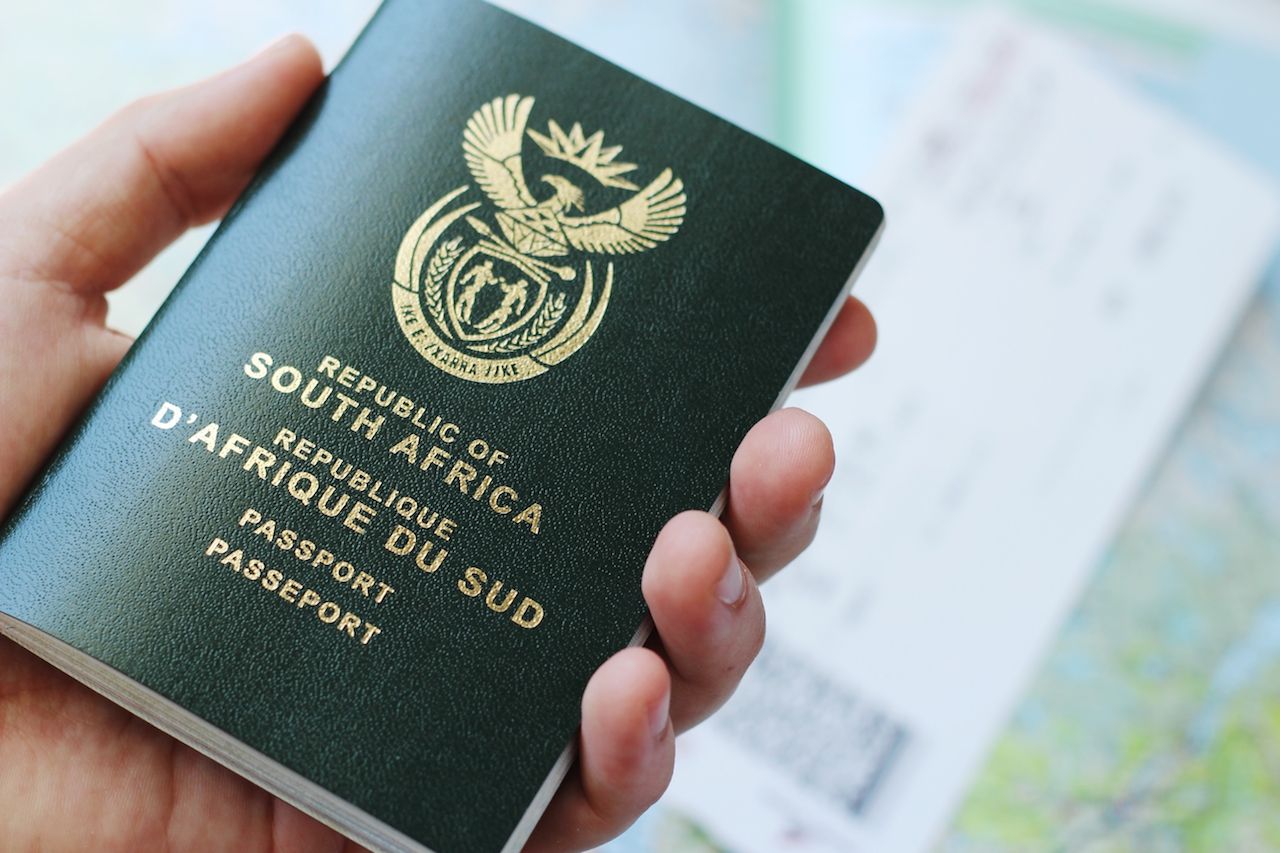
At the heart of the discussion was the “vaccine passport,” a smartphone app or a slip of paper that would attest to inoculation, granting bearers the freedom to travel, go to concerts and cafes, or even just return to the office.



Yet what sounds like a practical solution to an unprecedented problem opens the door to a host of ethical and legal concerns.
“It would mean passes for the pub,” Conservative MP Steve Baker thundered in a parliamentary debate. “I did not think that is the society that we wished to live in.”

Politicians, ethicists, and epidemiologists worldwide are grappling with the same issue.
As vaccine rollouts accelerate in the UK, US, and beyond, how do we open up safely, letting people who have protection and are demonstrably Covid‑free return to pre-pandemic life without risk to the rest of the population?
More important, how do we do that in a way that’s equitable, because passports could easily benefit the wealthy and more fortunate while leaving behind minority groups and the poor.
“There’s an important sense that we’re all in this together, and it’s only as a society that we get out, but if you allow some people to have freedoms and privileges but not others, it may erode that sense of solidarity,” says David Archard, chair of the Nuffield Council on Bioethics in London.
“There are clear benefits, but I think on balance the potential risks and harms outweigh the gains.”
CommonPass
Providing proof of vaccination isn’t new. Many tropical and subtropical countries require travellers to show they’ve been inoculated against yellow fever, and others want proof of a polio vaccine from at least some travellers.
But a Covid passport program would require global coordination on an unprecedented scale, spurring myriad efforts to offer one.
The non-profit Commons Project and the World Economic Forum have talked with officials from 52 countries about developing what they call CommonPass, aimed at returning travel and trade to pre-crisis levels.
The International Air Transport Association, the airline trade group, is working on a similar idea.
The European Union has outlined plans for digital certificates to facilitate movement around the bloc. U.S. airlines have pushed the Biden administration to set standards for health passes.
Even without government directives, businesses such as restaurants and theatres may take the lead and require customers to show they’ve been vaccinated.
But companies that implement measures such as “no jab, no job” policies risk legal challenges, University of Oxford professors Christopher Dye and Melinda Mills wrote on March 19 in the journal Science.
“Freedom of choice for individual employees, set against a firm’s duty and preference for the care of all staff, might be tested in court,” they wrote.
The biggest concern for many health advocates is access to vaccines. More than three months after the first shots were approved for use in Britain, differences in vaccination rates are stark.
Although the U.K. has given at least one dose to more than 40% of its population, and the US to about a quarter, vast swaths of the globe are still waiting, with just 10 countries accounting for three-fourths of all the vaccines administered.
“There is a huge disparity in availability and access between high-income and low- and middle-income countries,” says Mark Eccleston-Turner, a law and infectious disease specialist at Keele University in England.

“If we then attach vaccine passporting to that, we’re going to end up with a very clear two-tier system.”
Developing countries left behind
The lag threatens to leave developing countries even further behind. Without vaccines, those countries risk repeated waves of infection and new variants.
The use of passports could exacerbate “vaccine nationalism,” making efforts to strengthen health systems and speed up immunizations even more urgent, says Nicole Hassoun, a professor at Binghamton University in New York.
“Vaccine inequity is a huge problem that is potentially made worse by this system,” she says.
In the developed world, the prospect of passports raises the spectre of a new generation gap. For most of the past year, young people have been asked to remain socially distanced from friends – for their own health, of course, but even more for that of older, more vulnerable people.
Because the elderly have been the first to get vaccinated, they would presumably be among the first to get passports, leaving young people stuck at home while Grandma and Grandpa jet off to Sardinia or Santorini.
Lacking a passport could hinder access to job and business opportunities, too, particularly for migrants and the young, who aren’t prioritized for vaccines, says Chetan Kapoor, co-founder of Safe Travel Barometer, an Indian company that tracks health and safety measures.
For people who have been offered jobs or admitted to universities abroad, he suggests a protocol allowing inoculations in the destination locale. “Younger people in almost all countries are at the bottom of the list,” Kapoor says.
“It creates a really binary world between the haves and the have-nots.”
The counterargument is that lockdown measures have also drastically increased inequality as people have lost jobs, struggled with child care, and been forced to live much of their lives virtually.
Some form of pass to hasten the return to normal would let many of those people get back on their feet.
For now, soaring unemployment and widening socioeconomic gaps mean passes make sense even if they favour some groups over others, says Maya Fried of the Association for Civil Rights in Israel.
But longer-term, a passport system could become “a breeding ground for civil rights issues.”