Across Africa, ports have increasingly become symbols of economic ambition, industrial transformation and regional integration. Billions of dollars have been committed to expanding maritime infrastructure over the past decade as governments seek to position their economies within evolving global supply chains. Yet the expansion of major ports raises questions that extend beyond cargo volumes, shipping efficiency and foreign investment.
Recent analysis of Ghana’s Port of Tema suggests that while modern infrastructure can strengthen trade competitiveness, the governance arrangements behind such projects are equally significant in determining how economic benefits are distributed and whether national development priorities remain central.
According to data compiled by international development institutions, African ports attracted approximately US$13 billion in investment between 2010 and 2022, with significant projects concentrated in Ghana, Nigeria, Senegal and the Democratic Republic of the Congo. These investments have been accompanied by improvements in logistics capacity and increasing competition among West African ports seeking to establish themselves as regional transshipment hubs.



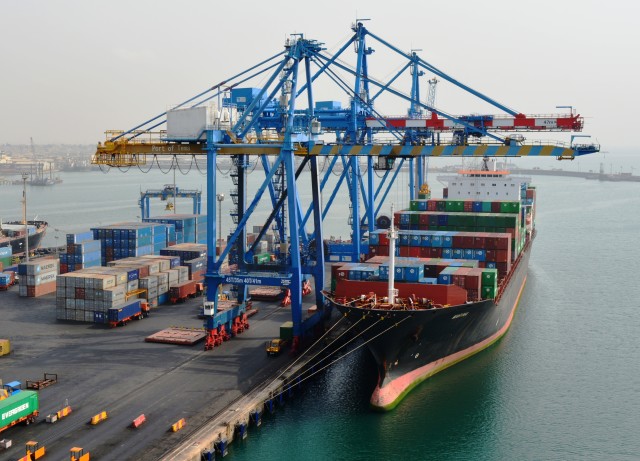
The expansion of Ghana’s Port of Tema has frequently been presented as one of the continent’s notable infrastructure success stories. The development of Terminal 3 significantly increased the port’s container handling capacity from around 800,000 twenty foot equivalent units annually at Terminal 2 to approximately 3.5 million. The new deep water facilities are capable of accommodating some of the world’s largest container vessels, strengthening Tema’s position within international maritime networks.
The improvements have produced measurable commercial outcomes. International shipping company Hapag Lloyd has designated Tema as one of its principal transshipment hubs for West Africa, while container traffic and cargo volumes have continued to increase as regional trade expands. The project has been developed through APM Terminals, Africa Global Logistics, and the Ghana Ports and Harbours Authority operating under Meridian Port Services.
While these operational achievements are widely recognised, maritime governance specialists argue that infrastructure projects should also be assessed through the institutional arrangements that underpin them. Questions surrounding ownership, regulatory authority, labour participation and long term public benefit have become increasingly relevant as African governments pursue partnerships with international investors.
Research undertaken by Jonas Aryee of the University of Plymouth, together with colleagues Casper Andersen and Annette Skovsted Hansen, suggests that infrastructure is not solely an engineering or financial undertaking. Rather, it represents an intersection of political, institutional and economic priorities that shape national development over several decades.
The study notes that different stakeholders have approached Tema’s expansion with distinct objectives. International investors have generally prioritised operational efficiency, commercial competitiveness and integration into global shipping routes. Ghanaian state institutions have viewed the port as part of a broader national development strategy, while organised labour has focused on employment security and equitable participation in the sector’s economic gains.
These differing priorities became particularly evident when comparing the concession agreements governing Tema’s two container terminals.
When Terminal 2 was concessioned in 2004, the Ghana Ports and Harbours Authority retained a 30 per cent equity stake after constructing the facility before entering into partnership arrangements. This structure enabled the authority to maintain significant oversight while working alongside international operators.
The arrangements surrounding Terminal 3 followed a different trajectory. The project proceeded through an unsolicited proposal rather than an open competitive tender. Initially, the authority’s equity share was reduced to 15 per cent and exclusive rights for container handling were granted to Meridian Port Services. Labour unions expressed concerns that these arrangements could affect employment opportunities for existing dockworkers and reduce operational roles for locally managed terminals.
Following negotiations involving government, organised labour and industry stakeholders, the Ghana Ports and Harbours Authority’s shareholding was subsequently restored to 30 per cent under an agreement commonly referred to as the Dubai Agreement. However, discussions surrounding the allocation of container handling activities between Terminal 3 and other port facilities have continued beyond the completion of the expansion.
The evolution of Tema reflects broader patterns visible across many African infrastructure projects. Rather than replacing earlier national development visions, successive investment phases have often built upon existing institutional frameworks while introducing new commercial partnerships and financing models.

Tema itself occupies an important place within Ghana’s post independence development history. It formed part of the industrial strategy championed by Ghana’s first President, Kwame Nkrumah, whose Seven Year Development Plan sought to link the port with manufacturing growth and hydroelectric power generation from the Volta River Project. Although Ghana’s economic policies have evolved considerably since the 1960s, references to that broader industrial vision have continued to appear in subsequent national development strategies, including Vision 2020 and Ghana Beyond Aid.
The governance questions raised by Tema are also reflected elsewhere in Ghana’s maritime sector.
At the Port of Takoradi, the country’s first locally initiated container and bulk terminal project was originally developed by Ghanaian engineering company Ibistek with financial participation from the Africa Finance Corporation. After construction, the corporation exited its investment and the operating concession transferred to Turkish port operator Yilport Holding, which now holds the controlling share alongside the Ghana Ports and Harbours Authority and Ibistek.
The sequence of investment differs from Tema because the project originated with domestic institutions before attracting international operational expertise. Nevertheless, it also illustrates the continued importance of foreign capital in financing and operating large scale maritime infrastructure across the continent.
These experiences are increasingly relevant beyond Ghana. Major port expansions are under way or planned in countries including Senegal, Côte d’Ivoire, Tanzania, Namibia, Mozambique, South Africa and Angola as African governments seek to strengthen implementation of the African Continental Free Trade Area. Efficient ports are widely recognised as essential for reducing transport costs, facilitating intra African trade and supporting industrial development.

At the same time, policymakers across the continent continue to balance the benefits of international investment with the objective of ensuring that strategic national assets remain aligned with long term domestic development priorities. Financing constraints, technological requirements and increasing competition between regional ports mean that partnerships with global operators are likely to remain an important feature of Africa’s maritime landscape.
The experience of Tema suggests that the quality of governance may prove as important as the scale of investment itself. The structure of concession agreements, the retention of institutional capacity within public authorities and the participation of domestic enterprises can all influence how infrastructure contributes to national development.
As African economies continue investing in transport corridors, logistics hubs and maritime gateways, the debate is therefore expanding beyond engineering achievements towards questions of governance, accountability and economic sovereignty. Rather than viewing ports solely as commercial infrastructure, governments are increasingly considering how these strategic assets can support industrialisation, regional integration and long term economic resilience.
For policymakers across Africa, Tema offers a case study demonstrating that infrastructure investment is not simply about constructing larger ports or handling greater volumes of cargo. It is also about ensuring that the institutions governing those assets are capable of advancing national priorities while participating effectively within an increasingly interconnected global economy.