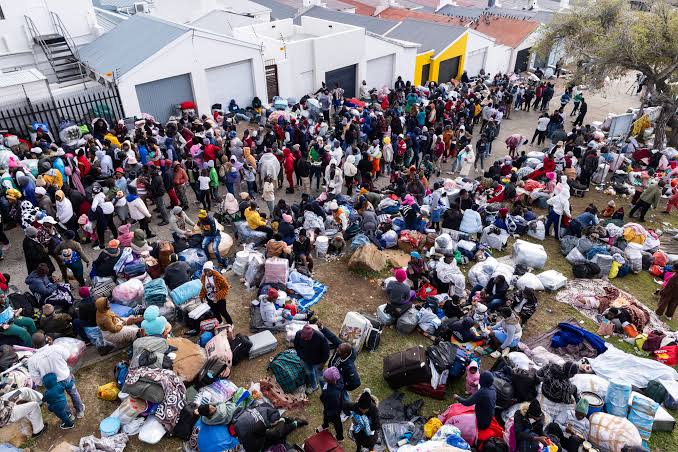
Hundreds of Zimbabwean nationals departed Cape Town on Saturday as South African authorities continued a coordinated voluntary repatriation process from a temporary processing centre in Epping, marking the closure of the facility established in response to heightened fears among foreign nationals following recent anti immigrant demonstrations.
Buses transporting Zimbabwean nationals, together with a smaller number of Malawian citizens, departed for Musina in Limpopo Province, where South African authorities have centralised processing before onward repatriation to neighbouring countries. Officials have advised those yet to be processed to travel directly to Musina as operations at the Cape Town site come to an end.
The Epping processing centre was established after thousands of Zimbabwean nationals sought assistance at the Zimbabwean Consulate in Cape Town amid concerns arising from anti immigrant protests and public calls by some activist groups for undocumented foreign nationals to leave South Africa. Authorities relocated approximately 3,000 people from the vicinity of the consulate to the Department of Home Affairs facility to facilitate registration, humanitarian assistance and transport arrangements.



The closure of the temporary centre comes as the South African Department of Home Affairs continues broader efforts to manage voluntary returns and immigration enforcement in collaboration with neighbouring governments. According to officials overseeing the operation, profiling and transport activities continued throughout Saturday while the facility was progressively dismantled. Independent media in South Africa reported that hundreds of additional migrants who arrived overnight were awaiting registration as the centre prepared to cease operations.
Humanitarian organisations remained active throughout the operation, providing food, temporary shelter, sanitation facilities and essential supplies to those awaiting transport. Aid organisations working at the site reported that some people, particularly children, had experienced diarrhoeal illnesses and flu like symptoms after several days in crowded temporary accommodation. Humanitarian groups have also expressed concern about sanitation and shelter conditions as temporary infrastructure was removed during the closure of the facility.
Among those awaiting departure was Zimbabwean national Yekuai Mokoena, who had spent several nights outside the Zimbabwean Consulate with her two children before being relocated to Epping. Describing the conditions at the site, she said only that “the situation is bad”, reflecting the uncertainty experienced by many families awaiting transport.
Despite the commencement of departures, additional Zimbabwean nationals continued arriving from different parts of the Western Cape seeking government assistance to return home. Aid agencies indicated that humanitarian support would remain available until the final groups had completed the repatriation process. According to Gift of the Givers, approximately 1,500 people remained in need of assistance as operations continued beyond the official closure of the Epping facility.

The Government of Zimbabwe has stated that its embassy and consulates in South Africa continue to coordinate the movement of citizens from various provinces to Musina, where they are processed before crossing into Zimbabwe through Beitbridge. Zimbabwean authorities have also acknowledged support from humanitarian organisations, local authorities and development partners assisting with transport, food and temporary accommodation during the operation.
Migration between Southern African countries has long been shaped by regional labour markets, family networks, economic opportunities and shared historical ties. Analysts note that while governments retain the sovereign responsibility to regulate migration and enforce immigration legislation, humanitarian agencies have consistently emphasised the importance of ensuring that enforcement measures uphold the dignity, safety and rights of affected individuals, particularly women, children and other vulnerable groups.
As the temporary Cape Town processing centre concludes its work, attention now shifts to Musina, where South African and Zimbabwean authorities continue coordinating one of the region’s largest recent voluntary repatriation efforts. The operation underscores both the practical challenges of managing cross border migration within Southern Africa and the importance of sustained regional cooperation in responding to humanitarian needs while respecting national legal frameworks.