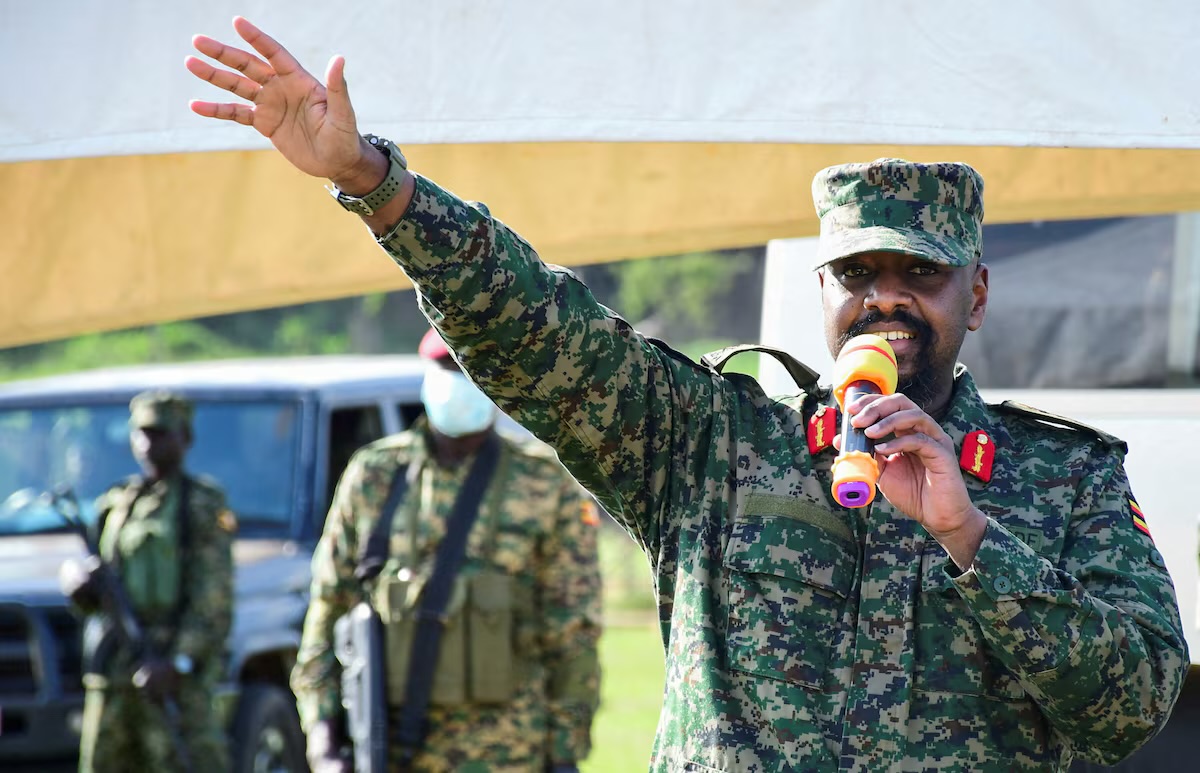
Uganda’s military chief, General Muhoozi Kainerugaba, has ordered the closure of two of the country’s leading independent media organisations, declaring that he does not believe in a free press in a move that has raised fresh concerns over media freedom ahead of the country’s next elections.
Kainerugaba, who is also the son of President Yoweri Museveni, announced on Sunday that the Daily Monitor, Uganda’s largest independent newspaper, and NTV Uganda, one of the country’s biggest private television stations, would remain closed until he personally authorised their reopening.
“In Uganda, I do not believe in a free press. The press should be guided by cadres of the revolution,” Kainerugaba wrote in a series of posts on social media platform X.



He did not provide any specific reason for targeting the two media outlets, both of which are owned by Kenya’s Nation Media Group, one of East Africa’s largest independent media companies listed on the Nairobi Securities Exchange.
The Daily Monitor reported that military personnel had been deployed to the company’s headquarters in Kampala, preventing staff from entering or leaving the premises. Broadcasts by NTV Uganda, along with other television and radio stations operated by Nation Media Group in Uganda, were also taken off air.
Ugandan government spokesperson Alan Kasujja did not immediately comment on the military chief’s announcement, while Nation Media Group Uganda Managing Director Susan Nsibirwa also declined to comment.
The latest developments have intensified concerns about press freedom in Uganda, where media organisations and journalists have long faced accusations of intimidation, censorship and harassment.
Kainerugaba has become one of Uganda’s most controversial public figures, frequently attracting international attention through inflammatory social media posts. Widely viewed as a possible successor to his 81 year old father, he has previously threatened opposition leader Bobi Wine and made remarks that have sparked diplomatic tensions with neighbouring countries.
His latest comments are likely to fuel debate about the growing influence of the military in Uganda’s political affairs, particularly as speculation continues over the country’s future leadership.
The closure also revives memories of a similar crackdown in 2013, when President Museveni’s government shut down the Daily Monitor for 10 days after it published reports concerning an alleged succession plan within the ruling establishment.

Museveni has ruled Uganda since 1986, making him one of Africa’s longest serving leaders. During his tenure, opposition parties, civil society organisations and international human rights groups have repeatedly accused his government of restricting political freedoms and suppressing independent media, allegations authorities have consistently rejected.
The latest action against the Daily Monitor and NTV Uganda is expected to draw close scrutiny from regional and international press freedom organisations, many of which have previously expressed concern over the operating environment for independent journalism in Uganda.
For the wider East African region, the move serves as another reminder of the ongoing challenges facing independent media as governments increasingly tighten control over public discourse and political reporting.