Tlhe Republic of Congo is seeking to consolidate its position as one of Central Africa’s leading hydrocarbon producers as a combination of new investments, regulatory reforms and infrastructure developments gathers momentum across the country’s oil and gas sector.
Government authorities have set a target of increasing oil production to 500,000 barrels per day while simultaneously expanding the country’s liquefied natural gas industry. These ambitions are being pursued against a backdrop of growing investor interest in African energy markets and renewed efforts by resource rich nations to maximise value from existing reserves while strengthening domestic participation in the sector.
According to industry stakeholders, the country’s appeal increasingly lies not only in the scale of its hydrocarbon resources but also in the progress being made on commercially viable projects that are already under development. This marks a notable shift from earlier narratives that focused primarily on untapped potential rather than active production and infrastructure delivery.



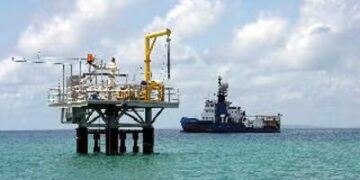
Recent developments in the offshore sector have reinforced this trajectory. In April 2026, TotalEnergies announced a hydrocarbon discovery at the Moho G structure, offshore the Republic of Congo. The company stated that the Moho G and earlier Moho F discoveries together contain recoverable resources estimated at close to 100 million barrels and are expected to be connected to existing production infrastructure. (TotalEnergies.com)
The Moho development remains one of the country’s most significant offshore assets. Existing facilities currently support production from the licence area, and operators are evaluating opportunities to expand output through additional drilling and tie back developments. (TotalEnergies.com)
Alongside TotalEnergies, a number of operators are pursuing growth strategies across Congolese acreage. Trident Energy has continued to develop mature offshore assets following its acquisition of interests in several producing fields, including Nkossa, Nsoko II, Lianzi and Moho Bilondo. The company’s strategy has focused on extending field life, improving recovery rates and sustaining production from established assets.
Independent producer Perenco has also continued development activities in the country, while Congolese company Ammat Global Resources has sought to increase production through well rehabilitation programmes and platform upgrades. These developments reflect a broader trend across Africa’s hydrocarbon sector, where operators are increasingly balancing frontier exploration with efforts to maximise returns from existing infrastructure.
Natural gas has emerged as a particularly important component of Congo’s long term energy strategy. The country’s LNG industry has expanded significantly in recent years through investments led by Italian energy company Eni. The Congo LNG project, which began exporting LNG through its initial facilities in 2023, has expanded capacity through the commissioning of additional floating liquefied natural gas infrastructure.
The expansion aligns with government plans to position natural gas as both an export commodity and a domestic development resource. Authorities have consistently argued that gas can play a central role in supporting electricity generation, industrialisation and cleaner cooking solutions while also generating foreign currency earnings through exports. The country’s LNG capacity is expected to reach approximately three million tonnes per year through ongoing project development. (Reuters)
Industry observers note that Congo’s growing network of floating LNG facilities could create opportunities for multiple operators across offshore basins. Shared processing infrastructure may enable companies to commercialise associated gas that might otherwise remain undeveloped, while also helping producers comply with increasingly stringent restrictions on gas flaring.
Beyond production growth, regulatory reform has become a central component of the government’s investment strategy. The introduction of a new Gas Code in 2025 established a dedicated legal and fiscal framework for gas exploration, production and commercialisation. Officials have described the legislation as an important step towards providing greater certainty for investors and supporting long term sector development. (Reuters)
Authorities are also advancing a broader Gas Master Plan aimed at reducing routine flaring and expanding gas to power capacity. The strategy reflects wider continental efforts to utilise Africa’s natural gas resources to address energy deficits while supporting industrial growth and economic diversification.

The policy agenda extends beyond attracting foreign capital. The government has increasingly emphasised local content requirements as part of a broader effort to ensure that the benefits of resource development are shared more widely across the national economy. Recent discussions between government officials and industry organisations have focused on strengthening the capacity of Congolese companies and creating pathways for local firms to participate as operators, licence holders and technical service providers.
This approach mirrors a growing trend across Africa, where governments are seeking to move beyond extractive models that rely predominantly on external expertise and ownership. Instead, policymakers are increasingly exploring ways to build domestic industrial capacity, develop technical skills and create opportunities for local enterprises throughout the energy value chain.
As the Republic of Congo advances its energy ambitions, the challenge will be balancing investment attractiveness with national development objectives. Sustaining production growth, attracting fresh capital and ensuring meaningful local participation will require careful policy management and continued infrastructure investment.
For many African energy producing nations, the debate is no longer simply about resource extraction. It is increasingly about how natural resources can support broader economic transformation, energy access and industrial development. In that context, Congo’s evolving oil and gas sector offers an important case study in how African countries are seeking to shape their own pathways through a rapidly changing global energy landscape.