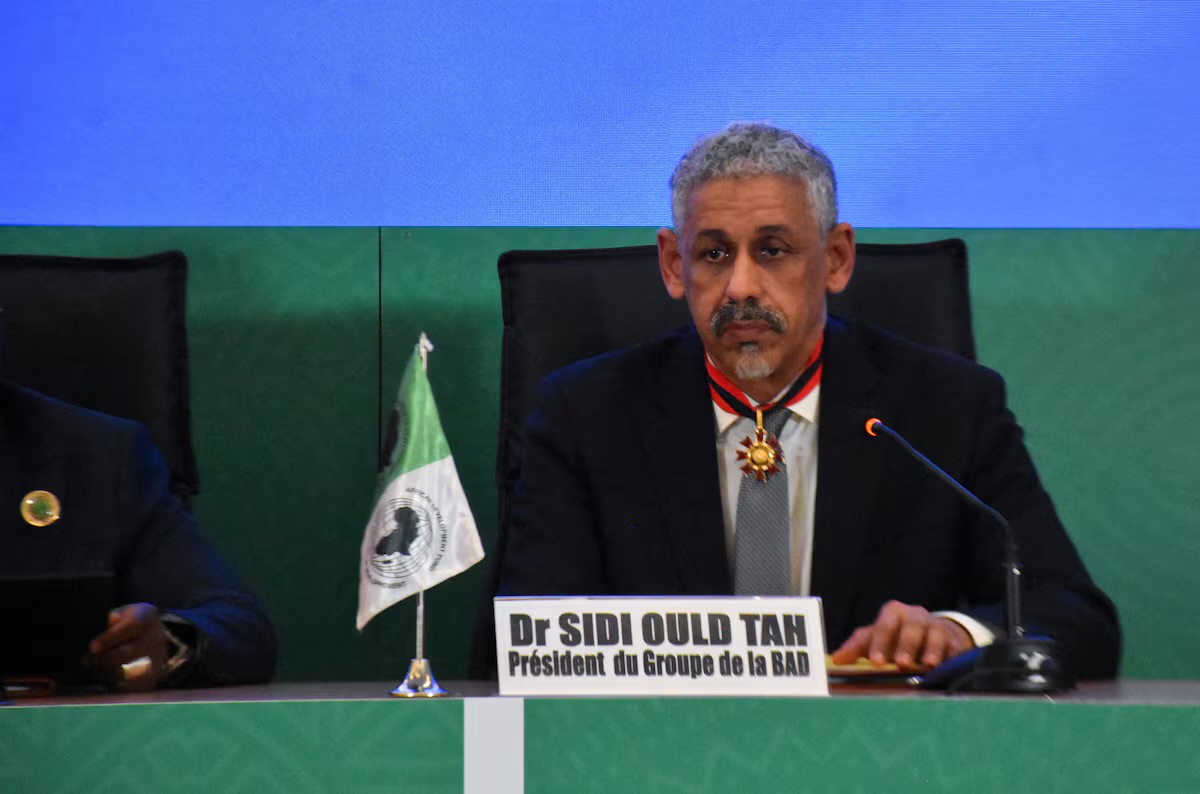
The African Development Bank (AfDB) is set to invest $125 million in African Trade and Investment Development Insurance (ATIDI), a move that will make the continent’s largest development lender the agency’s biggest shareholder and significantly expand its capacity to attract private sector investment into Africa.
AfDB President Sidi Ould Tah revealed the plan following the bank’s annual meeting in Brazzaville, describing it as a key pillar of his strategy to reshape development financing across the continent.
The investment comes at a time when traditional development assistance is shrinking. Overseas aid from wealthier nations fell sharply last year, prompting African institutions to seek alternative methods of funding infrastructure, energy, climate resilience and economic growth projects.



Tah’s approach, known as the New African Financial Architecture for Development (NAFAD), aims to mobilise Africa’s own financial resources, including pension funds, sovereign wealth funds and savings schemes. These assets are estimated to be worth around $4 trillion but remain fragmented across the continent.
“Our target is to bring the level of guarantees provided by ATIDI to $10 billion annually and reach a target that will really unlock huge potential for financing infrastructure at scale,” Tah said.
The AfDB’s shareholding in ATIDI will increase from 3% to 14% following the investment. The Nairobi-based institution has historically provided insurance and guarantee products that reduce investment risk and encourage private capital to enter African markets. Over the past several years, it has supported an average of $3 billion worth of investments annually.
Founded 25 years ago, ATIDI is owned by 24 African member states alongside institutional investors and development finance partners. Its role has become increasingly important as governments seek innovative ways to finance development projects without adding excessive debt burdens.
The latest investment signals a shift from ATIDI’s traditionally dispersed ownership model, where stakes have largely been spread among member states. Countries such as Togo and Benin have historically been among its larger shareholders.
Tah said the AfDB is encouraging additional African governments and financial institutions to become shareholders or increase their existing stakes in order to strengthen the organisation’s capital base and expand its guarantee capacity.
“We are also talking to various financial institutions and many countries to increase their contribution or to contribute if they are not yet shareholders,” he said.
Interest in the initiative appears to be growing internationally as well. France is reportedly considering increasing its participation, with further details expected during the upcoming G7 discussions in Evian later this month.

Supporters of the strategy argue that guarantees can play a crucial role in unlocking private investment by reducing perceived risks associated with African projects. By lowering financing costs and providing additional investor confidence, they believe institutions such as ATIDI can help close Africa’s estimated $400 billion annual development financing gap.
However, some economists contend that the continent should place greater emphasis on increasing domestic savings rates. According to World Bank data, sub-Saharan Africa’s savings rate stands at approximately 18%, less than half the global average, reflecting lower incomes and a youthful population.
Despite those concerns, Tah remains confident that a stronger guarantee system combined with better mobilisation of African capital can help address the continent’s financing challenges and reduce its dependence on external aid.