In the old African story, the zebra did not always have stripes. Its markings were not decoration; they were acquired through pressure, confrontation and adaptation. The stripes became a way to survive in a changed environment.
France now finds itself in a similar position in Africa. Its old markings – Francophonie, elite political ties, military presence, monetary influence and historic commercial networks – no longer provide the same protection or advantage. Forums such as the Africa Forward Summit are therefore part of a wider attempt by Paris to acquire new stripes: to reposition itself as a long-term economic partner rather than primarily a traditional political actor. Yet the real test is whether these new stripes represent genuine adaptation, or simply a new pattern painted over an old model of influence.
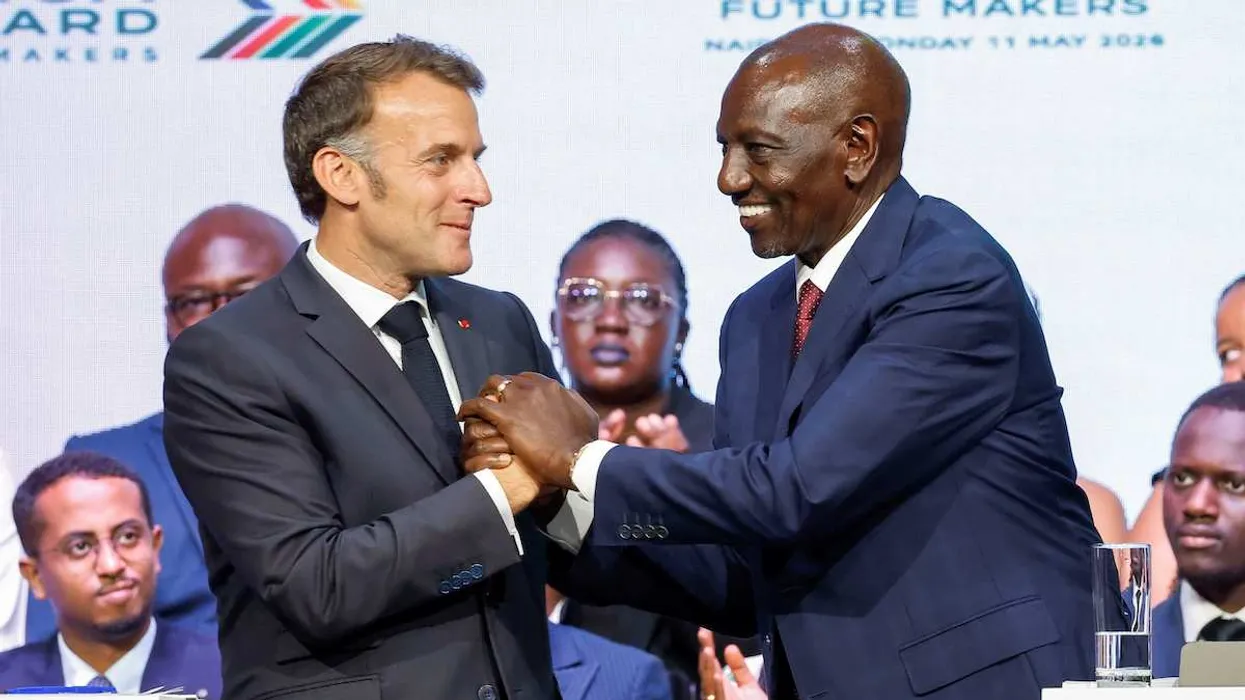
This is why the 2026 Africa-France Summit in Nairobi matters. It will be the 29th Africa-France Summit since the series began in 1973, and the first ever to be held in a non-Francophone African country. Of the previous 28 summits, 12 were hosted in Africa. More than five decades later, the move to Kenya is more than a logistical choice. It is a signal of how dramatically France’s position in parts of Francophone Africa has shifted, and how urgently Paris is seeking relevance in a more competitive, more assertive and less historically deferential continent.



France is not starting from zero. It still has deep economic roots across Africa. In telecommunications company, Orange remains a major player in several African markets through mobile services, internet infrastructure and digital finance platforms, operating in around 15 African countries. In transport and logistics, companies such as Alstom and CMA CGM remain active in rail, shipping and logistics infrastructure. In finance, BNP Paribas and Société Générale retain a significant presence, with Société Générale operating in around 10 African countries through 13 offices. In energy, TotalEnergies remains one of France’s most prominent corporate actors, active in more than 40 African countries through oil, gas and energy distribution projects.
Trade data also shows that France remains economically important in absolute terms. African exports to France increased from approximately US$24.5 billion in 2006 to around US$34.5 billion in 2024, while African imports from France rose from roughly US$24.6 billion to US$29.7 billion over the same period. African exports to France peaked at more than US$39 billion in 2011 and 2012, declined in the mid-2010s, and then recovered after the COVID-19 period. More recently, exports rose from US$19.7 billion in 2020 to US$35.9 billion in 2022 before stabilising at US$34.5 billion in 2024. Imports from France increased from US$25.6 billion in 2020 to US$31 billion in 2022, before easing slightly to US$29.7 billion in 2024.
But the more important story is relative decline. France’s share of African imports fell from roughly 12% in 2008 to below 5% by 2016, while its share of African exports similarly declined from around 13% to approximately 4–5% over the same period. In other words, France remains commercially significant, but it no longer occupies the dominant position it once did. Africa’s trade map has diversified. The continent has more partners, more bargaining power and more alternatives.
Investment tells a story as well. French FDI stock in Africa was estimated at around US$54 billion in 2023, making it – along with Netherlands – the joint second largest investor in the continent, behind the UK. This suggests that France is not retreating economically from Africa. Instead, it is trying to consolidate long-term commercial influence through private-sector engagement and sectoral diversification. In this sense, France’s new stripes are not only diplomatic. They are also financial, corporate and strategic.
This also explains Paris’s growing interest in larger Anglophone economies such as Kenya, Nigeria and South Africa. The Nairobi summit is therefore symbolic by design. France is trying to show that its Africa policy is no longer confined to Francophone Africa. It is entering markets where language, history and legacy networks offer fewer automatic advantages, and where it must compete directly with African, Asian, European, Gulf and American actors.
However, entering new terrain is not the same as adapting to it. France’s first challenge is historical and political baggage. In many African countries, perceptions of French engagement remain shaped by debates around neo-colonialism, military intervention, elite bargains and asymmetric economic relations. Even where commercial partnerships are growing, political legitimacy and public trust remain fragile.
The CFA franc remains one of the clearest symbols of this tension. For many critics in West and Central Africa, it represents the persistence of external influence over African monetary sovereignty. If Paris is serious about redefining its relationship with Africa, it will need to seriously support reforms that expand African control over monetary policy and reduce its external oversight – for example explicity support for the new West African currency proposed by the Economic Community of West African States (ECOWAS) – the Eco – targeted for launch in 2027, the African Monetary Institute being set up in Nigeria in September 2026 (as the pre-cursor to the African Central Bank) as well as the Pan-African Payment and Settlement System being developed by Afreximbank and the AfCFTA Secretariat to support the African Continental Free Trade Area. Without these, France’s new stripes may look cosmetic rather than structural.
The second challenge is that African governments are becoming more assertive and strategic. Many are prioritising industrialisation, value addition, technology transfer, regional production, digital infrastructure and local job creation. They are asking harder questions of all external partners. Does this investment build African manufacturing capacity? Does it create decent jobs? Does it transfer technology? Does it strengthen local firms? Does it expand fiscal space? Does it move African economies up the value chain?
This means France cannot rely on legacy networks or political familiarity. It must demonstrate concrete development value. It must compete not only on capital, but on relevance.
The central question, then, is not whether France can expand commercial ties with Africa. It probably can. France still has major companies, significant financial control, strong sectoral expertise and investment stock. The key question is whether France can move from a patermalistic model to a genuinely competitive partnership model.
That requires a different posture: less assumption of privileged access, more responsiveness to African priorities; less nostalgia for old spheres of influence, more seriousness about African agency; less focus on managing decline in Francophone Africa, more willingness to support industrial transformation across the continent.

France is trying to get new stripes in Africa. The Nairobi summit will show whether those stripes are credible to African governments and publics – or whether they are seen as the same old pattern under a different coat. In this new landscape, the partners that succeed will not be those with the longest history in Africa, but those that best understand and accelerate Africa’s deserved future.

By Ivory Kairo; Programme Manager, Development Reimagined