Wednesday, June 24, 2026
  • Login
The Southern African Times
  • Home
  • Southern Africa
  • Business
    • African Start ups
    • African Continental Free Trade Area
  • Technology
    • Lifestyle
      • Health
      • Culture
      • Food and Drink
      • Entertainment
  • Opinion
  • Sports
  • SAT Jobs
    • Events
  • About Us
    • Advertise with Us
    • Contact Us
No Result
View All Result
  • Home
  • Southern Africa
  • Business
    • African Start ups
    • African Continental Free Trade Area
  • Technology
    • Lifestyle
      • Health
      • Culture
      • Food and Drink
      • Entertainment
  • Opinion
  • Sports
  • SAT Jobs
    • Events
  • About Us
    • Advertise with Us
    • Contact Us
No Result
View All Result
The Southern African Times
No Result
View All Result
Home in Southern Africa Democratic Republic of Congo

DR Congo Warns 2028 Elections Could Be Delayed if Eastern Conflict Persists

by SAT Reporter
May 8, 2026
in Democratic Republic of Congo, in Southern Africa, Politics
0
DR Congo Warns 2028 Elections Could Be Delayed if Eastern Conflict Persists

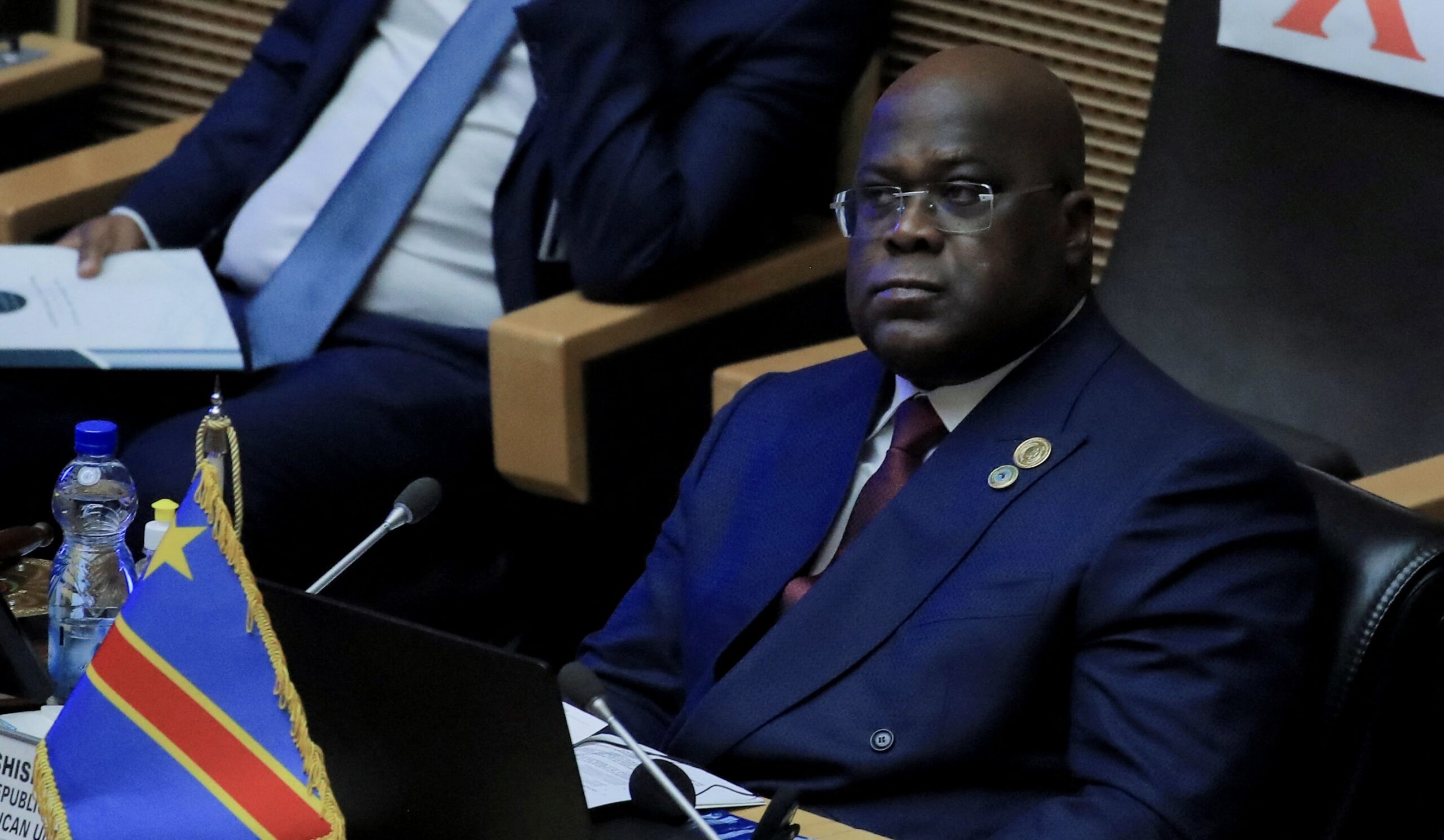
FILE PHOTO: President of the Democratic Republic of the Congo and newly appointed Chairperson of the African Union (AU) Felix Tshisekedi attends the the opening session of the 35th ordinary session of the Assembly of the African Union at the African Union Commission (AUC) headquarters in Addis Ababa, Ethiopia February 5, 2022. REUTERS/Tiksa Negeri/File Photo

President Félix Tshisekedi has indicated that the Democratic Republic of the Congo may be unable to conduct its scheduled 2028 presidential elections if armed conflict in the country’s eastern provinces continues, placing national security and territorial integrity at the centre of the government’s political priorities.

Speaking during a press conference in Kinshasa on Wednesday, Tshisekedi said the ongoing violence in North Kivu and South Kivu provinces has created conditions that could make nationwide elections difficult to organise in a manner that guarantees full national participation.

The Congolese president described the situation in eastern DRC as a prolonged security crisis that continues to threaten state institutions, civilian livelihoods and economic stability. He stated that his administration would not support elections that exclude populations living in conflict affected provinces.


ADVERTISEMENT

“If we cannot end this war, unfortunately, we will not be able to organise elections in 2028,” Tshisekedi said, adding that any delay would stem from prevailing security conditions rather than a political unwillingness to hold elections.

The statement comes amid intensified fighting involving the March 23 Movement, commonly known as M23, which has expanded its territorial presence in parts of eastern DRC since early 2025. According to reports from the United Nations, renewed clashes have contributed to significant civilian displacement, mounting humanitarian pressures and growing regional diplomatic concern.

Eastern DRC has experienced cycles of armed conflict for more than three decades, shaped by a complex interplay of historical grievances, regional tensions, competition over mineral resources and weak institutional control in border regions. The resurgence of M23 has once again drawn attention to unresolved questions surrounding sovereignty, governance and regional security cooperation within the Great Lakes region.

Tshisekedi said his government continues to prioritise military reforms and investment in the armed forces, arguing that the Congolese military inherited longstanding structural weaknesses, including inadequate equipment and organisational challenges. He noted that efforts to strengthen the defence sector are ongoing as authorities seek to restore state authority in affected territories.

At the same time, the Congolese government has continued to support diplomatic engagement aimed at securing a political resolution to the conflict. Regional mediation efforts led through African institutions, including the East African Community and the Southern African Development Community, have sought to encourage dialogue while addressing wider concerns around armed group activity and cross border insecurity.

The conflict has also highlighted the broader social consequences of prolonged instability across the region. Humanitarian agencies have warned of increasing displacement, pressure on local health systems and disruptions to education and agricultural production. Communities in eastern DRC continue to bear the human cost of insecurity, with many families displaced multiple times over successive waves of violence.

Political analysts note that Tshisekedi’s remarks reflect the growing intersection between security governance and democratic processes in conflict affected states. While constitutional provisions currently require elections to take place in December 2028, observers suggest that the trajectory of the conflict will likely shape both the political environment and public confidence in future electoral processes.

Tshisekedi first assumed office in 2019 following a disputed election and secured a second term after the 2023 presidential vote. Under the current constitution, he is expected to leave office at the end of his second mandate in 2028.

Across Africa, debates around elections, security and constitutional continuity continue to raise wider questions about how democratic institutions can function effectively in contexts marked by armed conflict and humanitarian strain. In the case of the DRC, the challenge remains not only the organisation of future elections, but also the pursuit of lasting peace and inclusive state reconstruction in regions that have endured decades of instability.

For many Congolese citizens, the immediate concern remains the restoration of security, dignity and normalcy in communities affected by conflict. Regional observers argue that sustainable peace in eastern DRC will require not only military responses, but also long term investment in governance, regional trust building, economic inclusion and accountable political institutions rooted in the aspirations of local communities.

Tags: 2028 electionsAfrican politicsDR CongoDRC Crisiseastern Congo conflictFelix Tshisekedigovernance in AfricaGreat Lakes regionKinshasaM23peace and securityregional securitySouthern African Times
Previous Post

Namibia Raises Fuel Prices as Global Oil Market Volatility Persists

Next Post

IMF Warns Africa’s Economic Gains Remain Vulnerable Amid Global Uncertainty

SAT Reporter

Related Posts

UNAIDS Appeals for Reconsideration as United States Moves to Withdraw HIV Funding from South Africa
in Southern Africa

UNAIDS Appeals for Reconsideration as United States Moves to Withdraw HIV Funding from South Africa

by Times Reporter
June 23, 2026
Namibia Emerges as a Bright Spot in Famous Brands’ Southern African Growth Story
in Southern Africa

Namibia Emerges as a Bright Spot in Famous Brands’ Southern African Growth Story

by Times Reporter
June 23, 2026
Botswana Positions Itself for Regional Power Trade Through US$100 Million Solar Investment
Botswana

Botswana Positions Itself for Regional Power Trade Through US$100 Million Solar Investment

by Times Reporter
June 22, 2026
Watervlei Memorial Park Set to Redefine Burial Services in Zimbabwe
Zimbabwe

Watervlei Memorial Park Set to Redefine Burial Services in Zimbabwe

by Leo Muzivoreva
June 19, 2026
South Africa’s Zimi Raises R50m for EV Expansion
in Southern Africa

South Africa’s Zimi Raises R50m for EV Expansion

by Times Reporter
June 12, 2026
Next Post
IMF Warns Africa’s Economic Gains Remain Vulnerable Amid Global Uncertainty

IMF Warns Africa’s Economic Gains Remain Vulnerable Amid Global Uncertainty

Browse by Category

  • Africa AI
  • African Continental Free Trade Area
  • African Debt
  • African Start ups
  • Agriculture
  • AI Africa
  • Algeria
  • All News
  • Analysis
  • Angola
  • Arts / Culture
  • Asia
  • Botswana
  • BOTSWANA
  • BREAKING NEWS
  • BRICS
  • Burkina Faso
  • Burundi
  • Business
  • Business
  • Business Wire
  • Cameroon
  • Central Africa
  • Chad
  • China
  • Climate Change
  • Climate Changev
  • Community
  • Congo Republic
  • Conservation
  • Côte d’Ivoire
  • COVID 19
  • CRYPTOCURRENCY
  • Culture
  • Democratic Republic of Congo
  • Diplomacy
  • Eastern Africa
  • Economic Development
  • Economy
  • Education
  • Egypt
  • Elections 2024
  • Energy
  • Entertainment
  • Environment
  • Eritrea
  • Ethiopia
  • Europe
  • Fashion
  • Feature
  • Finance
  • Financial Inclusion
  • Food
  • Food and Drink
  • Foods
  • GABON
  • Ghana
  • Global
  • Global Africa
  • Guinea
  • Health
  • Humanitarian Aid
  • Immigration
  • in Southern Africa
  • International news
  • International Relations
  • Investment
  • Ivory Coast
  • Just In
  • Kenya
  • Lesotho
  • Libya
  • Life Style
  • Lifestyle
  • Literature
  • Malawi
  • Malawi
  • Mali
  • Markets
  • Mauritius
  • Middle East
  • Mining in Africa
  • Morocco
  • Mozambique
  • Namibia
  • Niger
  • niger
  • Nigeria
  • North Africa
  • North-Eastern Africa
  • Obituaries
  • Obituary
  • Opinion
  • PARTNER CONTENT
  • Politics
  • Property
  • Racism
  • Rwanda
  • Rwanda
  • SADC
  • SAT Interviews
  • SAT Investigation
  • SAT Jobs
  • Saudi Arabia
  • Senegal
  • Seychelles
  • Somaliland
  • South Africa
  • South Sudan
  • Sports
  • Startup Africa
  • STOCK EXCHANGE
  • Sudan
  • Sustainability
  • Sustainablity
  • Tanzania
  • Technology
  • Telecommunications
  • The Editorial Board
  • The Power Of She
  • Togo
  • Trade
  • Travel
  • Travel
  • Tunisia
  • Uganda
  • Uncategorized
  • Wealth
  • West Africa
  • World
  • World
  • Zambia
  • ZAMBIA
  • Zimbabwe
  • ZIMBABWE

Browse by Tags

#NewsUpdate #SouthAfrica #SouthernAfricanTimes #TheSouthernAfricanTimes AfCFTA africa African Continental Free Trade Area African development African Development Bank African economies African economy African Union Agriculture Angola Botswana China Climate change Cyril Ramaphosa Economic Development economic growth energy transition Ghana governance industrialisation Inflation Infrastructure Infrastructure Development International relations Investment Kenya Mozambique Namibia news Nigeria Regional Integration renewable energy Rwanda SADC South Africa Southern Africa sustainable development Tanzania United States Zambia Zimbabwe
ADVERTISEMENT

WHO WE ARE

The Southern African Times is a regional bloc digital newspaper that covers Southern African and world news. The paper also gives a nuanced analysis on news and covers a wide range of reporting which include sports, entertainment, foreign affairs, arts and culture.

Welcome Back!

Login to your account below

Forgotten Password?

Retrieve your password

Please enter your username or email address to reset your password.

Log In
  • Home
  • Southern Africa
  • Business
    • African Start ups
    • African Continental Free Trade Area
  • Technology
    • Lifestyle
      • Health
      • Culture
      • Food and Drink
      • Entertainment
  • Opinion
  • Sports
  • SAT Jobs
    • Events
  • About Us
    • Advertise with Us
    • Contact Us
Not enough quota to unlock this post
Unlock left : 0
Are you sure want to cancel subscription?