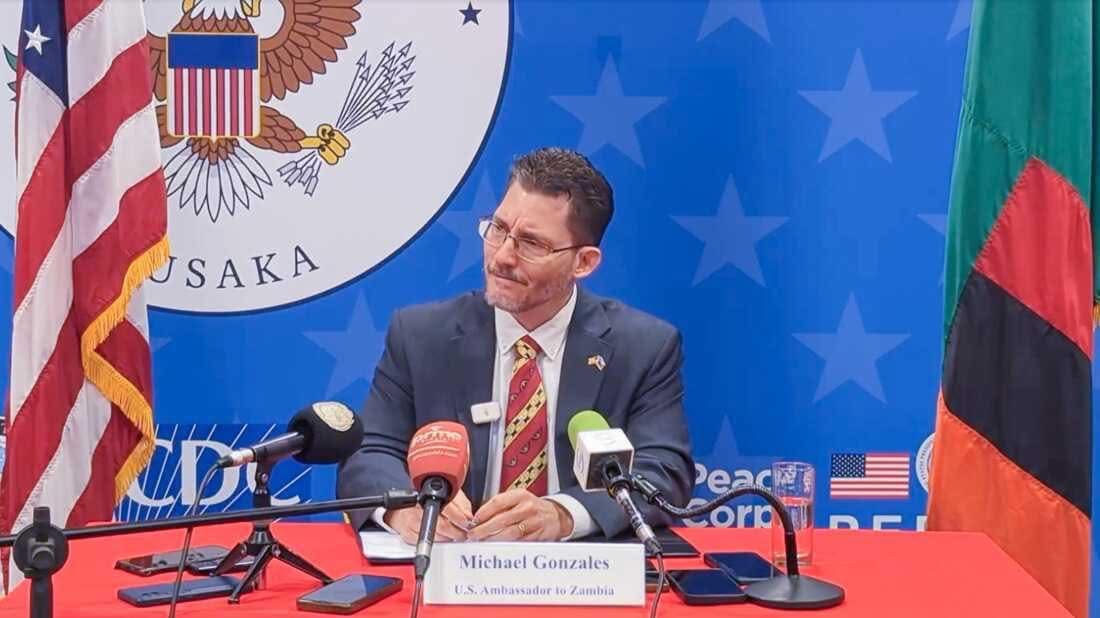
The outgoing United States ambassador to Zambia, Michael C. Gonzales, has delivered an unusually forthright critique of governance in the country, raising questions about corruption, institutional capacity, and the future of long-standing development partnerships. His remarks, made during a farewell reception in Lusaka on 30 April 2026, have intensified scrutiny of Zambia’s reform trajectory under President Hakainde Hichilema, while also prompting wider reflection on the nature of international engagement across Africa.
Gonzales situated his intervention within the historical context of United States support to Zambia, particularly in the public health sector. Since 2000, American assistance, largely channelled through programmes such as PEPFAR, has contributed more than seven billion dollars to health initiatives. According to data from the World Bank, Zambia has experienced a marked increase in life expectancy over the past two decades, alongside reductions in HIV transmission rates. However, a significant proportion of Zambia’s health expenditure continues to be financed externally, underscoring persistent structural dependency.
The ambassador argued that a temporary pause in US health funding in 2025 placed strain on parts of the healthcare system, exposing weaknesses in domestic capacity. While services did not collapse, the disruption highlighted the extent to which delivery remains reliant on donor support. Zambian authorities have previously acknowledged challenges within the health sector and initiated audits into the management of medical supplies, maintaining that corrective measures are ongoing.



A central element of Gonzales’s remarks concerned allegations of mismanagement and diversion of resources. He referred to incidents involving the theft of donor funded medicines and suggested that high level accountability had been limited. Investigations reported by international media have confirmed that some medicines intended for public facilities were diverted and sold through private channels, leading to suspensions and arrests of certain officials. However, the scale of prosecutions and the extent of systemic involvement remain matters of debate.

Gonzales further stated that Zambia loses more than four billion dollars annually through illicit financial flows, citing government reporting. Estimates by organisations such as Global Financial Integrity indicate that African economies collectively lose substantial sums each year through mechanisms including trade misinvoicing and capital flight. Nevertheless, country specific figures are often difficult to verify conclusively, and analysts caution that such flows are influenced by both domestic governance challenges and structural features of the global financial system.
The ambassador also highlighted concerns raised by some investors regarding regulatory delays and informal payment demands. Business environment assessments have noted bureaucratic inefficiencies in Zambia, although the government has emphasised reforms aimed at improving transparency and streamlining administrative processes. Officials have pointed to efforts to digitise services and strengthen oversight as part of a broader agenda to enhance the investment climate.
Debate around the effectiveness of Zambia’s anti corruption framework has been amplified by analysis from Sishuwa Sishuwa, who argues that structural limitations within the Anti Corruption Commission constrain its operational independence. He notes that appointment powers remain concentrated within the presidency, which may affect perceptions of impartiality. Sishuwa contends that legislative reform would be required to align the commission more closely with constitutional provisions introduced in 2016, which emphasise independence and non partisanship in public institutions.
Such perspectives reflect broader concerns identified in governance assessments by organisations such as Transparency International, which continues to highlight enforcement gaps across many jurisdictions despite the presence of formal legal frameworks. At the same time, the Zambian government has rejected claims that its anti corruption efforts are selective, maintaining that investigations have targeted individuals across political lines and that institutional processes are being strengthened.
In response to earlier concerns raised by the United States, Zambian officials have indicated willingness to cooperate on health sector reforms while emphasising the importance of national ownership. The government has also underscored its broader economic reform programme, including ongoing debt restructuring negotiations and fiscal consolidation efforts, as evidence of its commitment to improving governance and restoring stability.
Beyond the bilateral relationship, Gonzales’s remarks speak to wider geopolitical dynamics shaping African development. Zambia occupies a strategic position in global supply chains for critical minerals and maintains economic relationships with a range of international partners, including Western donors and Chinese investors. Concerns around governance standards, transparency, and environmental impact have been raised in relation to projects financed by multiple actors across the continent, reflecting systemic challenges rather than issues confined to any single partner.
This broader context aligns with longstanding debates about the nature of development assistance and external engagement in Africa. The Zambian economist Dambisa Moyo has argued that prolonged reliance on external aid can weaken domestic accountability by shifting responsibility away from national institutions. Others contend that such assistance remains essential in supporting public services and mitigating economic shocks, particularly in countries navigating fiscal constraints.
Gonzales sought to balance criticism with reassurance, affirming that the United States would continue to fund life saving health programmes, including HIV treatment and prevention. At the same time, he indicated that future cooperation would increasingly depend on what he described as mutual accountability and greater domestic ownership of development initiatives.
The absence of a detailed official response to the ambassador’s farewell address leaves open questions about how Lusaka will engage with the issues raised. However, the debate extends beyond the immediate diplomatic exchange. It reflects a broader continental challenge of strengthening institutions, managing public resources effectively, and navigating complex global partnerships in a manner that prioritises national development and citizen welfare.
For Zambia, as for many African states, the path forward lies in balancing sovereignty with accountability, ensuring that external support complements rather than substitutes domestic capacity. The discussion prompted by Gonzales’s remarks, alongside critical perspectives from within Zambia, underscores the importance of nuanced analysis that moves beyond singular narratives.
Ultimately, Zambia’s development trajectory is shaped by a convergence of historical legacies, institutional dynamics, and global economic forces. The extent to which these factors can be managed in a way that delivers tangible improvements in the lives of citizens will remain central to both domestic legitimacy and international confidence.